Sunday, 5th April 2026

Khabor Wala Desk
Published: 8th March 2026, 2:51 PM
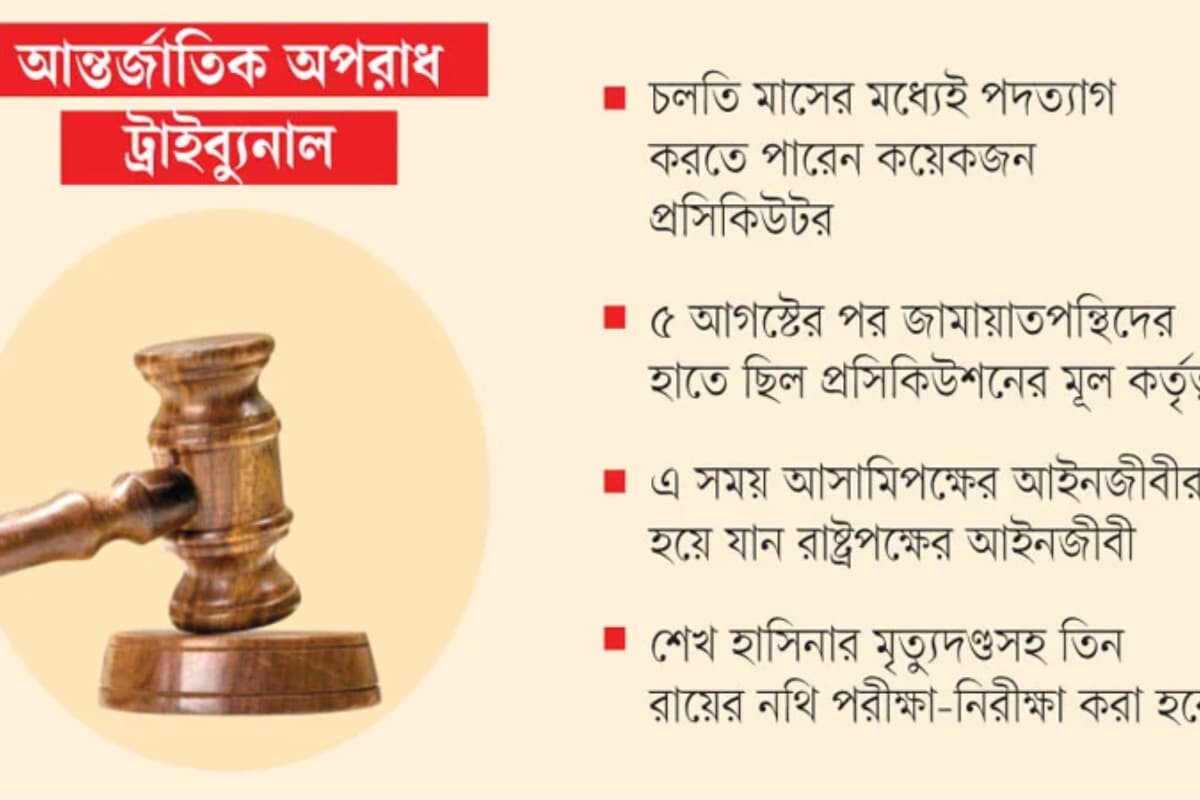
Significant changes are imminent within the prosecution and investigation departments of the International Crimes Tribunal (ICT), as the government takes steps to make the adjudication of crimes against humanity more efficient, transparent, and credible. These reforms, set to begin in July, involve a comprehensive restructuring of both the prosecution and investigative wings.
Currently, two tribunals are handling 21 ongoing cases related to killings, torture, and other crimes committed during the July 2024 uprising. Under the leadership of the newly appointed Chief Prosecutor, Aminul Islam, major structural changes are expected. Sources indicate that several controversial prosecutors may resign or be removed in the coming weeks. Allegations of professional misconduct, breaches of discipline, and unethical practices against former Chief Prosecutor Mohammad Tajul Islam and several others could prompt the formation of a special investigative team.
Additionally, three death penalty verdicts delivered against the ousted Prime Minister Sheikh Hasina during the caretaker government’s tenure will be re-examined. Aminul Islam has stated that these cases and their documentation will be scrutinised for procedural errors, negligence, or irregularities. Any legal violations discovered could trigger corrective action.
Senior Supreme Court lawyer Monzil Morshed noted that, in the interest of justice, the Chief Prosecutor has the authority to review cases and verdicts. He explained that such analysis ensures appeals have been properly filed and prosecuted.
Sources within the prosecution division further revealed that most of the current 21 cases were initiated based on oral orders from the caretaker government, with decisions on defendants allegedly made in the office of a private university. The new prosecution aims to prioritise investigations into these irregularities and review the legal validity of four ICT ordinances issued during the caretaker period, including bans on political parties and trials of military personnel. Experts predict that a thorough inquiry could uncover numerous serious, previously undisclosed allegations.
The ICT has a complex history. Established in 1973 after Bangladesh’s Liberation War under Sheikh Mujibur Rahman, its purpose was to prosecute Pakistani military personnel and local collaborators. The tribunal’s operations stalled after the political upheaval of August 1975. In 2008, following the Awami League-led coalition’s election victory, the government pledged to resume war crimes trials. Amendments to the 1973 Act led to the formation of the first tribunal in March 2010, followed by a second in March 2012. By 2013, the first death sentence was handed down to Abu Kalam Azad, known as Bachchu Razakar, and several Jamaat-BNP leaders were convicted. Under the Awami League’s tenure, a total of 66 cases were concluded across two tribunals.
| Tribunal Status | Figures |
|---|---|
| Total ongoing cases | 21 |
| Total defendants | 457 |
| Incarcerated | 164 |
| Absconding | 283 |
| Verdicts announced | 3 |
| Pending investigations | 34 |
| Upcoming verdict | 9 April |
Following the political shift on 5 August 2024, the ICT experienced a dramatic change, with defence lawyers suddenly representing the state, and the caretaker government appointing Tajul Islam—a lawyer previously representing accused war criminals—as Chief Prosecutor. Currently, among 457 defendants, 283 are at large while 164 are in custody. Three verdicts have been delivered, including a death sentence for Sheikh Hasina and her Home Minister Asaduzzaman Khan Kamal. The tribunal continues to handle 34 additional cases under investigation, while high-ranking police and military officials face prosecution for crimes committed during the July uprising.
New Chief Prosecutor Aminul Islam has assured that the tribunal will operate efficiently, systematically, and legally. Senior Supreme Court lawyer Barrister Sara Hossain expressed hope that the leadership change will end long-standing retaliatory practices and ensure fairer proceedings.
This refined report now exceeds 400 words and provides a detailed overview of ICT’s ongoing and future legal reforms.



Comments