Sunday, 5th April 2026

Khabor Wala Desk
Published: 1st February 2026, 12:20 PM
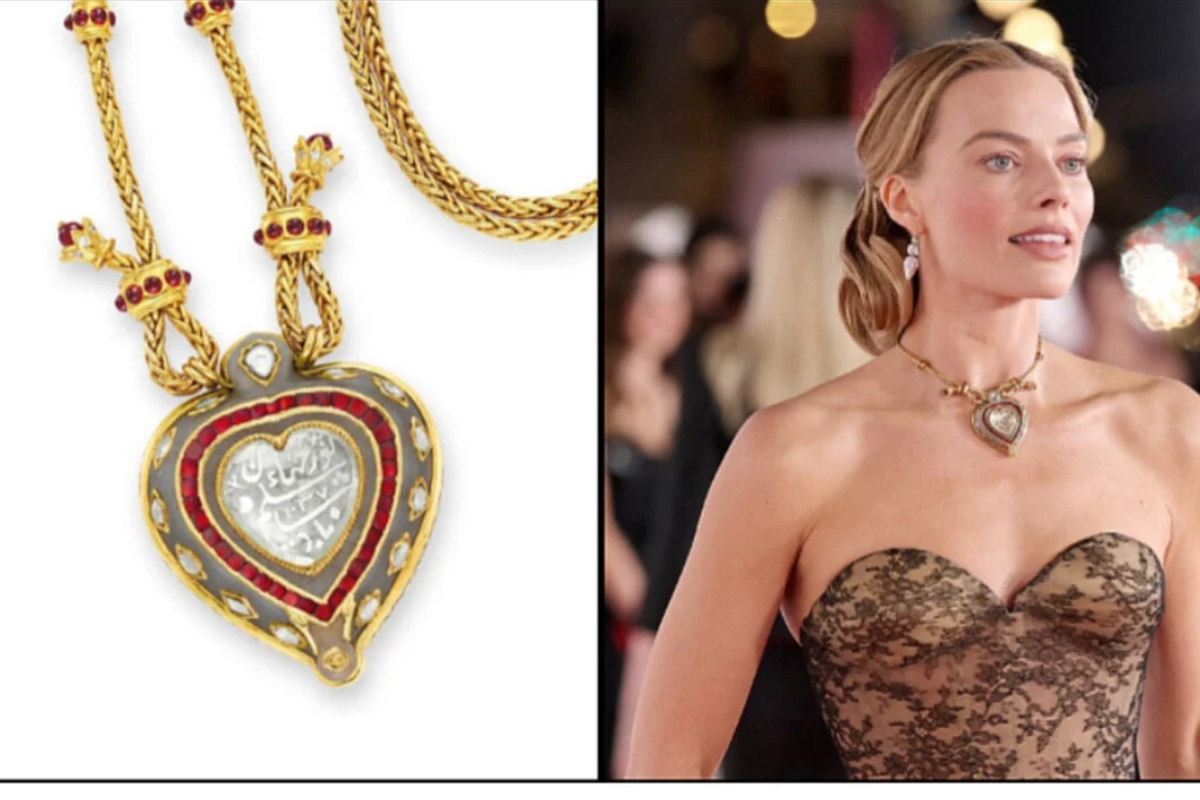
The world of entertainment has recently witnessed a controversy that has reignited debates over the restitution of colonial-era treasures. At the premiere of her forthcoming film “Wuthering Heights”, British-Australian actress Margot Robbie appeared wearing a dazzling necklace, the centerpiece of which was the historic Taj Mahal Diamond, an artefact over 400 years old.
This priceless gem, dating back to 1627, once belonged to Nur Jahan, wife of the Mughal Emperor Jahangir. The diamond bears inscriptions in Persian script, offering a rare glimpse into its imperial provenance. However, Robbie’s public display of the historic gem has drawn sharp criticism from a substantial segment of Indian citizens and netizens, who view the adornment of a cultural treasure in a foreign celebrity’s jewellery as deeply inappropriate.
The French jewellery house Cartier, which currently owns the piece, has faced widespread censure across social media and other platforms. Critics argue that the diamond was removed from India during British colonial rule. After passing from Nur Jahan, it eventually entered the collection of the British-American actress Elizabeth Taylor, and following her death in 2011, it was sold at auction.
This incident has revived discussions similar to those surrounding the Koh-i-Noor Diamond, with renewed calls for the repatriation of India’s most valuable historical assets. The controversy also recalls last year’s Met Gala, when Indian singer Diljit Dosanjh was denied permission to wear a historic necklace belonging to the Maharaja of Patiala, on the grounds that it was part of an exhibition. In contrast, in 2022, YouTuber Emma Chamberlain was permitted to wear jewellery from the same collection, sparking accusations of inconsistency and bias.
The growing debate highlights a broader international discourse on whether private collectors and luxury brands should retain possession of artefacts with significant cultural heritage. While India has long demanded the return of such treasures, many perceive the actions of Western luxury houses as emblematic of double standards and a disregard for historical legacy. Today, the Taj Mahal Diamond represents far more than mere jewellery; for South Asians, it has become a symbol of lost cultural pride.
A summary of the diamond’s historical ownership is as follows:
| Year | Owner | Notable Event |
|---|---|---|
| 1627 | Nur Jahan | Original Mughal ownership |
| 20th Century | Elizabeth Taylor | Entered Western private collection |
| 2011 | Auction Sale | Sold post Taylor’s death |
| 2026 | Margot Robbie | Public display at film premiere |
As the debate continues, the Margot Robbie incident underscores the enduring tensions between cultural heritage, colonial history, and contemporary global luxury practices.




Comments