Monday, 6th April 2026

Khabor Wala Desk
Published: 9th March 2026, 6:22 AM
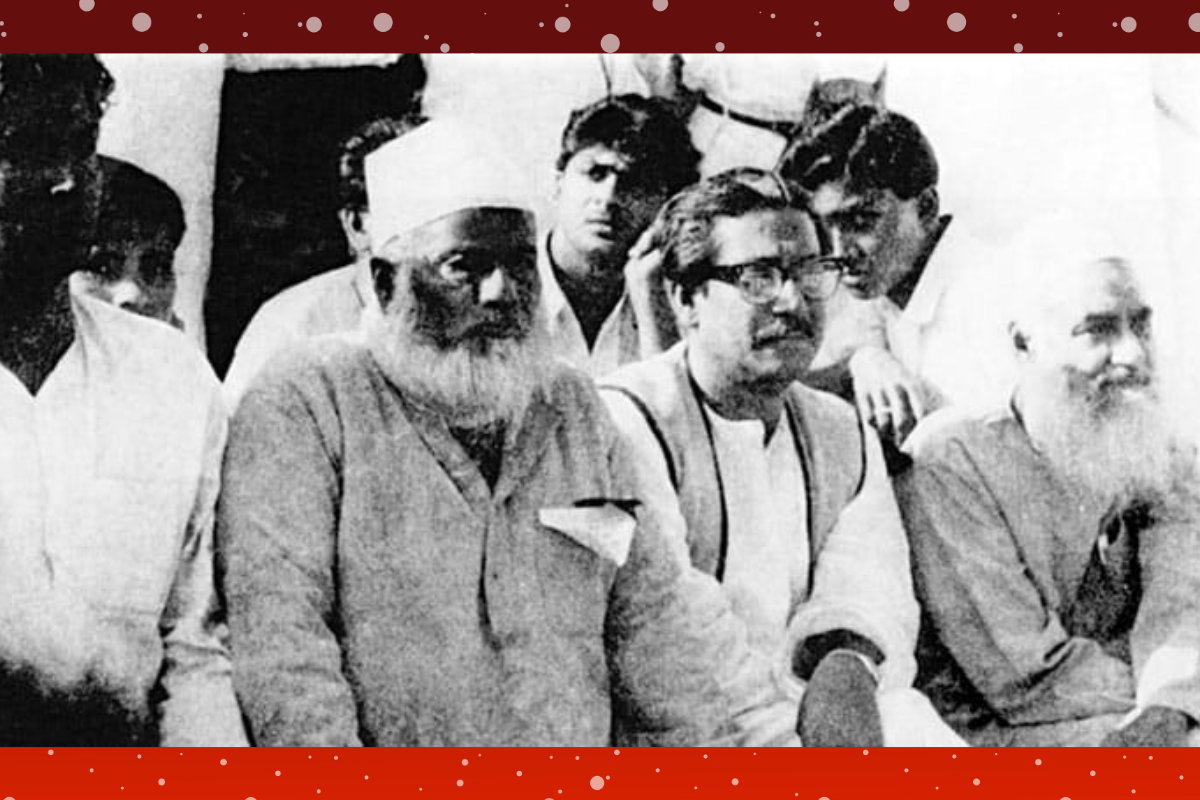
On 9 March 1971, the struggle for Bangladesh’s independence took a decisive turn as prominent leader Maulana Abdul Hamid Khan Bhasani publicly declared his unwavering support for Sheikh Mujibur Rahman’s call for freedom. Addressing a massive public gathering at Paltan Maidan in Dhaka, Bhasani delivered a scathing rebuke to Pakistan’s President Yahia Khan, urging recognition of East Pakistan’s right to self-determination.
Speaking to thunderous applause, Maulana Bhasani proclaimed, “Yahia Sahib, enough is enough. There is no benefit in prolonging bitterness. La-kum dinukum wa liya din – your religion is yours, mine is mine. Accept the independence of East Bengal.” He warned that if no action was taken by 25 March, he would join forces with Sheikh Mujibur Rahman to organise a mass movement reminiscent of the 1952 language movement.
Amid the rising political tensions, Lieutenant General Tikka Khan was appointed military governor of East Pakistan’s “K” sector late at night in Islamabad and arrived in Dhaka on 7 March. Despite this, the High Court in Dhaka refused to conduct the swearing-in ceremony for the newly appointed military governor, following Sheikh Mujibur Rahman’s instructions.
On 9 March, a comprehensive strike paralysed government and semi-government offices across the country, including the High Court and judiciary, in accordance with the programmes announced by Sheikh Mujibur Rahman.
An emergency meeting of the central committee of the Bangladesh Chhatra League was held at the Iqbal Hall canteen of Dhaka University (now Sergeant Zahurul Haque Hall). Presided over by student leader Nure Alam Siddiqui, the committee approved a proposal ratified earlier in a 2 March student gathering at Dhaka University under the leadership of Chhatra League and Daksur, forming the “Swadhin Bangladesh Chhatra Sangram Parishad” and endorsing the declaration of an independent Bangladesh.
Amid the unfolding crisis, UN Secretary-General U Thant directed the withdrawal of UN staff and their families from East Pakistan if necessary. Similarly, Japan’s Ministry of Foreign Affairs decided to evacuate its citizens from the region. The West German government also dispatched military aircraft to repatriate its nationals.
Military authorities imposed an eight-hour curfew in Rajshahi city starting at 9 p.m., later extending nightly curfews indefinitely. The Awami League issued a statement questioning the rationale behind the sudden imposition, asserting that the army had already been withdrawn to its barracks, and demanded immediate suspension of the curfew.
On the morning of 9 March, Bengali employees of Pakistan International Airlines marched from Tejgaon Airport to Sheikh Mujibur Rahman’s residence in Dhanmondi, where they were received by the leader. Nationwide, the announcement of Sheikh Mujibur Rahman’s independence movement on 8 March had ignited immense enthusiasm among students, youth, and professional associations. Dhaka Radio broadcast his historic 7 March speech from Racecourse Ground at 8:30 a.m., energising the masses.
At the central committee meeting, the East Pakistan Chhatra League formally adopted the “Chhatra League” name, replacing the previous East Pakistan Chhatra League designation. A joint statement from the organisation’s leadership—President Nure Alam Siddiqui, General Secretary Shahjahan Siraj, Daksur co-vice-president A. S. M. Abdur Rob, and General Secretary Abdul Quddus Makhan—expressed full support for Sheikh Mujibur Rahman’s directives at Racecourse Ground, calling upon the people of Bengal to unite and participate in the independence movement.
This historic day further cemented Maulana Bhasani’s alignment with Sheikh Mujibur Rahman, signalling a powerful coalition of political and student leadership in the escalating campaign for Bangladesh’s liberation.




Comments