Sunday, 5th April 2026

Khabor Wala Desk
Published: 6th March 2026, 1:27 AM
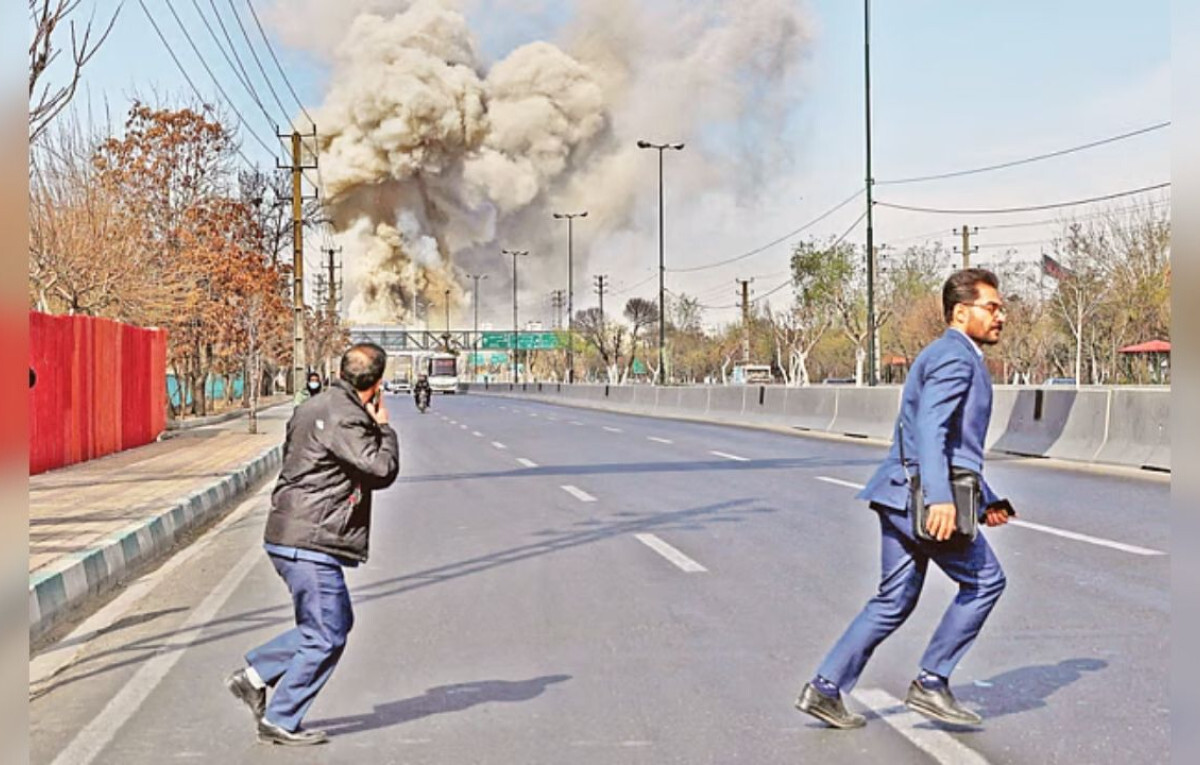
The prospect of a swift resolution to the crisis in the Middle East has evaporated, replaced by the grim reality of a long-term war of attrition. As the United States and Israel continue their relentless aerial bombardment and missile strikes across Iran—targeting the capital, Tehran, and various strategic hubs—the Islamic Republic has demonstrated a resilient and defiant retaliatory capacity.
On Thursday, Iranian drones successfully struck two US military installations in Iraq and Kuwait. Furthermore, Tehran claimed responsibility for an attack on a US-linked oil tanker in the Persian Gulf, signalling that the maritime energy corridors remain a primary theatre of conflict. Despite the loss of key political and military leaders to initial strikes, Iran’s ability to project power across its borders is fundamentally altering the strategic calculus of the Pentagon.
In response to the escalating cycle of violence, the US military is formalising plans for a conflict that could extend well into the third quarter of 2026. US Central Command (CENTCOM), operating out of its headquarters in Tampa, Florida, has reportedly requested a surge of additional military intelligence officers from the Pentagon.
According to reports from Politico, these specialists are expected to serve for a minimum of 100 days, with planning cycles now extending through September. This shift suggests that the White House has abandoned the hope of a “decapitation strike” leading to a rapid regime collapse, instead preparing for a sustained regional campaign.
The human and structural toll of the conflict has reached staggering proportions, with civilian infrastructure increasingly caught in the crossfire.
| Category | Statistics (as of 5 March 2026) |
|---|---|
| Total Fatalities (Iran) | 1,230 (including 180 children) |
| Civilian Infrastructure Damage | 3,643+ structures across 174 cities |
| Healthcare Facilities Hit | 13 (confirmed by WHO) |
| US Military Casualties | 6 personnel killed |
| Israeli Military Casualties | 11 personnel killed |
| Regional Fatalities (Lebanon) | 102 killed; 638 wounded |
The British Minister for the Middle East, Hamish Falconer, echoed the sentiment of a prolonged crisis during a session in Parliament. He warned that the situation is “constantly evolving” and could persist for months rather than weeks.
Meanwhile, traditional allies are being drawn deeper into the fray. NATO members, including Italy and Australia, have announced the dispatch of military equipment and crisis response teams to the region.
Italy: Prime Minister Giorgia Meloni has pledged air defence systems, while the navy will assist in protecting British bases in Cyprus.
France: Reports suggest Paris has granted the US permission to utilise French military bases for offensive operations.
Australia: Prime Minister Anthony Albanese confirmed the deployment of six crisis management teams and significant military hardware.
Analysts suggest the Trump administration may have miscalculated the internal stability of the Iranian state. Professor Abdullah Al-Arian of Georgetown University noted that there was a pervasive assumption that Iran would mirror the collapse of Gaddafi’s Libya or Saddam’s Iraq once the top leadership was removed. “None of this has happened,” Al-Arian observed. “The US now faces an incredibly difficult situation.”
This military deadlock carries significant domestic political risks for President Trump. With the mid-term elections approaching in November, advisors warn that a protracted and costly “forever war” could alienate the Republican base and swing the electorate. A Republican strategist, Matthew Bartlett, cautioned that this could result in a “political catastrophe” and a generational disaster for the party if a major military setback occurs on the ground.
As the conflict spreads to 13 countries, including recent drone strikes in Azerbaijan, the shadow of a wider regional conflagration looms larger than ever.



Comments