Monday, 6th April 2026

Khabor Wala Desk
Published: 8th March 2026, 8:54 AM
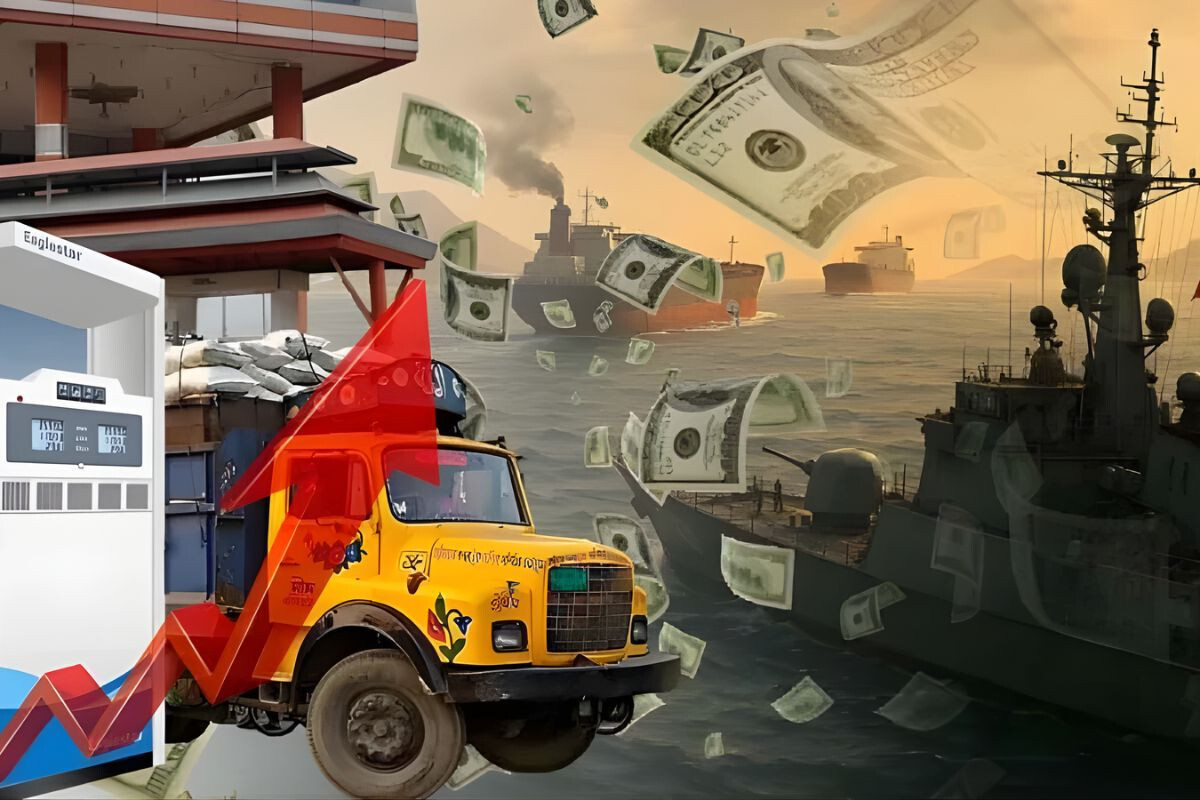
The escalating conflict in the Middle East between Iran, the United States, and Israel is creating turbulence far beyond the region. Global energy markets are destabilised, with crude oil prices rising sharply, LNG and crude shipments disrupted, and supply chains under strain. For Bangladesh, a nation heavily reliant on imported energy, these developments pose immediate economic challenges, impacting households, businesses, and investors alike. The newly formed government faces a critical test in maintaining economic stability amid this international turmoil.
Following the parliamentary elections on 12 February, the government led by Tariq Rahman assumed office with ambitious priorities: controlling inflation, creating employment opportunities, renegotiating trade terms amid U.S. retaliatory tariffs, managing the postponed LDC graduation, and preparing the national budget for the upcoming fiscal year. However, the ongoing Middle East conflict has rapidly imposed unforeseen pressures, particularly on the energy sector.
The Strait of Hormuz, a key oil transit route, carries nearly 20% of the world’s oil supply. Any disruption here immediately drives up global oil prices, feeding into domestic inflation. Bangladesh imports the bulk of its energy—crude oil, LNG, and LPG—from Middle Eastern countries. Recent U.S.-Israel-Iran hostilities have disrupted production and supply, with QatarEnergy, the world’s largest LNG producer and Bangladesh’s primary supplier, declaring a “force majeure” and temporarily suspending deliveries. The resulting scarcity has already created local fuel shortages and heightened anxiety among consumers.
Experts warn that a protracted Middle East conflict could intensify Bangladesh’s energy vulnerabilities. Supply constraints may disrupt industrial production, while food prices are likely to rise, amplifying inflation. The economy, still under pressure from foreign exchange outflows and rising import costs, could face budgetary deficits and increased subsidy burdens.
In response, the government has established a high-level committee, led by Finance Minister Amir Khasru Mahmud Chowdhury, including representatives from the Ministries of Finance, Power and Energy, Commerce, Bangladesh Bank, Bangladesh Petroleum Corporation, and the Planning Commission. This committee aims to monitor energy supply, stabilise prices, and mitigate economic risk.
Recent market data underscores the severity: Brent crude prices surged nearly 20% within a week, reaching approximately $87 per barrel. Analysts warn that prolonged conflict could push prices to $100–$150 per barrel, further straining Bangladesh’s import-dependent economy.
The government’s challenge is compounded by domestic fiscal pressures, sluggish development implementation, and investment uncertainty. Renewable energy initiatives and technological programmes may be hindered as resources are redirected to manage the crisis.
Selim Raihan, Executive Director of the South Asian Network on Economic Modeling (SANEM), emphasises the widespread impact: “Energy supply disruptions affect all sectors—from households to industries. Inflation, sluggish business activity, and deferred investments are inevitable consequences. The new government must act decisively to prevent the crisis from stalling economic growth.”
| Energy Type | Source Region | Recent Disruption | Impact on Bangladesh |
|---|---|---|---|
| Crude Oil | Middle East | Supply interruptions | Price surge, inflation risk |
| LNG | Qatar | Force majeure, production halt | Shortages, industrial strain |
| LPG | Middle East | Transport delays | Fuel scarcity, household impact |
The unfolding Middle East crisis not only tests Bangladesh’s energy security but also the new government’s ability to safeguard economic stability in an increasingly volatile global landscape.




Comments