Sunday, 5th April 2026

Khabor Wala Desk
Published: 5th March 2026, 4:09 AM
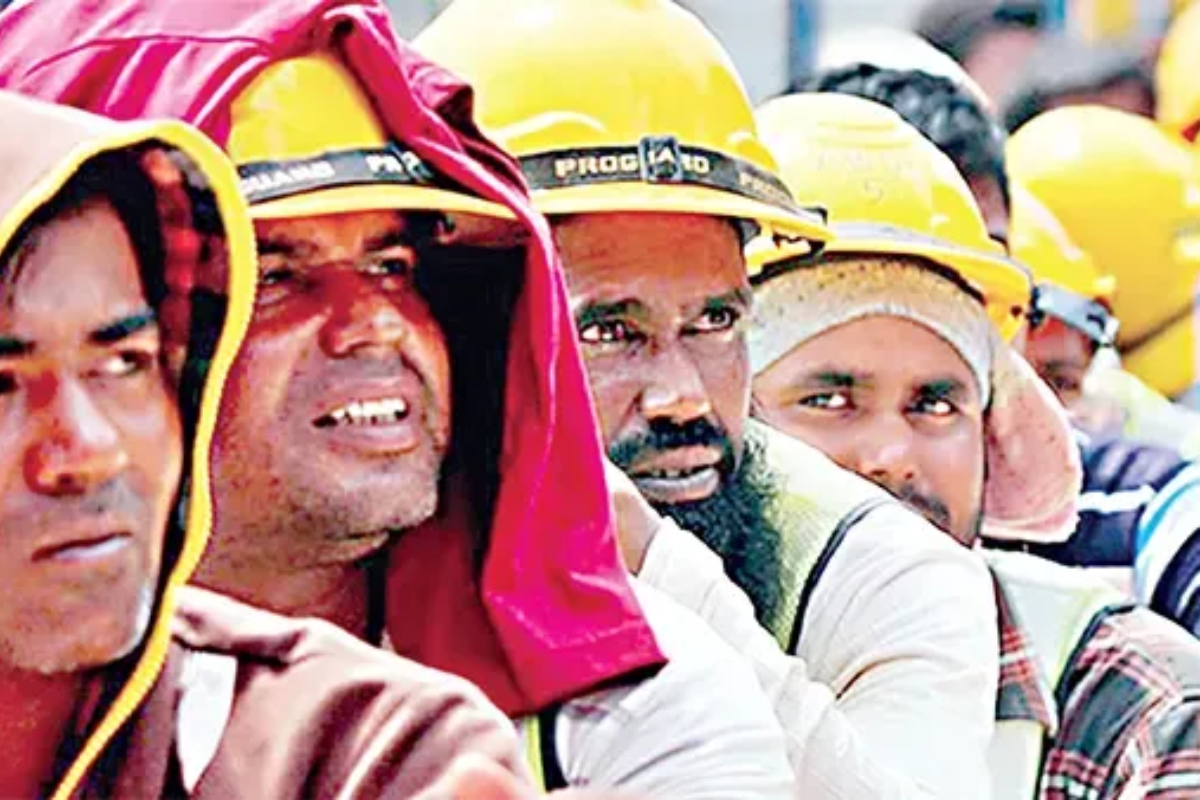
The escalating conflict in the Middle East, triggered by joint attacks from the United States and Israel on Iran, is sending shockwaves through the Gulf region’s economy and labour market, profoundly affecting Bangladeshi migrant workers. Temporary airspace closures, flight cancellations, and visa complications have effectively stalled the movement of Bangladeshi workers to the region. Reports indicate that two Bangladeshi workers have been killed in the UAE and Bahrain, while seven others have been injured. Families of migrant workers are increasingly anxious over safety and income security.
According to government data, around 4.5 million Bangladeshi workers are employed across the six Gulf Cooperation Council (GCC) countries—Saudi Arabia, UAE, Qatar, Kuwait, Bahrain, and Oman. Approximately 45% of Bangladesh’s total remittances originate from this region, making the continuity of the labour market critical to the country’s economy.
Flight disruptions have been severe. Over five days up to 4 March, 173 flights from Dhaka and Chattogram were cancelled, leaving many workers stranded abroad or unable to travel to the Gulf.
| Date | Cancelled Flights | Example Airlines |
|---|---|---|
| 28 Feb | 23 | Emirates, Qatar Airways, Air Arabia |
| 1 Mar | 40 | Biman Bangladesh, US-Bangla |
| 2 Mar | 46 | Jazeera Airways, Kuwait Airways |
| 3 Mar | 39 | Air Arabia, Emirates |
| 4 Mar | 25 | Qatar Airways, US-Bangla |
Proactive measures are underway: Qatar has extended entry visa validity by one month, and other countries are considering similar actions. Flight re-scheduling and refunds are being facilitated for affected passengers.
The distribution of Bangladeshi workers and remittance inflows across GCC countries is as follows:
| Country | Migrant Workers | Remittance (Q1, 2025-26, Crore BDT) |
|---|---|---|
| Saudi Arabia | 2,000,000 | 156 |
| UAE | 1,000,000 | 92 |
| Oman | 700,000 | 48 |
| Qatar | 450,000 | 25 |
| Bahrain | 150,000 | 13 |
| Kuwait | 140,000 | 10 |
Bangladesh Bank data shows that in Q1 of FY 2025-26, 45.4% of total remittances came from GCC countries, amounting to 344 crore BDT of the total 759 crore BDT received. The conflict occurring during Ramadan—the peak remittance season—raises concerns of substantial shortfalls in migrant income and household budgets.
Energy imports may also face disruption. Significant portions of Bangladesh’s LNG come from Qatar and Oman via the Strait of Hormuz, currently blocked, potentially affecting electricity production, industry, and fertiliser plants.
Analysts warn that while Bangladesh is not directly involved in the conflict, economic shocks are inevitable. Ensuring worker safety, preparing emergency repatriation plans, and securing alternative energy sources are urgent priorities. The government has established a special cell to address visa and flight-related issues. The Prime Minister, Sheikh Tarek Rahman, is reportedly overseeing the situation, coordinating with relevant ministries to mitigate the crisis.



Comments