Sunday, 5th April 2026

Khabor Wala Desk
Published: 15th February 2026, 12:51 PM
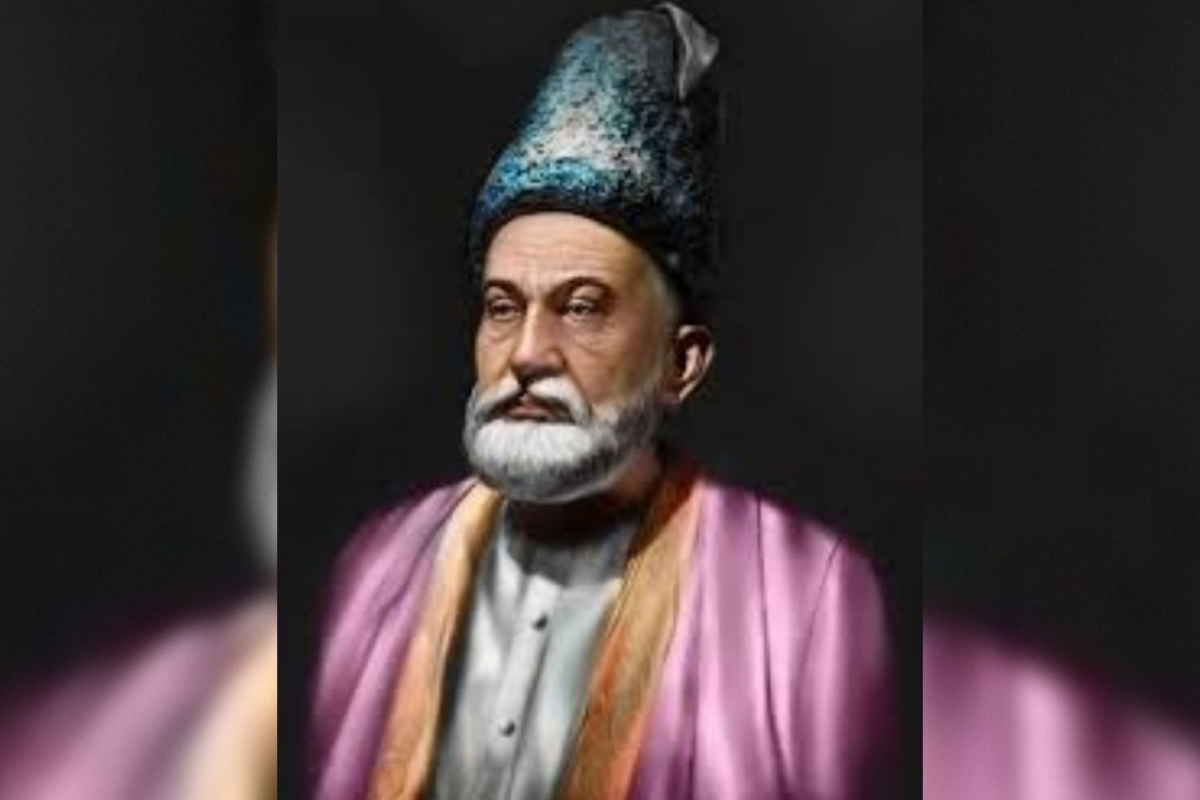
“If ever I come to your memory, call out to me,
I am not the past that cannot return.”
These words echo the enduring spirit of Mirza Ghalib, the towering figure of ghazal poetry whose influence continues to illuminate Urdu and Persian literature. His work transcends mere romantic expression, delving into philosophical reflection, self-examination, historical consciousness, and the subtle agony of human existence.
Born Mirza Asadullah Khan Ghalib on 27 December 1797 in Agra, then part of the Mughal Empire, Ghalib experienced the loss of his father at a young age. Early marriage brought him personal responsibilities, yet much of his life was marked by financial uncertainty and private sorrow.
| Aspect | Details |
|---|---|
| Full Name | Mirza Asadullah Khan Ghalib |
| Birth | 27 December 1797, Agra, Mughal Empire |
| Parents | Father passed away in early childhood |
| Marital Status | Married young |
| Languages | Urdu and Persian |
| Death | 15 February 1869, Delhi |
| Burial Site | Near Nizamuddin Auliya’s shrine, Delhi |
Ghalib lived through the twilight of the Mughal Empire, witnessing its gradual decline and the expansion of British colonial power in the Indian subcontinent. The 1857 Sepoy Rebellion, which marked the end of Mughal rule, unfolded during his lifetime, and he captured the societal and political tremors of this turbulent era in his letters and prose. Today, his correspondence is celebrated as a priceless treasure of Urdu literature.
Ghalib’s ghazals explore more than romantic longing. They probe existential questions, divine providence, identity, and the human soul’s inner conflicts. His language is ornate yet layered with profound meaning. One of his famous couplets illustrates this depth:
“Thousands of desires, each worth dying for,
Many have been realised, yet still too few.”
Though a master of Persian and primarily considered a Persian poet during his life, history has enshrined him as one of Urdu’s greatest literary figures. His command over both languages allowed him to express universal themes with extraordinary elegance and subtlety.
Ghalib never held a permanent job, often relying on royal patronage, friends, or loans. His life was a blend of material hardship and personal grief. Despite this, he remained confident that future generations would recognise his genius—a belief vindicated long after his death.
On 15 February 1869, Ghalib passed away in Delhi. He was interred near the Nizamuddin Auliya shrine, which today remains a site of pilgrimage for literature lovers worldwide. His poetry, brimming with emotional depth and intellectual rigor, continues to inspire readers and writers, ensuring that Ghalib’s legacy as the immortal source of the ghazal endures.




Comments