Sunday, 5th April 2026

Khabor Wala Desk
Published: 5th February 2026, 10:23 AM
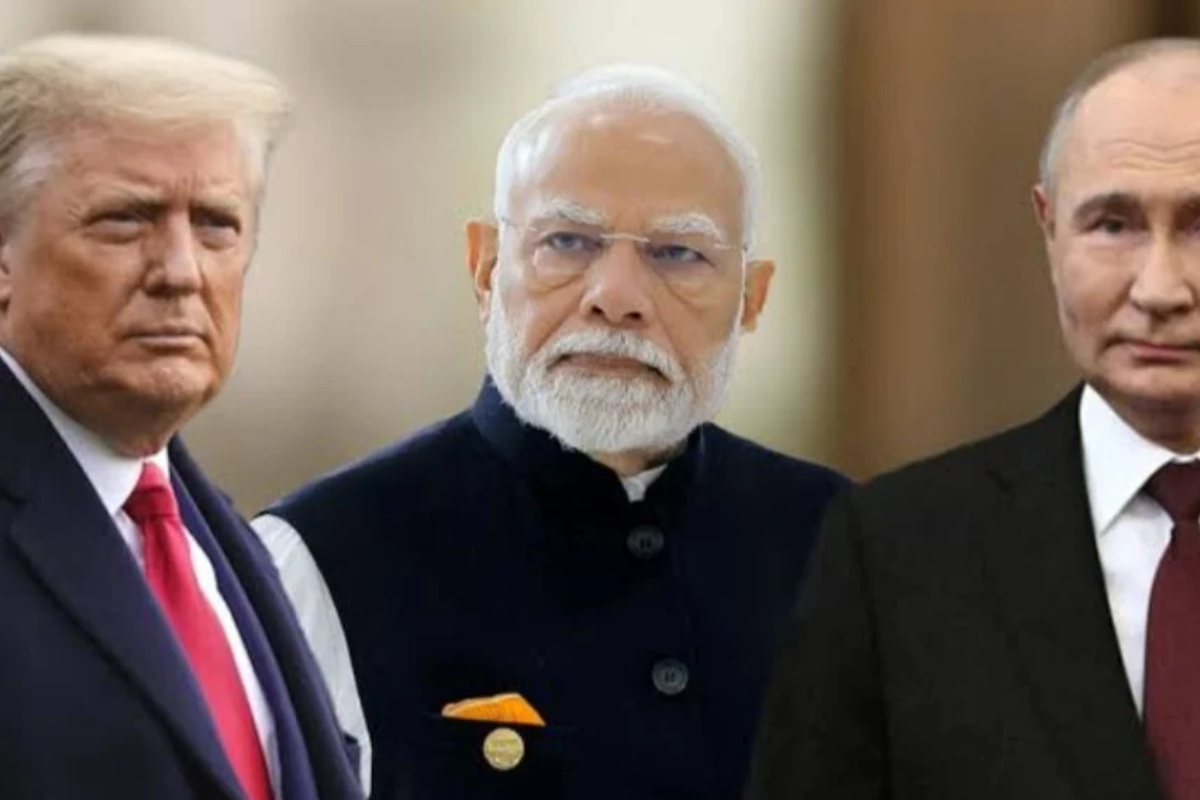
The Indian government under Prime Minister Narendra Modi is facing mounting diplomatic and economic pressures, caught between the unrelenting demands of US President Donald Trump and the steadfast stance of Russian President Vladimir Putin. This delicate balancing act has left Delhi navigating a complex and high-stakes geopolitical dilemma.
Recently, the issue of crude oil imports has taken centre stage. India has long pursued a policy of energy diversification, sourcing oil from multiple countries to safeguard national interests. Yet, Trump has publicly asserted that as part of a trade deal between Washington and New Delhi, India has agreed to halt oil imports from Russia, potentially turning to the US and Venezuela instead. Moscow, however, has firmly rejected this claim.
Kremlin spokesperson Dmitry Peskov clarified that India is not reliant on Russia as its sole crude supplier and routinely purchases oil from various sources. He emphasised that Moscow has received no formal communication from New Delhi regarding a complete cessation of Russian oil imports. “There is nothing new here,” Peskov stated, noting that India’s occasional adjustment of supply sources is consistent with its longstanding energy strategy.
Despite Western sanctions against Russia following the Ukraine conflict, India has continued to import substantial volumes of discounted crude from Moscow over the past few years. Current estimates indicate that India imports roughly 1.5 million barrels of Russian crude daily, accounting for over one-third of its total oil imports. Even in the face of a 25 per cent tariff imposed by the Trump administration on certain Indian goods, Delhi has remained committed to maintaining Russian energy imports.
Maria Zakharova, spokesperson for the Russian Ministry of Foreign Affairs, described the bilateral hydrocarbon trade as mutually beneficial, highlighting that ongoing energy cooperation contributes to stability in international markets. “Russia is prepared to maintain close energy collaboration with India,” she added.
Technical constraints also complicate any abrupt shift away from Russian crude. Russian Urals crude is heavier and higher in sulphur content compared with lighter US grades. India’s refineries have been optimised over decades to process such heavier crude efficiently. Switching to American crude would require significant infrastructural adjustments, making such a transition costly and operationally challenging.
The table below summarises India’s crude oil imports by primary source and characteristics:
| Source Country/Region | Approx. Share of Imports | Crude Type | Strategic Advantage for India |
|---|---|---|---|
| Russia | 30–35% | Heavy, sulphur-rich (Urals) | Discounted rates; refinery compatibility |
| Middle East (Iraq, Saudi Arabia) | 40–45% | Medium to heavy | Geographic proximity; supply stability |
| United States | 5–10% | Light crude | Diversification; diplomatic balance |
| Other sources | 10–15% | Mixed | Risk mitigation; flexibility |
In essence, Modi’s administration is grappling with a geopolitical tightrope. While deepening economic ties with the US remains crucial, maintaining energy and strategic cooperation with Russia is equally imperative. Delhi’s path forward will likely involve gradually increasing supply diversity while avoiding abrupt disruption of existing partnerships, thereby preserving both economic stability and strategic autonomy.



Comments