Sunday, 5th April 2026

Khabor Wala Desk
Published: 2nd March 2026, 9:21 AM
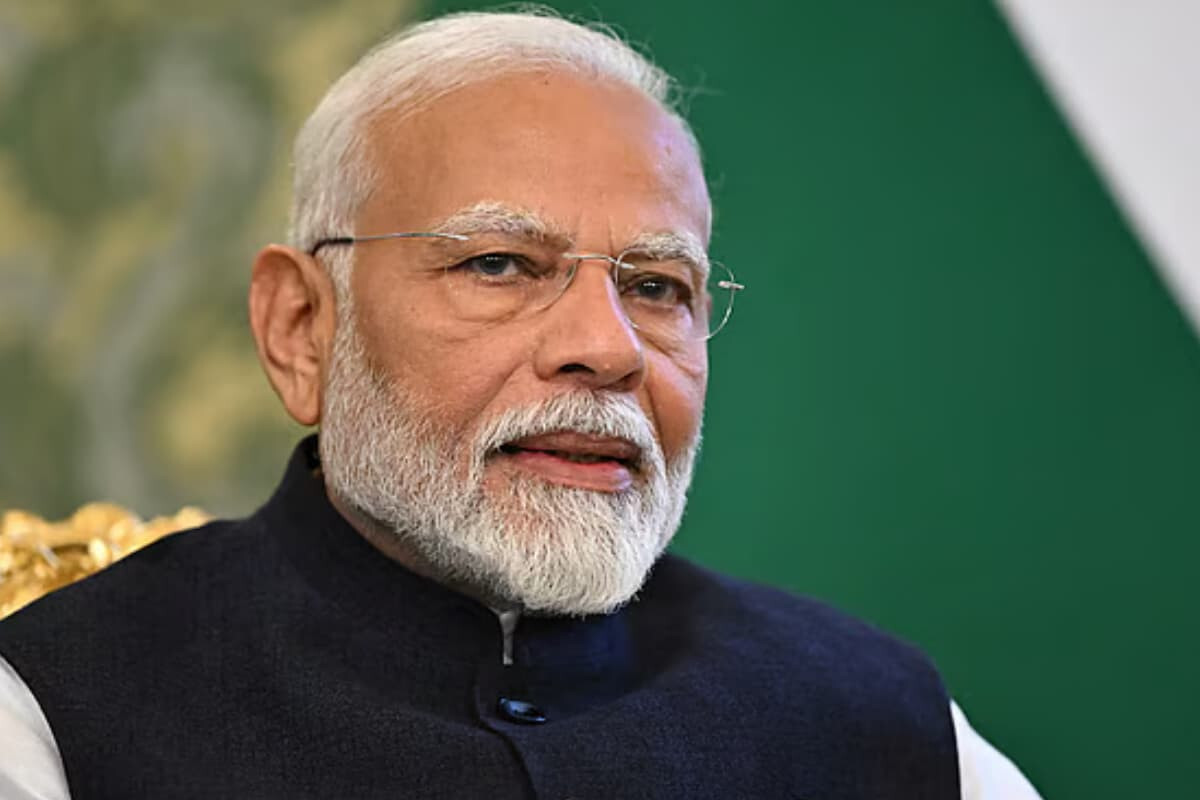
The recent escalation of tensions in Iran, coupled with the United States and Israel’s military actions, has placed India in a diplomatically delicate position, intensifying scrutiny of Prime Minister Narendra Modi’s apparent silence. Following the death of Iran’s Supreme Leader Ayatollah Ali Khamenei, neither the Prime Minister nor any official representative of the Indian government has publicly expressed condolences, drawing criticism from opposition parties and sections of the public.
Questions have emerged as to whether Modi’s restraint is influenced by India’s strategic ties with the United States and Israel. Three days after the attacks in Iran, during a joint press briefing with Canadian Prime Minister Mark Carney on Monday, Modi limited his remarks to:
“The situation in West Asia is of serious concern to India. We hope all conflicts are resolved through dialogue and diplomacy.”
Beyond this statement, he offered no further commentary.
Modi’s recent visit to Israel has also attracted criticism. Addressing the Israeli Parliament amid pre-election tensions and opposition walkouts, questions have arisen over whether knowledge of imminent attacks in Iran influenced Modi’s muted response. Balancing domestic political pressures with the intricacies of international diplomacy has evidently posed a considerable challenge for the Indian government.
Opposition leaders have been vocal. Congress spokesperson Jairam Ramesh stated on social media that the United States and Israel could strike Iran at any time, yet Modi proceeded with his Israel visit. Priyanka Gandhi condemned the targeted killings, calling them morally reprehensible and inconsistent with India’s ethical stance. Similarly, the Aam Aadmi Party has raised concerns regarding Modi’s silence and the safety of Indian citizens.
According to sources within the Ministry of External Affairs:
“This is a highly delicate balancing act. India cannot openly support any side. Careful, cautious diplomacy is the only viable approach.”
Following Khamenei’s death, mourning processions and protests were reported across several Indian states. In left-leaning regions such as Kerala, Karnataka, Telangana, and parts of Kashmir, schools and colleges were closed, and internet access was restricted to maintain peace. Large gatherings were also observed in Madhya Pradesh, Uttar Pradesh, and Punjab.
The following table summarises the situation across major states:
| State | City/Region | Situation & Processions | Administrative Measures |
|---|---|---|---|
| Kerala | Thiruvananthapuram | Mourning procession led by leftist groups | Police supervision |
| Karnataka | Bengaluru | Mourning assemblies | Monitoring to maintain peace |
| Telangana | Hyderabad | Processions and gatherings | Heightened security |
| Kashmir | Shia areas | Street mourning, two-day closure | Internet restrictions, school closures |
| Madhya Pradesh | Bhopal | Large mourning gatherings | Administrative oversight |
| Uttar Pradesh | Lucknow | High turnout at assemblies | Peacekeeping supervision |
| Punjab | Ludhiana | Large-scale mourning gatherings | Police supervision |
The unfolding developments underscore the highly sensitive nature of India’s position in West Asian geopolitics. With the United States and Israel on one side and Iran and Arab states on the other, India’s challenge is to navigate a path that safeguards its strategic interests while maintaining ethical and diplomatic credibility on the global stage.



Comments