Sunday, 5th April 2026

Khabor Wala Desk
Published: 1st October 2025, 6:34 AM
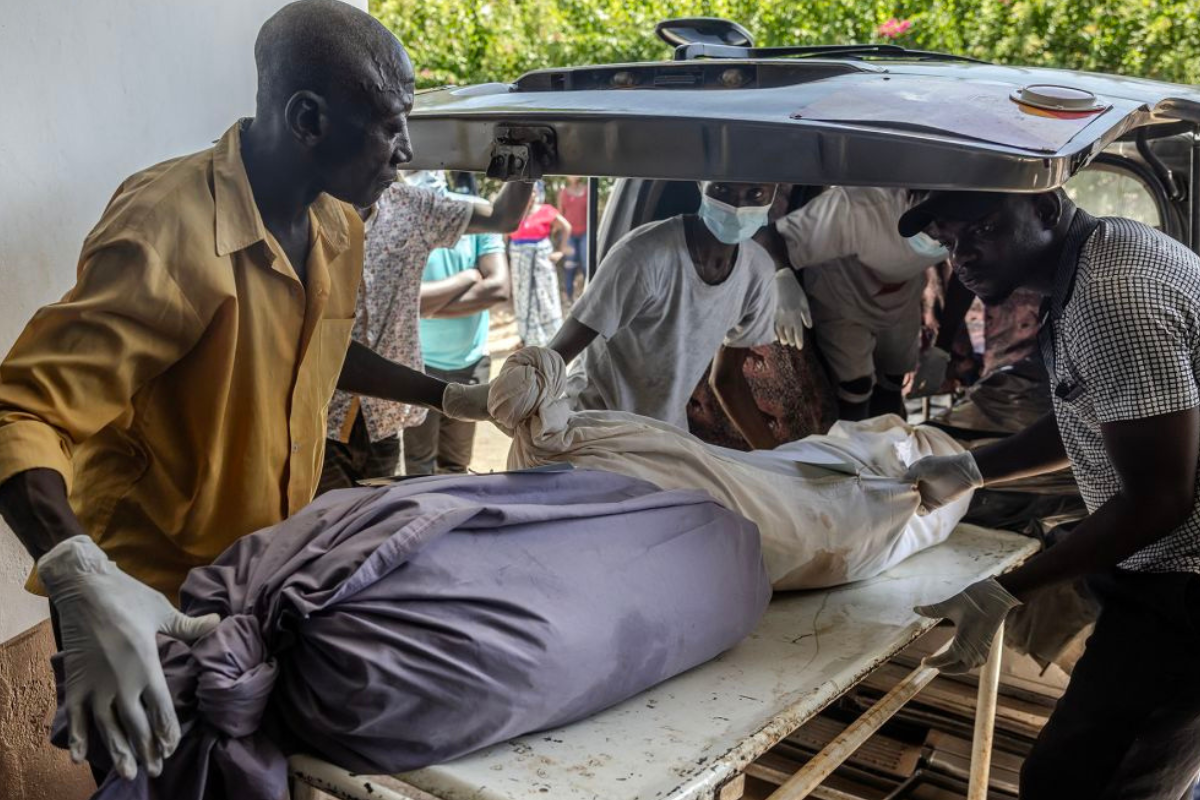
The discovery of body parts and skeletons scattered around a remote village in coastal Kenya has raised fears that a doomsday starvation cult, responsible for hundreds of deaths, has survived despite a major police crackdown.
Two years ago, investigations into the Shakahola Forest Massacre uncovered one of the world’s deadliest cults operating just inland from Kenya’s scenic beaches. Almost 450 bodies were recovered from mass graves – most starved to death, while some, including children, were strangled, beaten, or suffocated.
The alleged leader, Paul Mackenzie, a former taxi driver and self-proclaimed pastor, is accused of inciting followers to starve themselves to “meet Jesus” and using enforcers to ensure no one left the forest alive.
While Mackenzie and dozens of followers were arrested, authorities believed the threat had ended.
However, in July this year, police began uncovering further bodies in Binzaro, a village just 30 kilometres (20 miles) from Shakahola.
| Location | Findings | Condition | Notes |
| Binzaro, coastal Kenya | 34 bodies, 102 body parts | Various stages of decay | Burials under trees, covered with leaves and thorns |
| Shakahola Forest | Almost 450 bodies | Mass graves | Most starved; some strangled or beaten |
Binzaro is a small hamlet of 140 households with a single shop, lacking running water and rarely visited. Police discovered bodies near mud-walled houses surrounded by yellow tape, with abandoned clothes and makeshift baby furniture nearby.
Victor Kaudo, head of the Malindi Community Human Rights Centre and one of the first responders, said: “There are so many, so many graves.”
Police were alerted after a man in protective custody escaped and called his family, revealing that some of his children had died.
Authorities suspect the cult continued even as Mackenzie faced trial in Mombasa, where he has pleaded not guilty to multiple counts of manslaughter.
Police have arrested 11 people at Binzaro, at least four of whom were part of Mackenzie’s Shakahola community and had children who died there. Kaudo believes more bodies may yet be discovered, but police halted digging because “the morgue is now full.”
Unlike Shakahola’s deep mass graves, Binzaro burials were shallow, under trees, and hidden with leaves and thorns, making access difficult but leaving remains exposed to hyenas, scattering bones.
Investigators believe the deaths began in 2023, coinciding with disruption to the Shakahola cult.
“These people were already continuing… but the government never listened,” Kaudo said.
The alleged leader of the Binzaro group, Sharleen Temba Anido, appeared emotionless in court last week, accompanied by three co-suspects in Malindi.
Investigators allege that Anido operated a base in Malindi, from which followers were transported by motorbike to Binzaro at night.
“They were coming in small groups; whoever went in did not come out,” said Robert Kiinge, a Directorate of Criminal Investigations officer.
The four suspects face charges of murder, radicalisation, and organised crime.
An anonymous officer confirmed that Anido was part of the Shakahola cult, describing adherents as “brainwashed”. Court documents indicate that Anido’s husband, a man with extreme religious beliefs, is believed dead.
Authorities warn that a large network of radicalised followers likely remains, and some are suspected to still be communicating.
A lawyer familiar with the Shakahola case noted that the Binzaro cult adapted tactics in response to Shakahola arrests, including new burial techniques.
Local residents report little knowledge of the cult but suggest that such groups are attracted to the area because of unoccupied land, often sold by unscrupulous dealers.
“We had this thing at Shakahola One, and then we had Shakahola Two. We will have Shakahola Three, we are fearing,” said a resident identified only as Simon, 32.
Kaudo highlighted the political challenges in addressing radical religious groups: “Politicians are reluctant to impose tougher regulations on religions that play an influential role in Kenyan politics. They’re thinking… the majority of Kenyans are Christians; if we regulate the church, who is going to vote for us?”
Without a proper de-radicalisation programme, Kaudo warns the cycle of death will continue: “It can never stop. It won’t stop.”



Comments