Sunday, 5th April 2026

Khabor Wala Desk
Published: 3rd December 2025, 11:30 AM
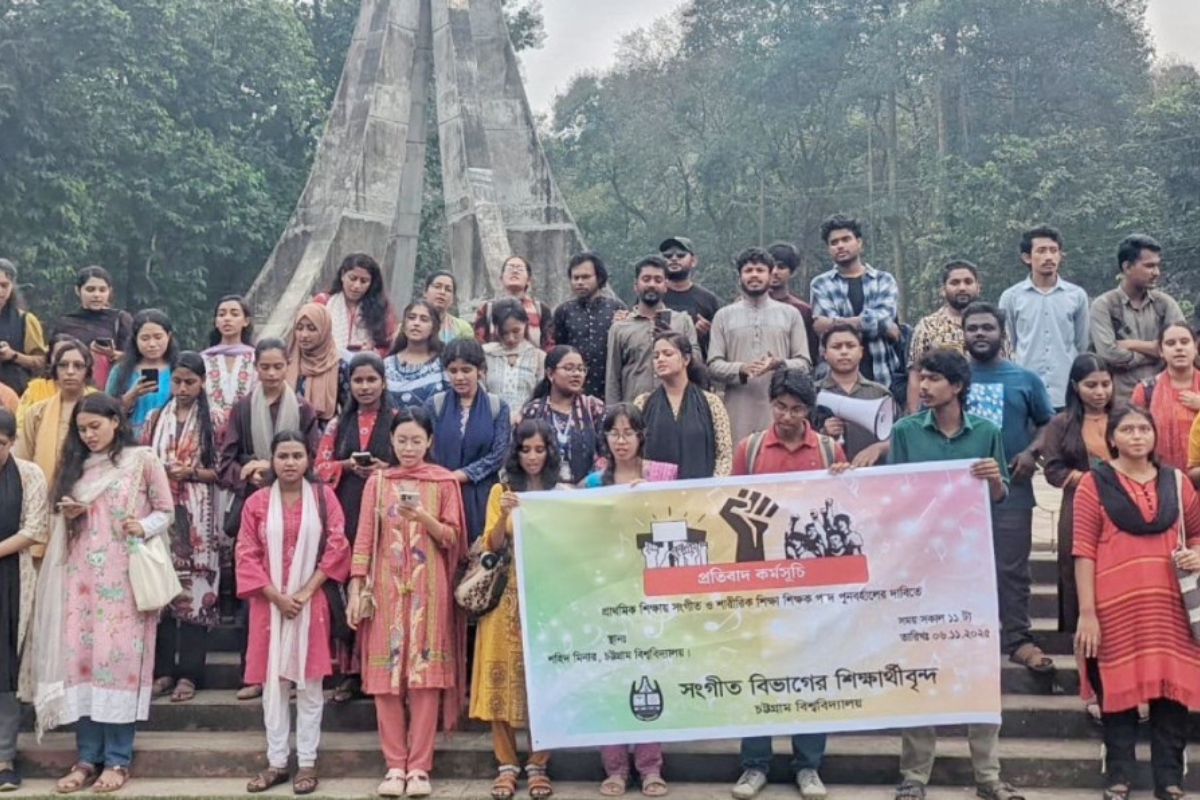
The interim government’s recent decision to suspend the recruitment of music and physical education teachers in Bangladesh’s government primary schools has raised significant concern. Such a move could severely impact the quality of education and students’ creative development. While the country is undergoing administrative reforms, it is essential to uphold democratic values and prioritise the best interests of ordinary citizens in all decisions.
Music and physical education are fundamental to the school curriculum. They promote discipline, creativity, and cultural awareness, while also supporting mental health. Many students today face anxiety and psychological stress; music and sports provide essential outlets to relieve this pressure, encourage self-expression, and improve focus and emotional resilience.
In many Muslim-majority countries, music education is compulsory. For example, in Kuwait, all school students attend a weekly music class. In 1958, the Music Education Supervisor Office was established to formalise music education within the curriculum. Turkey similarly mandates music in primary schools and revised its curriculum in 2007, incorporating modern teaching methods to enhance student creativity. Malaysia includes music in its national curriculum as part of a holistic educational approach, encouraging students’ intellectual, physical, and creative development.
The standard of education in Bangladesh’s public schools is already concerning. Removing subjects that develop creativity and critical thinking would increase reliance on rote memorisation and further deteriorate quality. Additionally, this decision risks widening social inequality. Children from lower-middle-class families, who rely on public education, would have fewer opportunities compared to those from wealthier backgrounds.
Music and sports are integral to Bangladeshi culture. Folk songs, the works of Nazrul and Rabindranath, and national sporting achievements form a critical part of the country’s identity. Participation in sports teaches leadership, teamwork, and physical skills. Reducing opportunities for music and physical education in schools will hinder the discovery of talented artists and athletes in the future.
While reform is necessary, it should not involve removing long-established subjects that have benefited generations. Curriculum modernisation, teacher training and pay improvements, and funding for extracurricular activities are the correct path to improving education. Eliminating existing subjects is not progress.
| Country | Characteristics | Policy/Year |
|---|---|---|
| Kuwait | Weekly compulsory classes | Supervisor Office established 1958 |
| Turkey | Mandatory in primary schools | Modernised curriculum 2007 |
| Malaysia | Integrated into national curriculum | KSSR framework |
KhaborwalaASN



Comments