Sunday, 5th April 2026

Khabor Wala Desk
Published: 1st December 2025, 9:17 PM
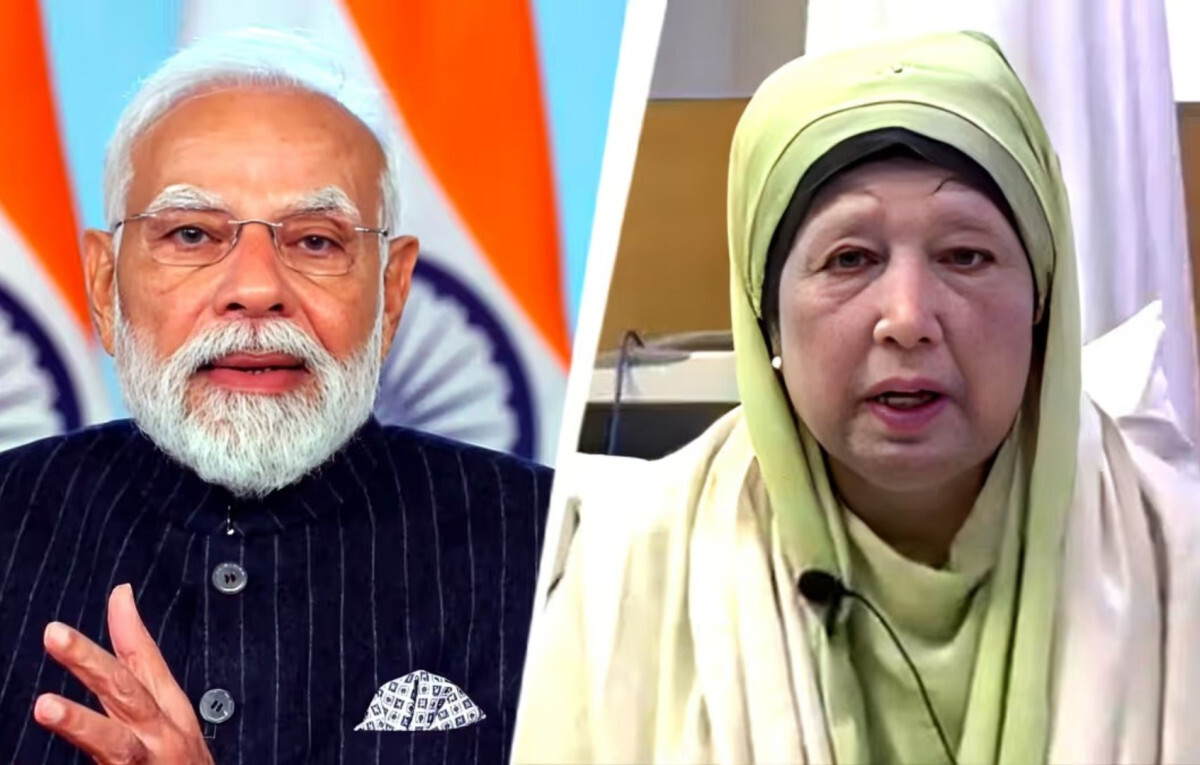
India’s Prime Minister, Narendra Modi, has expressed deep concern over the health of Bangladesh’s former Prime Minister and BNP Chairperson, Begum Khaleda Zia. The announcement came following reports of her deteriorating condition, which have raised alarm both within Bangladesh and internationally.
On Monday, 1 December, at 9:56 pm, Modi took to his official X (formerly Twitter) account to convey his message. In his statement, he emphasised that he was “deeply concerned” upon learning of Khaleda Zia’s health situation, acknowledging her long-standing contributions to Bangladesh’s political landscape. He also extended his “heartfelt prayers and best wishes for her speedy recovery” and reaffirmed that India is ready to provide all possible assistance if required.
Khaleda Zia is currently receiving medical treatment at Evercare Hospital in Dhaka. Multiple sources have confirmed that her condition has worsened over the past few weeks, leading to her placement on life support. The news has sparked widespread concern among political circles and the general public in Bangladesh, particularly among BNP members and supporters.
Analysts note that Prime Minister Modi’s public expression of concern carries significant diplomatic weight. It reflects not only humanitarian empathy but also a continued interest in maintaining stable bilateral relations between India and Bangladesh. Observers suggest that such gestures can help reassure both domestic and international audiences that India remains attentive to Bangladesh’s political and social developments.
While the immediate focus is on Khaleda Zia’s health, the implications extend beyond the personal sphere. India’s willingness to offer support sends a subtle yet important message about the enduring significance of diplomatic goodwill, especially during sensitive political times. Political analysts in Dhaka have interpreted Modi’s statement as a reaffirmation of India’s commitment to regional stability and cooperation.
In addition, the public nature of Modi’s message serves to highlight the importance of international humanitarian concern and solidarity in times of medical crisis. Bangladesh’s political and social stability is closely linked to the wellbeing of its key political figures, making this message particularly significant.
Ultimately, Modi’s announcement exemplifies a blend of diplomacy, humanitarian concern, and political prudence. By acknowledging Khaleda Zia’s contributions and offering support, India reinforces a narrative of constructive engagement and mutual respect, strengthening ties with Bangladesh while providing reassurance to concerned citizens and political stakeholders alike.

Comments