Sunday, 5th April 2026

Khabor Wala Desk
Published: 24th February 2026, 8:41 AM
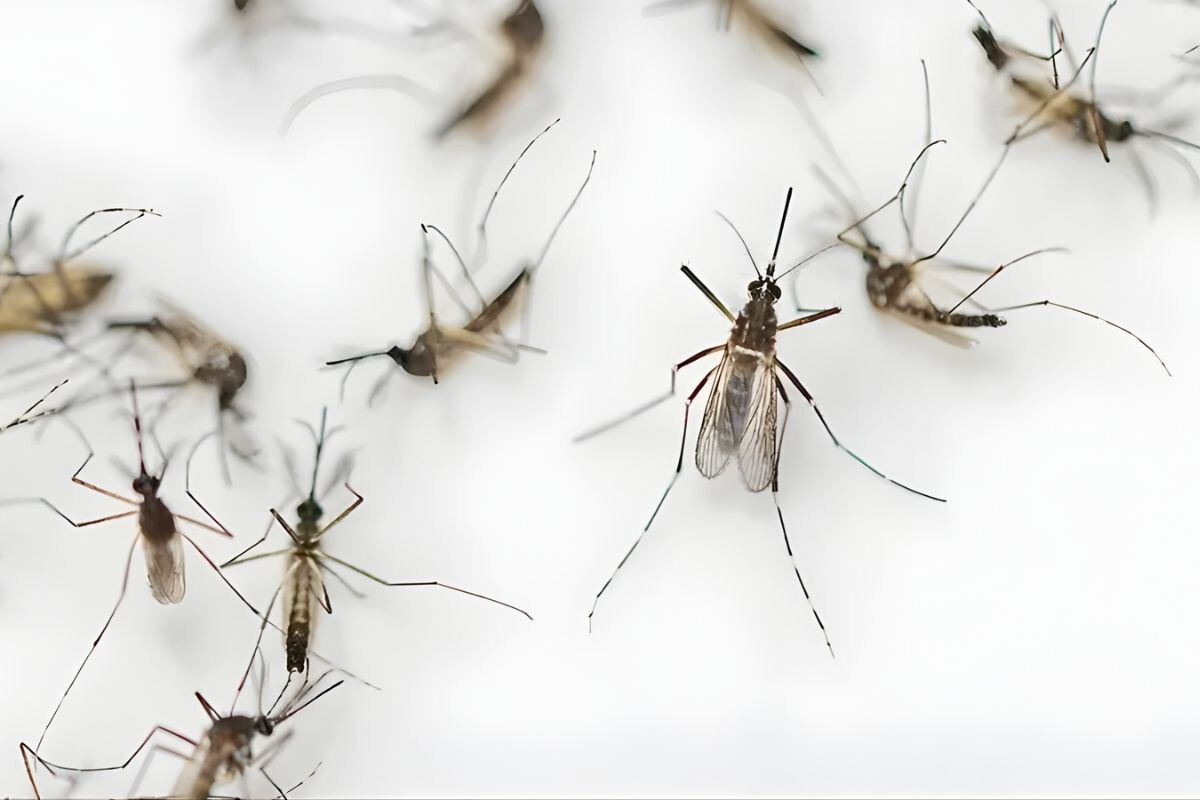
Across Bangladesh, citizens are grappling with an unprecedented surge in mosquito infestations, disrupting daily life and raising public health concerns. From urban centres to rural villages, the tiny insects have become a formidable nuisance.
In Tejgaon, Dhaka, Bilal Hossain runs a small tea stall inside the local truck stand. Despite lighting two mosquito coils, he is unable to work in peace. “The swarms settle on me no matter what. I constantly worry about the bites,” he lamented, his voice heavy with frustration. Similarly, Badal Sutradhar, a resident of Rokeya Sarani near Pirerbagh Road, said, “I have never seen so many mosquitoes. They bite and cause unbearable itching. Even using coils at home feels unsafe.”
The crisis extends far beyond Dhaka. Across multiple city corporations, municipalities, and rural areas, mosquito infestations are widespread. Recently, a concerned lawyer issued a legal notice to both the Secretary of the Ministry of Local Government, Rural Development and Cooperatives and the Chief Executive Officer of Dhaka North City Corporation (DNCC) after a month of inaction by authorities. Spraying exercises, when conducted, are often minimal and their efficacy remains doubtful.
Dhaka South City Corporation (DSCC) Chief Waste Management Officer Air Commodore Md. Mahbubur Rahman Talukdar explained the steps taken to verify insecticide effectiveness. “We conducted extensive spraying in Shahjahanpur, Basabo, and Khilgaon. Samples were collected before and after operations and sent to the Institute of Epidemiology, Disease Control and Research (IEDCR) for analysis,” he said.
Experts, however, blame administrative lapses for the mosquito explosion. Dr. Kabirul Bashar, Professor of Zoology at Jahangirnagar University, noted, “A prolonged dry spell has slowed drainage, creating stagnant, decaying water. Warmer temperatures further favour mosquito breeding. Proper vector control measures were not executed, allowing populations to surge.”
Across other major cities, the situation is similarly dire. In Chittagong, over the past 16 months, 48 fatalities and more than 10,000 infections from dengue and chikungunya have been reported. Despite budget allocations for vector control, citizens observe little on-the-ground action. A recent IEDCR study showed mosquito larval density in Chittagong skyrocketing from 36% in 2024 to 75.29% in 2025 — nearly four times the WHO-recommended limit of 20%.
In Rajshahi, 1,720 dengue cases were reported in 14 months, including 21 deaths. In Khulna, dengue cases in 54 days reached 45, exacerbated by delays in insecticide procurement. Sylhet and Rangpur are also struggling with limited personnel and insufficient chemical supplies. Mymensingh, Bogura, and Comilla report similar gaps, where allocated budgets are not translating into effective mosquito control measures.
| City | Dengue Cases | Chikungunya Cases | Deaths | Larval Density (%) |
|---|---|---|---|---|
| Chittagong | 6,338 | 3,683 | 48 | 75.29 |
| Rajshahi | 1,720 | N/A | 21 | N/A |
| Khulna | 45 | N/A | 0 | N/A |
| Sylhet | N/A | N/A | 0 | Detected Aedes |
| Rangpur | N/A | N/A | 0 | N/A |
| Dhaka | N/A | N/A | N/A | N/A |
Experts warn that without immediate, coordinated vector control, the risk of mosquito-borne diseases will escalate further. Citizens continue to demand visible action from city authorities to curb the growing public health threat.

Comments