Sunday, 5th April 2026

Khabor Wala Desk
Published: 4th August 2025, 6:11 PM
Transparency International Bangladesh (TIB) has identified the emergence of the National Citizens’ Party (NCP) — born out of the anti-discrimination movement — as a significant event in the political history of Bangladesh. However, the organisation has expressed serious concerns over the party’s current trajectory.
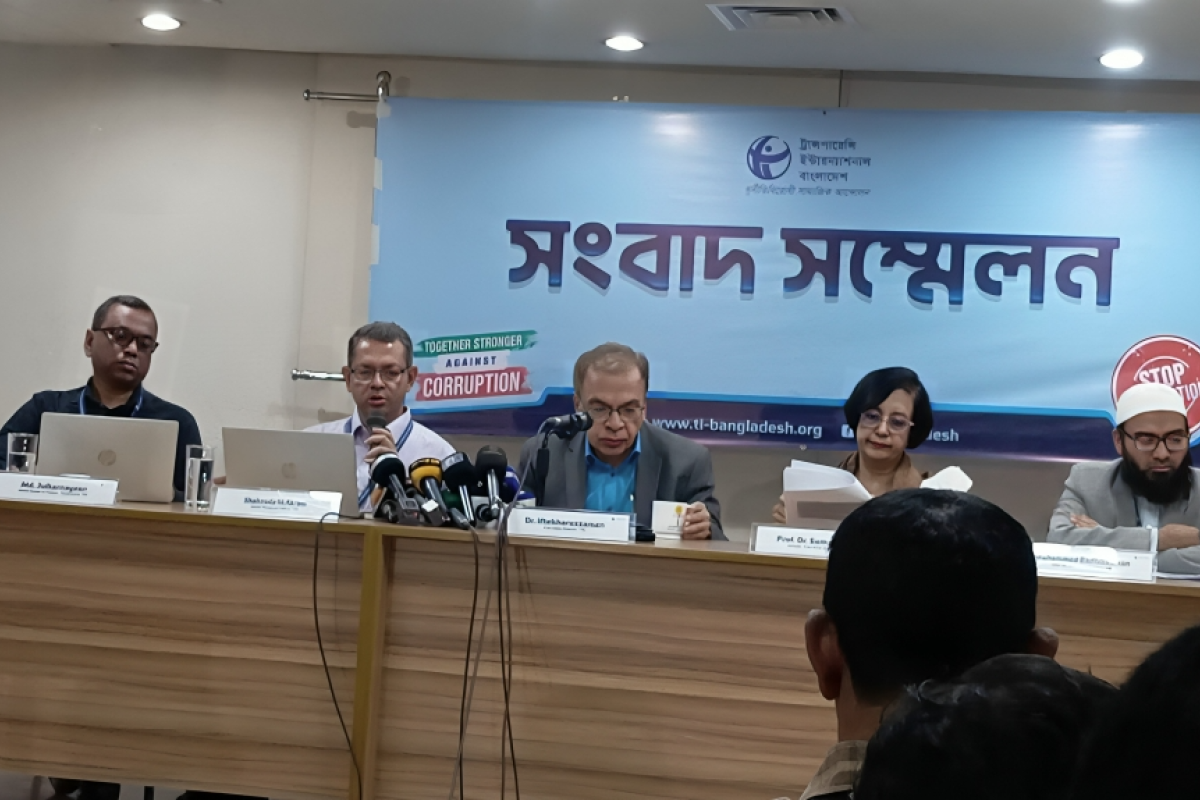
The remarks were made during the launch of a research report titled “New Bangladesh: Observation Over One Year Since the Fall of the Authoritarian Government”, held on Monday (4 August) at TIB’s conference room in the Midas Centre, Dhaka.
According to TIB:
“As part of the new political arrangement, the NCP was expected to develop as a political force committed to good governance, corruption-free leadership, and serving the people. However, in many respects, this remains questionable.”
The organisation further added:
“With an opaque source of funding, factionalism, turf wars, extortion, and entrenched culture of irregularities, the party is now accelerating towards a self-destructive path.”
During the research presentation, TIB research fellow Mohammad Zulkarnaine observed:
“There is a risk of reform and election disruption due to mutual distrust, suspicion, disputes, and a lack of tolerance between the government and political parties regarding election dates, reforms, and the tenure of the interim government.”
He added:
“Political parties hold rigid positions opposing any confrontation between election reforms and the prosecution of crimes against humanity. Within the anti-discrimination student movement, there exist divisions, ideological conflicts, and power struggles. Consequently, some factions have formed new political parties, such as the National Citizens’ Party (NCP).”
Zulkarnaine also pointed to the emergence of new political polarisation around the upcoming elections and the trend of dissolving old alliances and forming new coalitions.
“Following 5 August, numerous new political parties have applied for registration ahead of the elections. However, none of these parties have met the initial criteria set by the Election Commission,” he revealed.
The research highlighted particularly the failure of the NCP to meet registration requirements and described many of the applicant parties as nominal or ‘name-only’ entities.
The event was attended by TIB Executive Director Dr Iftakharuzzaman, research fellows Shahjada M Akram, Farhana Rahman, and other relevant officials.
| Aspect | Details |
| Research Report | New Bangladesh: Observation Over One Year Since Authoritarian Government’s Fall |
| Date of Event | Monday, 4 August 2024 |
| Venue | Transparency International Bangladesh, Midas Centre, Dhaka |
| Key Focus | Political party evolution, election reforms, distrust between government and parties, ideological divisions |
| NCP Status | Emerged from anti-discrimination movement; significant yet heading towards self-destructive path |
| Concerns Raised | Opaque funding, factionalism, extortion, inability to meet registration criteria |
| Political Climate | New polarisation, coalition reshuffles, election uncertainties |
| Election Commission Findings | None of the new applicant parties fulfilled registration conditions |
| Key Speakers | Mohammad Zulkarnaine (Research Fellow), Dr Iftakharuzzaman (Executive Director) |
| Attendees | TIB staff and research fellows |



Comments