Monday, 6th April 2026

Khabor Wala Desk
Published: 7th March 2026, 1:24 PM
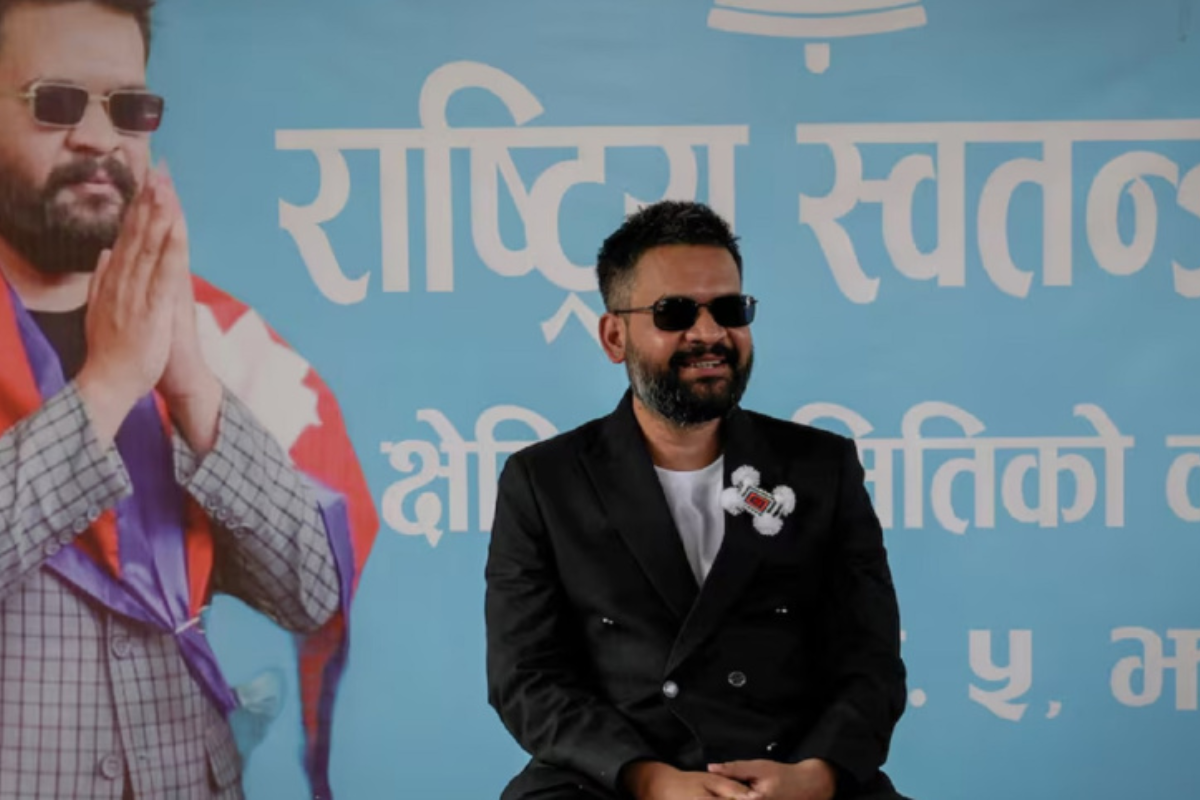
Nepal’s political landscape is witnessing a remarkable upheaval as rapper-turned-politician Balendra Shah surges ahead in the parliamentary elections. Preliminary results released by the Election Commission indicate that his centrist Rastriya Swatantra Party (RSP) is on course for a sweeping victory.
Following Saturday’s vote count, it became evident that the 35-year-old Shah has secured overwhelming support from the younger generation, reflecting the aspirations of voters seeking fresh leadership after last year’s student-led protests. According to the Election Commission, the RSP is on track to secure a two-thirds majority in the 275-seat House of Representatives, Nepal’s lower parliamentary chamber.
Election Commission spokesperson Narayan Prasad Bhattarai told AFP:
“The trend suggests that the Rastriya Swatantra Party is leading in many constituencies and has already won several seats.”
If the current trajectory continues, Shah, a former mayor of Kathmandu, could unseat veteran Marxist leader K.P. Sharma Oli and become Nepal’s next prime minister—a development described by analysts as one of the most dramatic shifts in recent Nepali politics.
As of Saturday morning, results from 24 of the 165 constituencies counted had been declared:
| Party | Seats Won | Notes |
|---|---|---|
| Rastriya Swatantra Party (RSP) | 18 | Leading in 99 additional constituencies |
| Nepali Congress | 5 | Largest party in previous coalition, new leader Gagan Thapa trailing |
| CPN-UML | 1 | Party of former PM K.P. Sharma Oli |
In addition, proportional representation votes for 110 seats show that Shah’s party has secured over half the votes, reinforcing the prospect of a decisive parliamentary majority. The Commission expects preliminary overall results by Monday, though full confirmation, including all proportional representation counts, may take up to a week. Authorities confirmed that the counting process is proceeding smoothly.
The political momentum behind Shah can be traced back to the mass protests of September last year, when Gen Z-led demonstrations against the social media ban quickly escalated into widespread anti-corruption and economic crisis protests. The unrest left at least 77 people dead and ultimately led to the fall of Oli’s government. Six months later, Nepal is poised to elect a new administration.
Shah’s supporters have already taken to the streets of Kathmandu in celebratory gatherings since Friday, signalling public anticipation of change. Analysts view his lead over 74-year-old Oli as a symbolic victory of youth over entrenched political leadership, while Nepali Congress’s new leader Gagan Thapa struggles in his own constituency.
This election marks a generational and political turning point in Nepal, demonstrating the electorate’s appetite for reform and the rise of unconventional leaders in the country’s parliamentary system.

Comments