Sunday, 5th April 2026

Khabor Wala Desk
Published: 9th December 2025, 3:55 AM
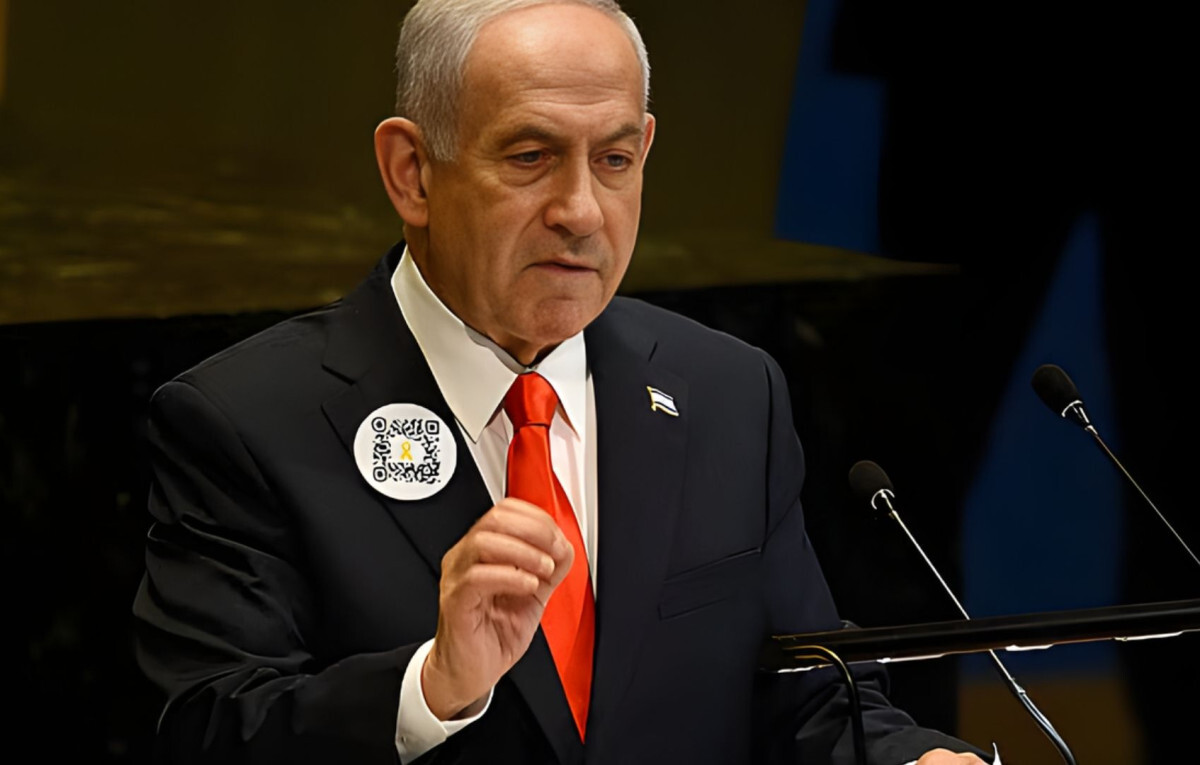
Israeli Prime Minister Benjamin Netanyahu has announced that the second phase of the United States–backed peace framework aimed at halting the ongoing Gaza conflict is expected to commence soon. However, despite this apparent progress, Netanyahu admitted that several critical issues at the heart of the framework remain far from resolved.
The peace plan, proposed by the current US administration, outlines a multi-stage approach intended to gradually wind down hostilities in Gaza while moving towards a political resolution. According to the stipulations of the second phase, Israel would be required to withdraw additional military forces from Gaza, paving the way for the creation of an interim governing authority. Alongside this, an international security force would be deployed to maintain stability and oversee the transition. In return, Hamas would be obliged to lay down its weapons and begin an extensive organisational restructuring process.
Addressing reporters, Netanyahu confirmed that he intends to hold “significant and detailed discussions” with President Trump later this month on how to operationalise the next phase. Israeli government spokespersons have since clarified that the meeting is scheduled for 29 December, marking a potentially decisive moment for the diplomatic track.
Following a meeting in Jerusalem with German Chancellor Friedrich Merz, Netanyahu reaffirmed Israel’s insistence on the complete dissolution of Hamas’s governing authority in Gaza. He reiterated that Hamas must not only surrender its weapons but must relinquish all capacity to operate as a military organisation. Speaking at a separate event, the Israeli leader expressed scepticism about the idea that an international force could effectively oversee Hamas’s disarmament. Netanyahu insisted that Israel would ultimately have to guarantee Hamas’s demilitarisation itself, describing this as a “non-negotiable security requirement”.
Meanwhile, senior Hamas official Basem Naim told the Associated Press that the group is willing to engage in discussions on the question of disarmament — a notable shift in tone from its earlier stance in which Hamas repeatedly asserted that it would not give up its weapons until a fully recognised Palestinian state was established.
Despite the theoretical ceasefire in place for the past two months, accusations of violating the terms of the truce continue to fly from both sides. According to Gaza’s Ministry of Health, more than 370 Palestinians have been killed in Israeli strikes since the ceasefire began, underscoring the fragility of the situation on the ground.
Israel, for its part, maintains control over more than half of Gaza’s territory. Humanitarian organisations report that although the volume of aid entering Gaza has increased in recent weeks, access remains inconsistent and unpredictable. Aid groups also highlight that Israeli restrictions and ongoing security concerns continue to hinder relief operations. Disagreements over the reopening of the Rafah border crossing have further exacerbated tensions, leaving humanitarian actors in a precarious operational environment.
As international pressure grows for a sustainable political settlement, the second phase of the peace plan could represent a critical opportunity. However, with major disagreements lingering — including demilitarisation, governance structures, and long-term security arrangements — the prospects for lasting peace remain uncertain. For now, Netanyahu’s cautious optimism signals progress, but not yet a breakthrough.



Comments