Sunday, 5th April 2026

Khabor Wala Desk
Published: 19th October 2025, 8:41 AM
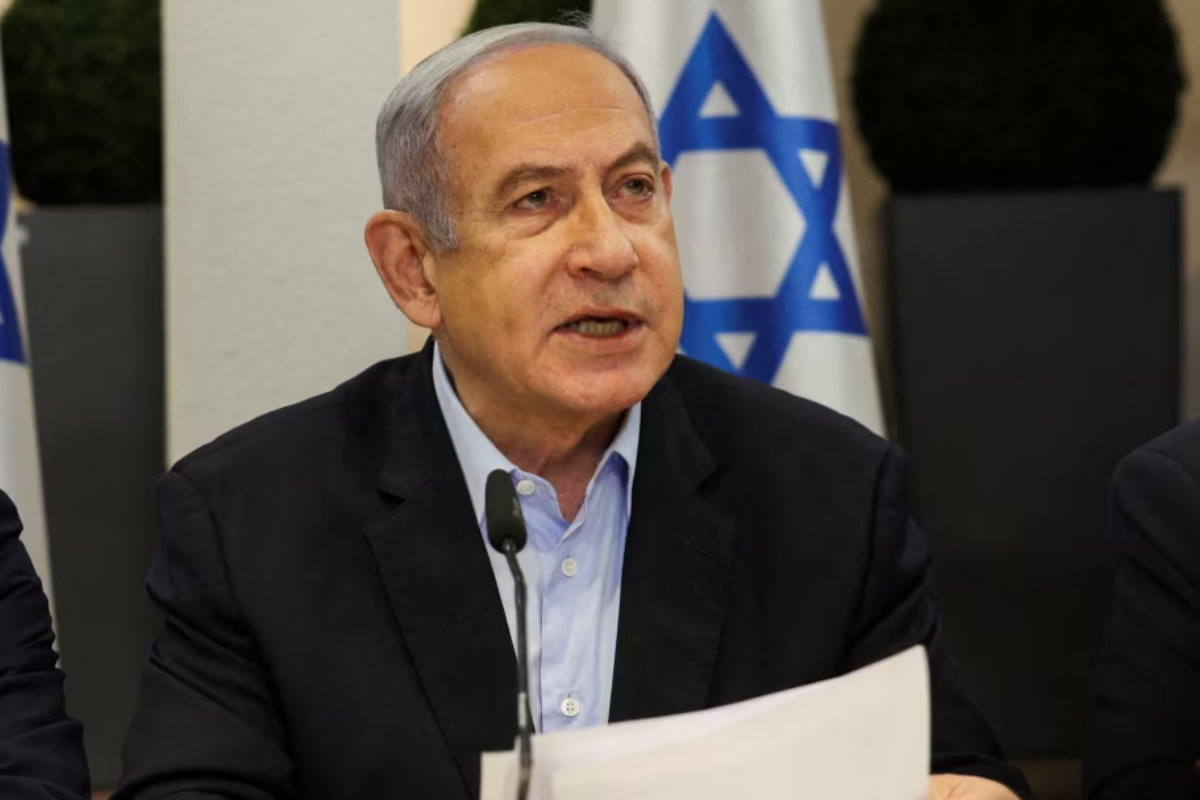
Israeli Prime Minister Benjamin Netanyahu declared on Saturday that the war in Gaza would not conclude until Hamas is fully disarmed and the Palestinian territory demilitarised. His comments came amid ongoing complications in implementing the ceasefire deal brokered by U.S. President Donald Trump, as disputes over hostages and the reopening of the Rafah crossing continue to stall progress.
Netanyahu, speaking on right-wing Israeli Channel 14, said:
“Phase B also involves the disarming of Hamas — or more precisely, the demilitarisation of the Gaza Strip, following the stripping of Hamas of its weapons. When that is successfully completed — hopefully in an easy way, but if not, in a hard way — then the war will end.”
Hamas’s armed faction, the Ezzedine Al-Qassam Brigades, announced that it would return the remains of two more hostages on Saturday night. The Israeli military confirmed that a Red Cross team was dispatched to receive “several bodies” shortly before 11:00 PM (2000 GMT).
The status of hostages’ bodies in Gaza has become a central sticking point in enforcing the first phase of the ceasefire, with Israel linking the reopening of the Rafah border crossing to the handover of remains.
| Item | Detail |
| Living Hostages Released by Hamas | 20 |
| Bodies Returned (Israeli + 1 Nepalese) | 10 |
| Palestinian Prisoners Released by Israel | ~2,000 |
| Palestinian Bodies Returned by Israel | 135 |
| Truce Came Into Effect | 10 October 2025 |
The most recent handover, on Friday night, included the body of Eliyahu Margalit, a 75-year-old Israeli killed in Hamas’s 7 October 2023 attack.
Hamas stated that recovering the remaining hostages’ bodies required technical assistance due to their being buried under rubble from Israeli airstrikes.
Despite mediation efforts, tensions persist over the Rafah crossing between Gaza and Egypt. Netanyahu linked its reopening to Hamas’s cooperation in returning the remaining bodies.
The Palestinian mission in Cairo had earlier announced that Rafah might reopen as early as Monday, but only for Gazans residing in Egypt wishing to return. Soon after, however, Netanyahu’s office issued a statement saying the crossing would remain closed “until further notice.”
“Its reopening will be considered based on how Hamas fulfils its part in returning the hostages and the bodies of the deceased, and in implementing the agreed-upon framework,” the Prime Minister’s Office said.
Further delays to the reopening threaten to hamper humanitarian efforts. Tom Fletcher, the UN Head of Humanitarian Relief, visited northern Gaza on Saturday and described the devastation as “absolutely overwhelming.”
“I drove through here seven to eight months ago when most of these buildings were still standing. Now, it’s just a wasteland. People are digging latrines in the ruins — they told me most of all they want dignity.”
Fletcher outlined a 60-day UN plan to address immediate humanitarian needs:
| Objective | Target |
| Food Supply | 1 million meals per day |
| Health Sector | Rebuilding and re-equipping key facilities |
| Shelter | Distribution of winter tents |
| Education | Returning hundreds of thousands of children to school |
According to the UN humanitarian office, citing Israeli civil affairs data, 950 trucks carrying aid and commercial goods crossed into Gaza from Israel on Thursday alone — despite the Rafah closure.
Despite the truce, sporadic violence continues. Gaza’s civil defence agency, which operates under Hamas, reported that nine members of the Shaaban family — including four children — were killed when Israeli forces fired two tank shells at a bus.
| Victims | Number |
| Men | 2 |
| Women | 3 |
| Children | 4 |
| Total | 9 confirmed dead |
Two other victims’ remains remain missing. At Al-Ahli Hospital in Gaza City, relatives wept over bodies wrapped in white shrouds.
“My daughter, her children and her husband; my son, his children and his wife were killed. What did they do wrong?” lamented Umm Mohammed Shaaban, the grieving grandmother.
The Israeli military stated that its troops had fired at a “suspicious vehicle” that approached the “yellow line” demarcating their withdrawal zone under the ceasefire.
“The troops fired warning shots toward the vehicle, but it continued to approach in a way that posed an imminent threat. The troops opened fire to remove the threat, in accordance with the agreement,” the army said.
As diplomatic negotiations falter and humanitarian conditions worsen, the Gaza ceasefire remains fragile. Netanyahu’s insistence on complete disarmament of Hamas as a prerequisite to peace underscores the deep mistrust still dividing both sides.
Meanwhile, with aid convoys limited and Rafah still sealed, millions in Gaza remain caught between the lingering horrors of war and the uncertain promise of an elusive peace.

Comments