Sunday, 5th April 2026
Khabor Wala Desk
Published: 26th December 2025, 8:19 PM
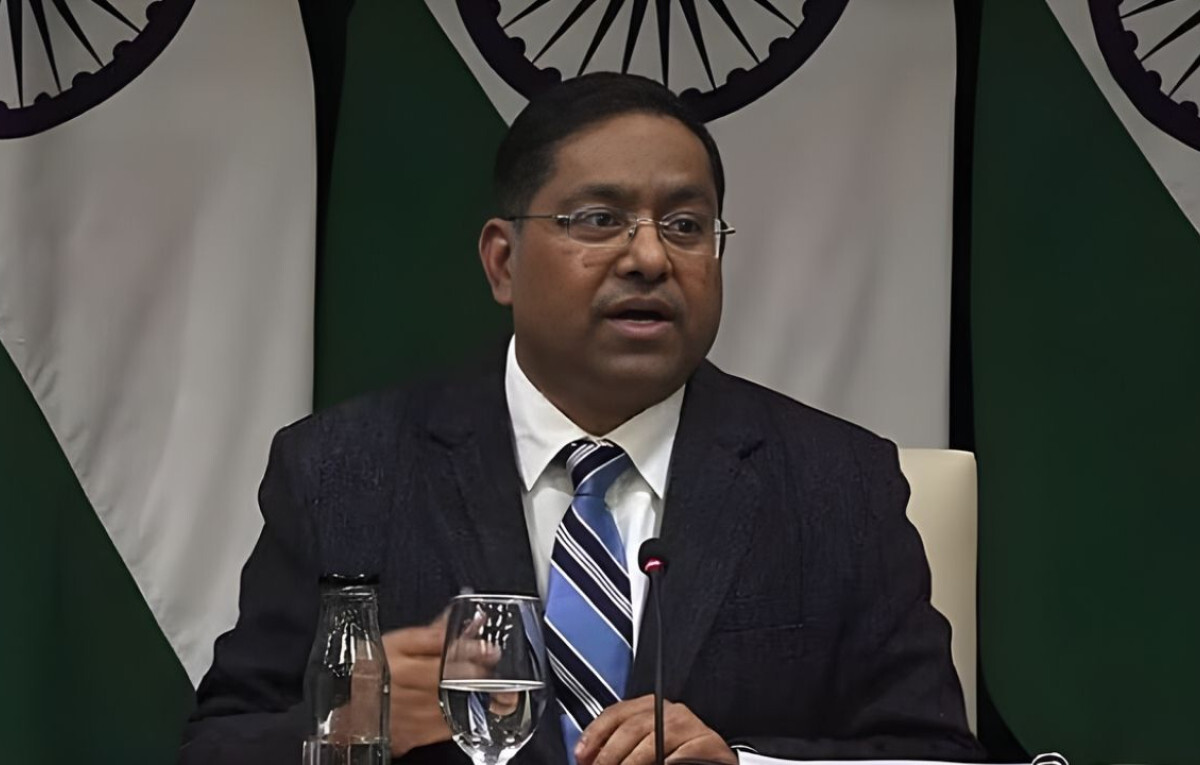
In a comprehensive diplomatic briefing that underscored the increasingly brittle relationship between India and Bangladesh, the Indian Ministry of External Affairs (MEA) has reasserted its longstanding policy positions. During a 35-minute press engagement on Friday, MEA spokesperson Randhir Jaiswal addressed over fifteen queries regarding the neighbouring nation, ranging from the protection of minorities to the potential extradition of ousted Prime Minister Sheikh Hasina. Despite the significant political shifts in Dhaka following the August uprising, New Delhi’s rhetoric suggests a cautious adherence to its established “wait and watch” doctrine, even as bilateral tensions continue to simmer.
The briefing was heavily dominated by the issue of communal stability and the welfare of religious groups. India expressed “profound concern” regarding what it described as persistent violence directed at Hindu, Christian, and Buddhist minorities by extremist elements. Mr Jaiswal specifically condemned the “brutal murder” of a Hindu youth in Mymensingh, demanding that the perpetrators be brought to justice. Crucially, New Delhi challenged the interim government’s narrative; while Dhaka has frequently dismissed reports of communal targeting as “media exaggerations” or “isolated incidents,” Mr Jaiswal cited figures claiming over 2,900 incidents of violence against minorities since the fall of the previous regime. He rejected the notion that these concerns are politically manufactured, stating that India’s stance on the safety of these communities remains unwavering and clear.
Regarding the future of democratic governance in Bangladesh, India continues to advocate for a political process that is “free, fair, inclusive, and participatory.” When questioned on whether India would recognise the results of an election that potentially excluded the Awami League, the spokesperson pivoted back to the necessity of an “inclusive” environment. Furthermore, addressing the reported communications between Indian officials and the Bangladesh Nationalist Party (BNP) leadership in London, Mr Jaiswal framed such interactions within the broader context of supporting a stable and democratic transition. This indicates that while India’s historical ties lay with the former administration, it is pragmatically engaging with a wider spectrum of the Bangladeshi political landscape to safeguard its regional interests.
Since the dramatic fall of the Awami League government, the presence of Sheikh Hasina in India has remained a significant diplomatic friction point. Following a death sentence handed down by Bangladesh’s International Crimes Tribunal for alleged crimes against humanity, Dhaka has repeatedly sought her extradition under existing treaties. When pressed on the status of these requests, the MEA spokesperson remained non-committal, stating the matter “remains where it was.” While acknowledging India’s general commitment to returning fugitives to face justice, he pointedly noted that such processes involve “complex legal steps” and significant procedural hurdles, suggesting a long-drawn-out legal process rather than a swift political handover.
| Issue | India’s Official Position |
|---|---|
| National Elections | Advocates for “free, fair, inclusive, and participatory” polls. |
| Minority Safety | Expresses “deep concern”; claims 2,900+ incidents recorded. |
| Extradition | Acknowledges requests but cites “legal complexities” and hurdles. |
| Economic Ties | Committed to development cooperation and Line of Credit (LoC). |
| Regional Security | Monitoring Pakistani naval activity and “anti-India narratives.” |
The briefing also touched upon broader geopolitical anxieties, particularly regarding regional security and the influence of external powers. With reports from Indian parliamentary committees flagging the current situation in Bangladesh as a “security challenge,” New Delhi is reportedly keeping a close eye on the arrival of Pakistani naval vessels in Bangladeshi ports and the visit of the Pakistani Naval Chief. Mr Jaiswal dismissed the rising “anti-India narrative” in Dhaka as a “false narrative,” asserting that maintaining internal law and order is strictly the responsibility of the Bangladeshi government. He emphasised that India would take all necessary steps to protect its national interests amidst these shifting allegiances.
Despite the prevailing friction, India maintains that its bond is fundamentally with the people of Bangladesh—a relationship forged during the 1971 Liberation War. However, diplomatic analysts, including Major General (Retd) A.N.M. Muniruzzaman, suggest that the primary obstacle remains New Delhi’s perceived inability to fully reconcile with the “Revolution of 2024.” For a stable future, observers argue that India must eventually accept the seismic shift in Bangladesh’s political landscape, moving past its historical reliance on a single political entity to foster a more resilient, cross-party friendship based on contemporary realities and mutual respect.

Comments