Monday, 6th April 2026

Khabor Wala Desk
Published: 12th February 2026, 4:31 AM
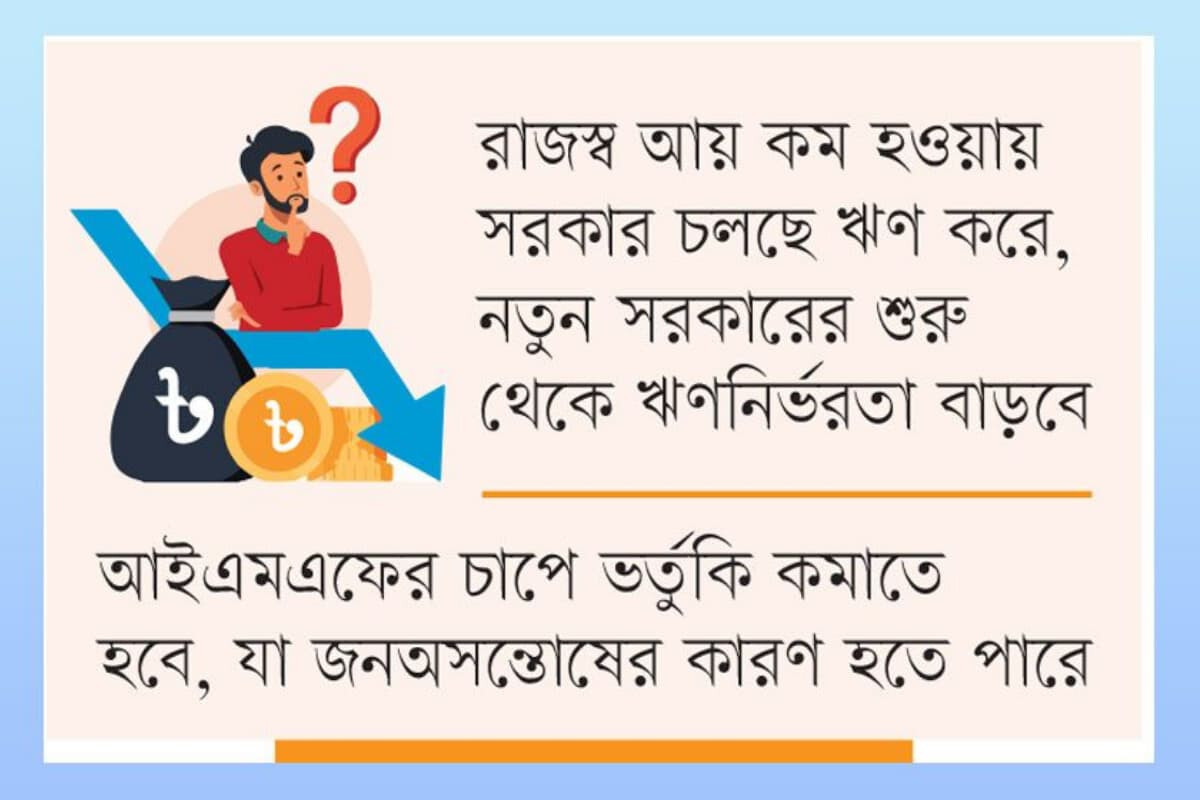
The incoming government of Bangladesh will inherit an economy far from stable or comfortable. Rather than stepping into a period of steady growth, it will confront a complex mix of vulnerabilities, including high debt dependence, persistent inflation, and fragile economic structures. Experts emphasise that immediate political stability, the restoration of business confidence, and a well-coordinated plan to boost investment and revenue will be crucial for navigating these challenges.
Reports from Bangladesh Bank, the International Monetary Fund (IMF), and the World Bank have collectively outlined the obstacles and opportunities facing the new administration. However, translating these recommendations into effective policy will be far from straightforward.
Bangladesh Bank has highlighted that political stability post-election will be pivotal in unlocking investment opportunities. To facilitate this, uninterrupted gas and electricity supplies, reduced bureaucratic hurdles, and controlled lending rates are essential. Yet, with inflation currently standing at 8.58%, lowering policy interest rates is not a viable option in the immediate term.
The table below summarises the key economic challenges for the new government and their potential implications:
| Challenge | Current Situation | Potential Impact |
|---|---|---|
| Political Stability | Expected improvement post-election | Easier to attract investment |
| Inflation | 8.58% | Policy interest rates cannot be lowered |
| Debt Dependence | High | Limits private-sector borrowing |
| Revenue Collection | Low | Increased pressure on government spending and salaries |
| Banking Sector | Weak | Constraints on loan availability |
| Foreign Debt & Reserves | Improving | Easier remittance flow and energy supply for industry |
Dr Mostafa K. Mujeri, former chief economist at Bangladesh Bank and director at the Bangladesh Development Research Institute, noted: “Due to deficits and reduced revenue during the interim government, the incoming administration will face substantial fiscal gaps. Restoring business confidence and increasing foreign investment could take at least two years.”
The World Bank has also emphasised that the post-election period presents an opportunity for rising domestic demand, which could stimulate investment and infrastructure development. Success, however, will hinge on maintaining ongoing reforms, expanding revenue streams, and ensuring financial accountability.
In summary, the new government’s foremost economic challenges include: controlling debt dependence, reducing inflation, securing political stability, boosting investment, and reforming revenue collection.
If addressed effectively, these measures could set the stage for gradual economic recovery, enhanced investment, and sustainable job creation, ultimately strengthening Bangladesh’s long-term growth trajectory.



Comments