Sunday, 5th April 2026

Khabor Wala Desk
Published: 8th August 2025, 12:02 PM
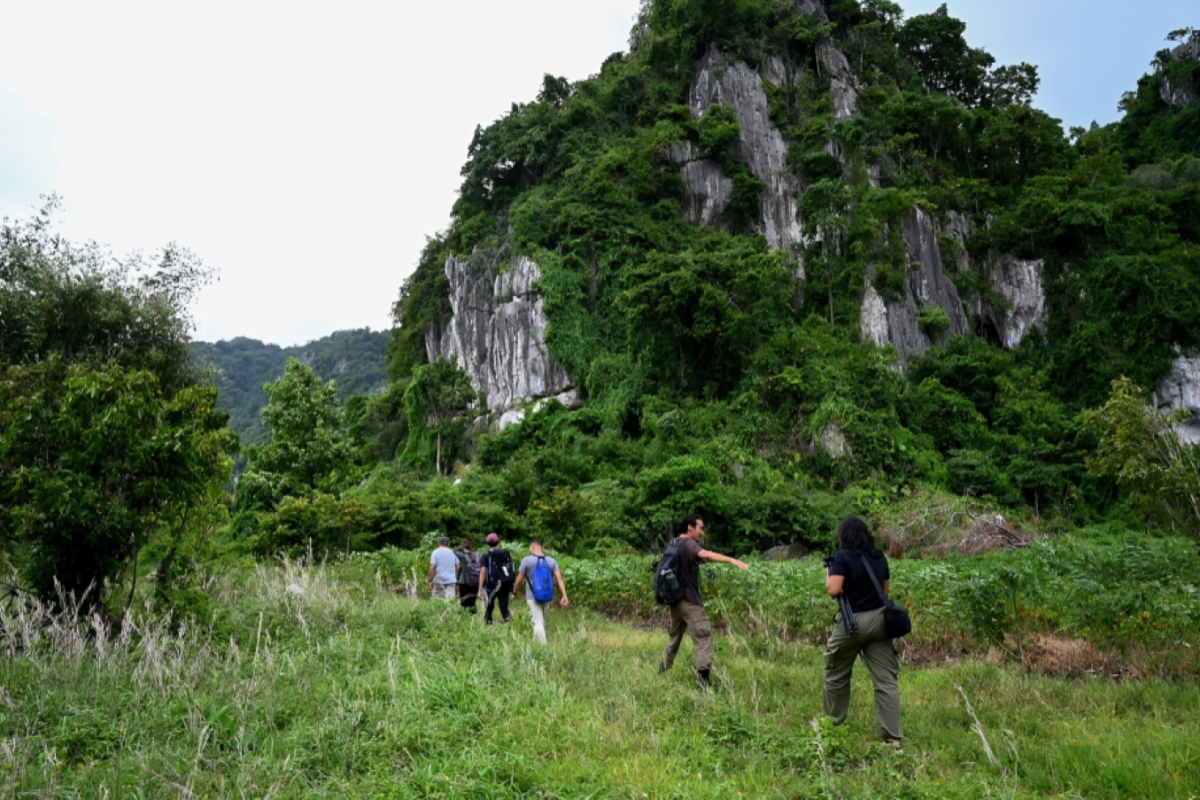
In a discovery most biologists could only dream of, a single night’s expedition into the karst landscapes of Cambodia has yielded three new species of gecko, shining a spotlight on the extraordinary biodiversity hidden within these ancient limestone formations—and the existential threat posed by the rapidly expanding cement industry.
The Discovery: New Species in a Single Night
A joint team from Fauna & Flora and international universities ventured into the karst terrain near the Cambodia-Thailand border in July, where they navigated treacherous terrain, venomous wildlife, and even the threat of nearby cross-border conflict.
| Newly Discovered Species | Key Features |
| Large Speckled Gecko | Prominent speckled body pattern |
| Bent-Toed Gecko with Banded Tail | Distinctive tail markings |
| Web-Toed Gecko | Unique toe morphology |
“You can quite literally go into a cave, collect a few specimens, and most likely there’ll be some that are new to science,”
— Pablo Sinovas, Fauna & Flora, Cambodia Director
What Makes Karst So Special?
Karst formations, shaped by millions of years of erosion, resemble evolutionary islands. Their physical isolation enables species to evolve independently, making them hotspots of endemism.
| Karst Ecosystem Characteristics | Description |
| Origin | Ancient coral reefs, eroded by rain |
| Appearance | Pockmarked rock towers, caves, and tunnels |
| Ecological Importance | Isolated habitats, ideal for species divergence |
| Threats | Cement quarrying, unexploded ordnance, climate |
Into the Wild: Risk, Research and Reptiles
The research team, led by herpetologist Lee Grismer of La Sierra University, began their work at night—after the departure of millions of bats from karst roosts.
With headlamps, camera gear and specimen bags, the team navigated razor-sharp limestone ridges and treacherous caves, facing dangers such as:
Each catch—some no bigger than a human pinky—was gently bagged and catalogued for DNA sequencing, photography, and preservation.
“These animals can escape and you’ve lost your new species,”
— Lee Grismer, on the challenges of photographing specimens in the field
The Scientific Process: From Field to Formaldehyde
The identification process was meticulous and often surreal. In a makeshift hotel lab, karst rocks were arranged on black velvet backdrops for photographing frogs, snakes, and geckos.
Following documentation, each specimen was:
If the genetic sequencing reveals a species on its own branch of the evolutionary tree, it is confirmed as new to science.
The Shadow of Cement
Despite their ecological importance, Cambodia’s karst formations are under severe threat due to the growing demand for cement, both domestically and for export.
| Cement Industry Facts (Cambodia) | Details |
| Annual Production (as of May 2025) | 11 million tons |
| Economic Contributions | Reduced imports, job creation, tax revenue |
| PM Hun Manet’s Statement | Supports “responsible” quarrying |
“Would you turn Angkor Wat into cement?
You wouldn’t, because it’s a national treasure.
Some of these species should be considered national treasures as well.”
— Pablo Sinovas, Fauna & Flora
Yet even local residents, like Tuy Noeun, who believes spirits inhabit the karst, say they would welcome cement companies if it means jobs for the community.
A Delicate Balance: Conservation vs Development
Fauna & Flora aims to use the results of this research to advocate for protection of the most ecologically sensitive karst sites, especially those proven to harbour rare or endemic species.
“That same emotion, intensity and power… just comes rushing back,”
— Lee Grismer, on the thrill of discovering new species at age 70
In a rapidly modernising Cambodia, the battle to protect its hidden natural wonders grows ever more urgent—before these evolutionary islands are reduced to dust and concrete.




Comments