Sunday, 5th April 2026

Khabor Wala Desk
Published: 22nd October 2025, 12:09 PM
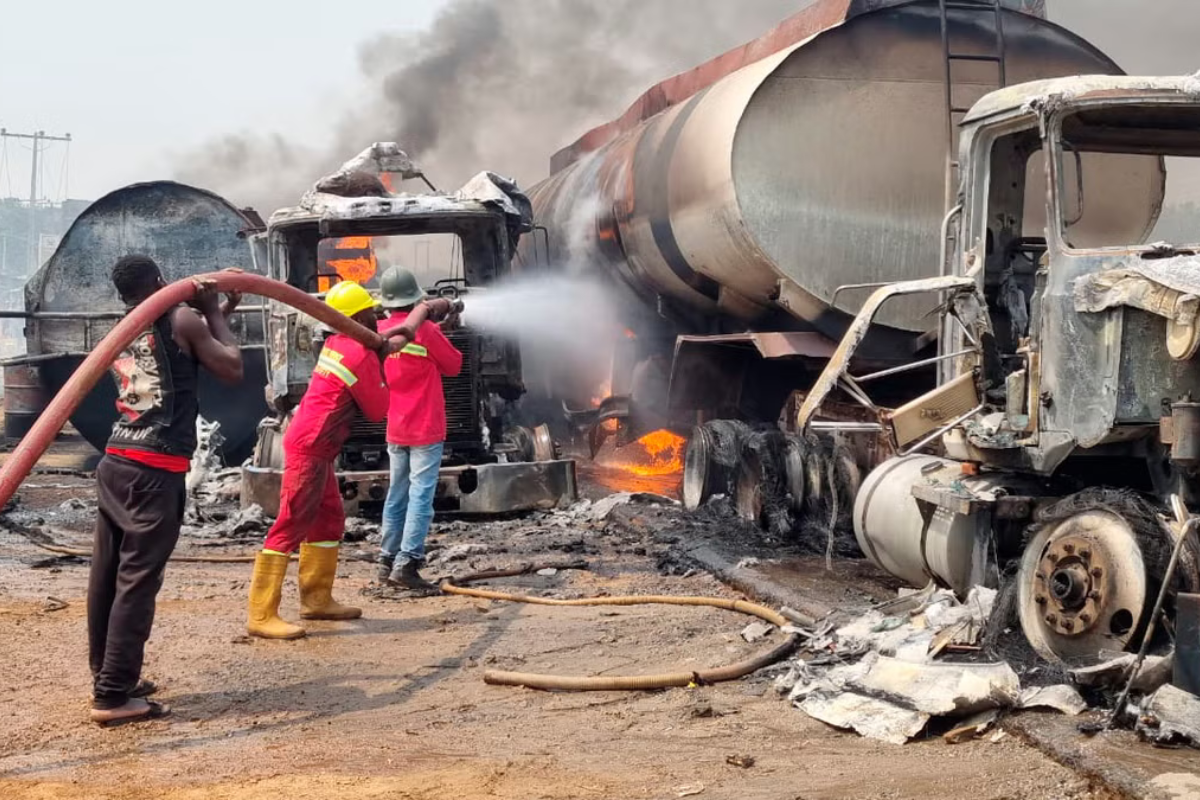
Abuja, Wednesday — The death toll from a petrol tanker explosion in central Niger State, Nigeria, has climbed to 39, up from an initial count of 29, with 60 others injured, officials confirmed on Wednesday.
According to Hussaini Isah, head of the Niger State Emergency Agency, the tragedy unfolded when residents attempted to scoop leaking fuel from an overturned tanker before it exploded, engulfing dozens in flames.
“There are now 39 dead and 60 injured. People went to scoop up the fuel — the truck exploded, and they got burnt,”
— Hussaini Isah, Niger State Emergency Agency Chief
The explosion occurred on Tuesday along the Bida–Agaie road in Katcha district, marking yet another in a string of fatal tanker incidents across the country.
Fuel tanker accidents are common in Nigeria, often attributed to:
However, worsening economic hardship has also driven people to take deadly risks by siphoning fuel from wrecked vehicles — an act that has repeatedly ended in tragedy.
| Policy Change | Impact on Citizens |
| Removal of fuel subsidies (May 2023) | Sharp rise in fuel prices |
| Currency deregulation | Inflation and reduced purchasing power |
| Resulting crisis | Widespread poverty and desperation |
Since taking office in May 2023, President Bola Tinubu has enacted sweeping economic reforms aimed at stabilising Nigeria’s struggling economy — notably by ending fuel subsidies and lifting currency controls.
While intended to attract investment and revive growth, these measures have triggered a cost-of-living crisis in Africa’s most populous nation, leaving millions struggling to afford essentials.
The latest incident follows a similar disaster in January, when 98 people died after attempting to collect spilled petrol from a crashed tanker, also in Niger State.
In response, President Tinubu ordered a nationwide awareness campaign warning citizens about the lethal and environmental dangers of collecting fuel from overturned tankers.
Despite such efforts, authorities warn that economic desperation continues to drive people to risk their lives in search of free fuel — a perilous practice that has now claimed dozens more victims.




Comments