Sunday, 5th April 2026

Khabor Wala Desk
Published: 18th January 2026, 10:34 PM
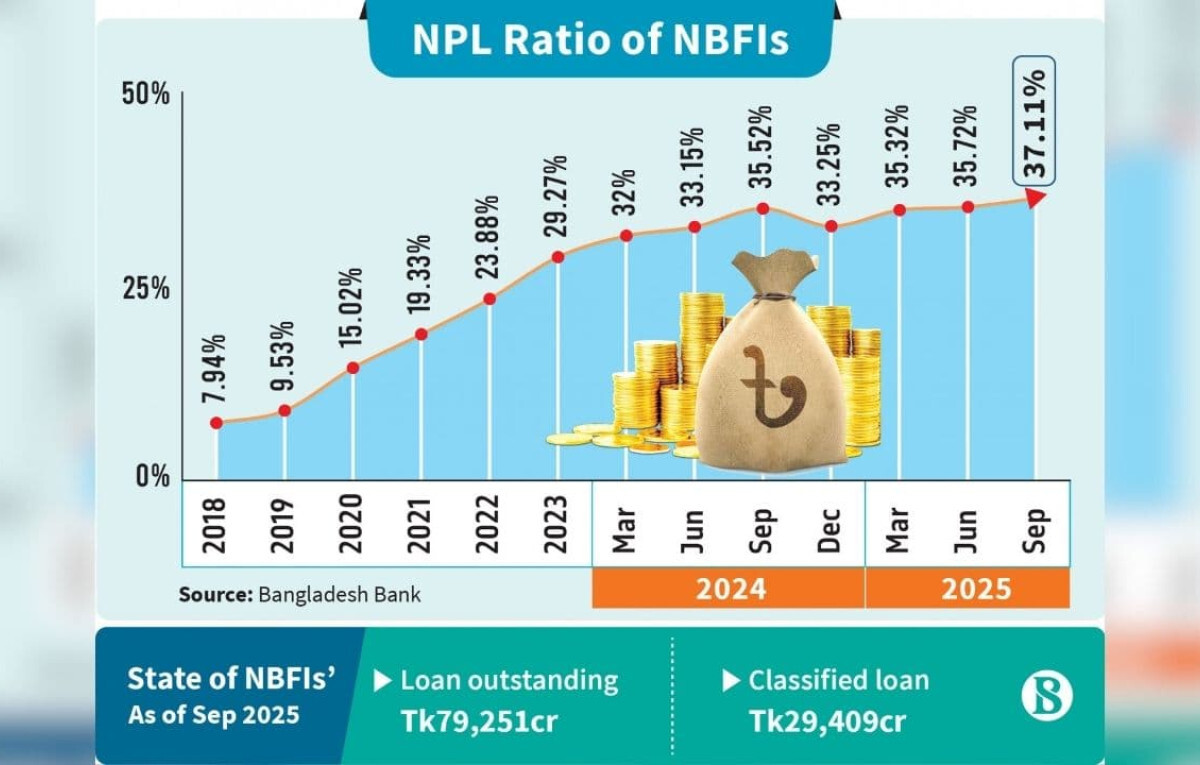
The structural integrity of Bangladesh’s Non-Bank Financial Institution (NBFI) sector is facing an existential threat as Non-Performing Loans (NPLs) surged to a staggering Tk 29,408 crore by the end of September 2025. This figure now represents more than one-third of the sector’s total credit portfolio, signaling a precipitous decline in asset quality and a deepening liquidity crisis that threatens to destabilise the broader financial ecosystem.
According to the latest data released by Bangladesh Bank, classified loans reached 37.11% of the total outstanding loans of Tk 79,251 crore by late September. The velocity of this deterioration is particularly alarming; within a single quarter (July–September), NPLs increased by Tk 1,867 crore. In June 2025, the ratio stood at 35.72%, suggesting that even newly disbursed credit is rapidly slipping into default.
The following table illustrates the recent quarterly escalation of the NBFI crisis:
| Period | Total Outstanding (Tk Crore) | Classified Loans (Tk Crore) | NPL Ratio (%) |
|---|---|---|---|
| June 2025 | 77,094 | 27,541 | 35.72% |
| September 2025 | 79,251 | 29,408 | 37.11% |
| Net Change | +2,157 | +1,867 | +1.39% |
Golam Sarwar Bhuiyan, Chairman of the Bangladesh Leasing and Finance Companies Association (BLFCA), noted that these harrowing figures are partly the result of newfound regulatory honesty. “The rot within the financial companies has existed for years but was obscured through accounting gimmicks,” Bhuiyan remarked.
Following the political transition on 5 August 2024, the central bank tightened its oversight, ending the era of repeated loan rescheduling for “zombie” borrowers. Many high-profile debtors, who had leveraged political connections to secure massive loans, have reportedly fled the country, causing their accounts to be reclassified as defaults immediately.
Public confidence in the sector has reached a nadir. In a radical move to cauterise the damage, Bangladesh Bank has initiated plans to liquidate nine deeply distressed NBFIs whose portfolios have essentially collapsed. The selection was based on a Tk 5,000 crore fiscal limit set by the government to manage depositor exposure.
The nine institutions earmarked for liquidation include:
FAS Finance & BIFC
Premier Leasing & Fareast Finance
GSP Finance & Prime Finance
Aviva Finance, People’s Leasing, and International Leasing
This regulatory “clean-up” has sparked a flight to quality, with depositors withdrawing funds en masse from smaller institutions. As profitability and total assets continue to shrink—down 1.22% in the September quarter alone—the sector remains locked in a vicious cycle of illiquid assets and vanishing trust.




Comments