Sunday, 5th April 2026

Khabor Wala Desk
Published: 2nd March 2025, 3:40 AM
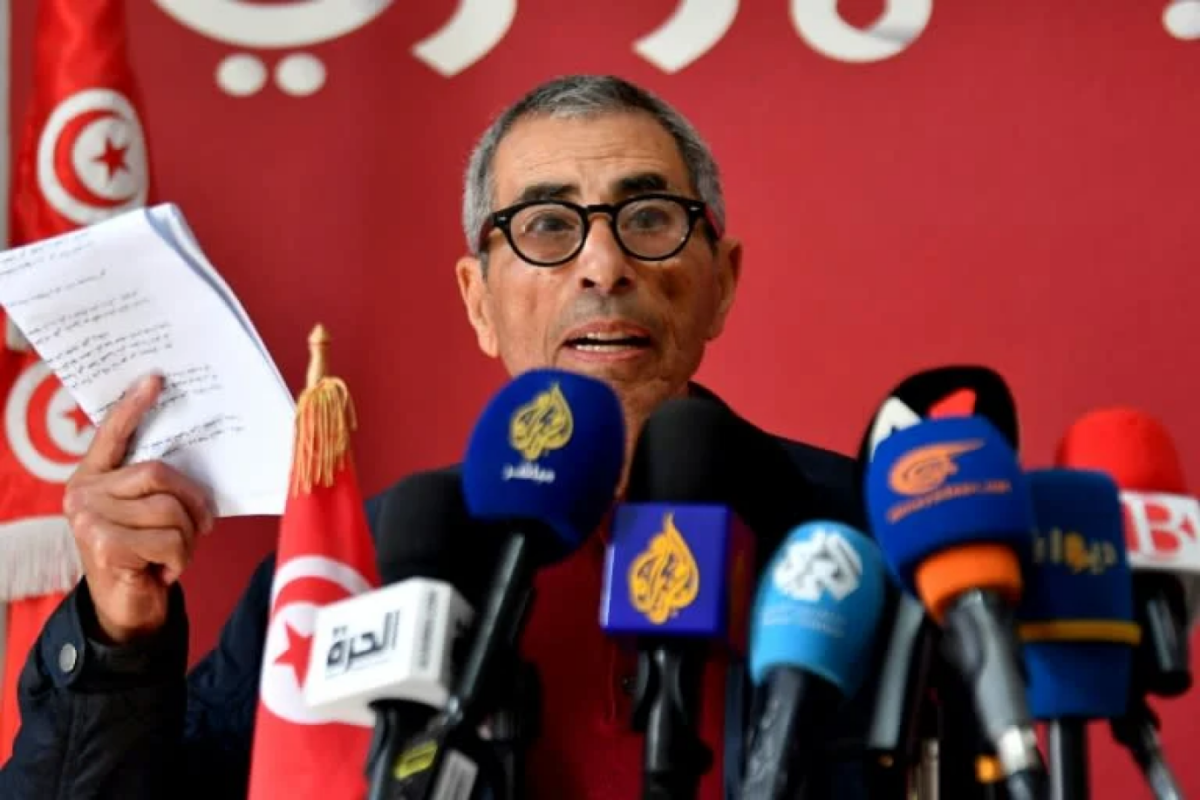
TUNIS, 2nd March 2025 – A highly anticipated trial is set to commence on Tuesday, involving several leading Tunisian opposition figures accused of plotting against the state’s security. Critics and human rights organisations have condemned the proceedings, labelling them unfair and politically driven.
Around 40 prominent defendants, including former diplomats, politicians, lawyers, and media figures, are named in the case. Many of the accused have been vocal critics of President Kais Saied. Several of the defendants were arrested following a series of detentions in February 2023, after Saied labelled them as “terrorists.”
The charges against them include “plotting against state security” and “belonging to a terrorist group,” which could result in severe sentences. Among those facing trial are Jawhar Ben Mbarek, a prominent opposition politician, Abdelhamid Jelassi, a former senior member of the Islamist-inspired Ennahdha party, and Issam Chebbi, one of the founders of the opposition National Salvation Front (FSN) coalition – all of whom are staunch critics of Saied’s government.
President Saied, who was elected in 2019, has been a controversial figure since staging a dramatic power grab in 2021. Human rights groups have since expressed concern over a significant erosion of freedoms under his rule.
The charges also involve activists Khayam Turki and Chaima Issa, businessman Kamel Eltaief, and Bochra Belhaj Hmida, a former member of parliament and human rights advocate currently residing in France. French intellectual Bernard-Henri Levy is also implicated, as some of the accused are suspected of engaging with foreign diplomats and political figures.
In a letter from his prison cell, Ben Mbarek described the case as part of a broader attempt to “systematically eliminate critical voices” and denounced what he called “judicial harassment.” Ben Mbarek, who co-founded the FSN – the main opposition coalition to Saied – argued that the trial was politically motivated and lacked legitimacy. His sister, Dalila Msaddek, a lawyer involved in the defence committee, also labelled the charges as based on “false testimony.”
The defence team has raised concerns about the trial being conducted remotely, with the defendants not being present in court. This decision has been criticised by the accused’s relatives and rights groups, who argue that it undermines the principles of a fair trial. Ahmed Nejib Chebbi, head of the FSN and also named in the case, stated that the right to stand before a judge in person is essential for fairness.
Riadh Chaibi, a former official in the Ennahdha party, decried the trial as having “no reasoning,” while lawyer Samir Dilou, also a member of Ennahdha, referred to it as “judicial madness.” The trial is further complicated by secret witnesses, secret evidence, and a desire to keep the entire process shrouded in secrecy.
Ben Mbarek’s father, Ezzeddine Hazgui, a leftist activist, expressed his “bitterness” over his support for Saied in the 2019 election. His daughter, Dalila Msaddek, noted that her brother, like many others, had campaigned vigorously to elect Saied, only to now face charges in what is widely perceived as a politically motivated trial.
While several defendants remain in custody, others are free pending trial or have fled abroad. In a separate case, Rached Ghannouchi, the leader of Ennahdha, was sentenced in February to 22 years in prison for allegedly plotting against state security. This conviction further raised concerns about the Tunisian government’s crackdown on dissent.
In response to the ongoing pattern of arrests and detentions, the United Nations recently urged Tunisian authorities to end the “arbitrary detentions and imprisonment” of human rights defenders, journalists, lawyers, activists, and politicians. Tunisia’s Foreign Ministry, however, expressed “astonishment” at the UN’s “inaccuracies,” asserting that the cases cited by the UN were related to “public law crimes,” not political activities or the exercise of free speech.
This trial marks yet another chapter in Tunisia’s ongoing political turmoil, as President Saied’s government faces mounting criticism for its clampdown on dissent and political opposition since his power grab in 2021. With human rights groups continuing to sound the alarm, the international community remains closely watching Tunisia’s evolving political landscape.
Background:
Tunisia, once hailed as the sole democracy to emerge from the Arab Spring, has witnessed a steady decline in democratic freedoms under President Saied’s rule. His decision to dissolve the parliament and seize executive powers has drawn condemnation both domestically and internationally. Many believe that the ongoing trials and arrests are part of a broader effort to stifle opposition and consolidate his hold on power.


Comments