Sunday, 5th April 2026

Khabor Wala Desk
Published: 16th October 2025, 1:09 PM
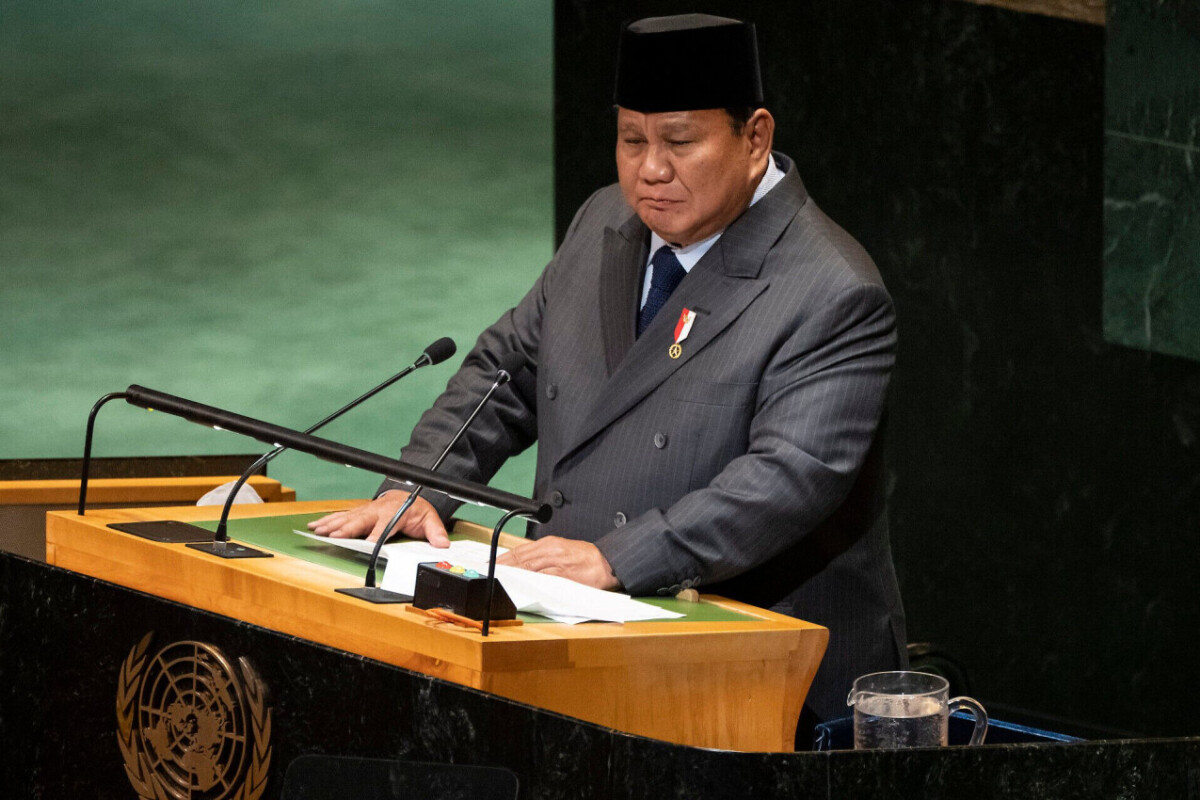
Politico reports that Pakistan, Azerbaijan and Indonesia are the leading candidates among potential countries to contribute troops to an international force intended to secure the ceasefire in the Gaza Strip, according to a current US defence official and a former official.
The report describes these three nations as the “top contenders” to supply troops, although no country has formally agreed to participate yet. Earlier on Wednesday, an adviser to former US President Donald Trump said that, alongside Indonesia and Azerbaijan, Egypt, Qatar and the United Arab Emirates (UAE) could also contribute forces to an International Stabilisation Force in Gaza. Indonesia is, to date, the only country to publicly offer to send troops; it has said it is prepared to deploy 20,000 personnel under a UN‑mandated peacekeeping operation. However, Mr Trump’s plan makes no mention of any UN role or mandate.
Politico further reports that forces from Qatar, the UAE and Egypt would be stationed alongside US troops at a military base inside Israel to monitor the ceasefire. According to the account, the next phase of the US plan is to disarm Hamas. After the Gaza ceasefire, the United States and its partners are now advancing to the next stage of the plan — compelling Hamas to surrender its weapons.
Speaking at an event in the White House with the President of Argentina on Tuesday, US President Donald Trump said: “Many say, ‘They will not be disarmed.’ I say, they will be disarmed. I have spoken with Hamas. I said, ‘You will be disarmed, yes?’ They said, ‘Yes sir, we will be disarmed.’ They will be disarmed, otherwise we will disarm them — understand?”
Daniel Shapiro, a former official in the Biden administration, believes it would help to finalise the framework for the International Stabilisation Force and confirm which countries might participate in order to give the US plan real momentum. He said: “It is important now to show speed and progress. Determining which countries will take part, finalising the mandate and structure, and demonstrating that troops are ready for deployment — those steps will help restore confidence in the plan.”
The Politico report notes that, despite talk of multiple contributors, formal commitments are still outstanding and significant diplomatic work remains to define command arrangements, legal mandates and rules of engagement, as well as to secure any necessary international or regional approvals.
The broader objective underpinning the initiative, as laid out by US planners, is to create a multinational presence capable of both observing and enforcing the ceasefire and facilitating the demilitarisation of extremist groups in Gaza. That plan envisages multinational contingents operating in concert with US forces and regional partners in order to stabilise the enclave and prevent the re‑emergence of armed factions that could reignite hostilities.
Officials have also highlighted practical and political hurdles: some countries are cautious about committing troops where they might become embroiled in direct combat; others are worried about domestic political backlash or the legal complexities of serving under an ad hoc international arrangement that lacks a clear UN mandate. Still, the urgency created by the humanitarian and security situation in Gaza is driving diplomatic outreach to secure contributions.
The prospective involvement of predominantly Muslim countries such as Indonesia, Azerbaijan, Qatar and Egypt is seen by some analysts as politically significant, potentially lending regional legitimacy to the stabilisation effort and helping to assure local populations and stakeholders that the mission is not exclusively Western‑led.
At the same time, Washington is reportedly pressing allies and partners to accelerate their deliberations so that, if agreed, a stabilisation force could be stood up rapidly. Pentagon planners are said to be working through scenarios for a range of force packages and logistical support arrangements, while diplomats continue to negotiate mandates, force protection measures and the necessary legal agreements with host and contributing states.
Mr Shapiro stressed that demonstrating readiness — both political and operational — would be crucial to moving from plan to implementation. “Showing which countries will participate, finalising the mandate and structure, and proving that troops are ready for deployment — those elements will help restore faith in the plan,” he said.
As discussions proceed, there remains uncertainty over exactly which nations will commit forces, the size and composition of any contingents, and whether the operation will have a UN imprimatur or proceed under an alternative coalition framework. The final shape of the International Stabilisation Force, if it is agreed, will depend on a complex mix of diplomatic bargaining, operational planning and the political willingness of candidate countries to assume the risks inherent in deploying troops to the region.


Comments