Sunday, 5th April 2026

Khabor Wala Desk
Published: 2nd October 2025, 8:30 AM
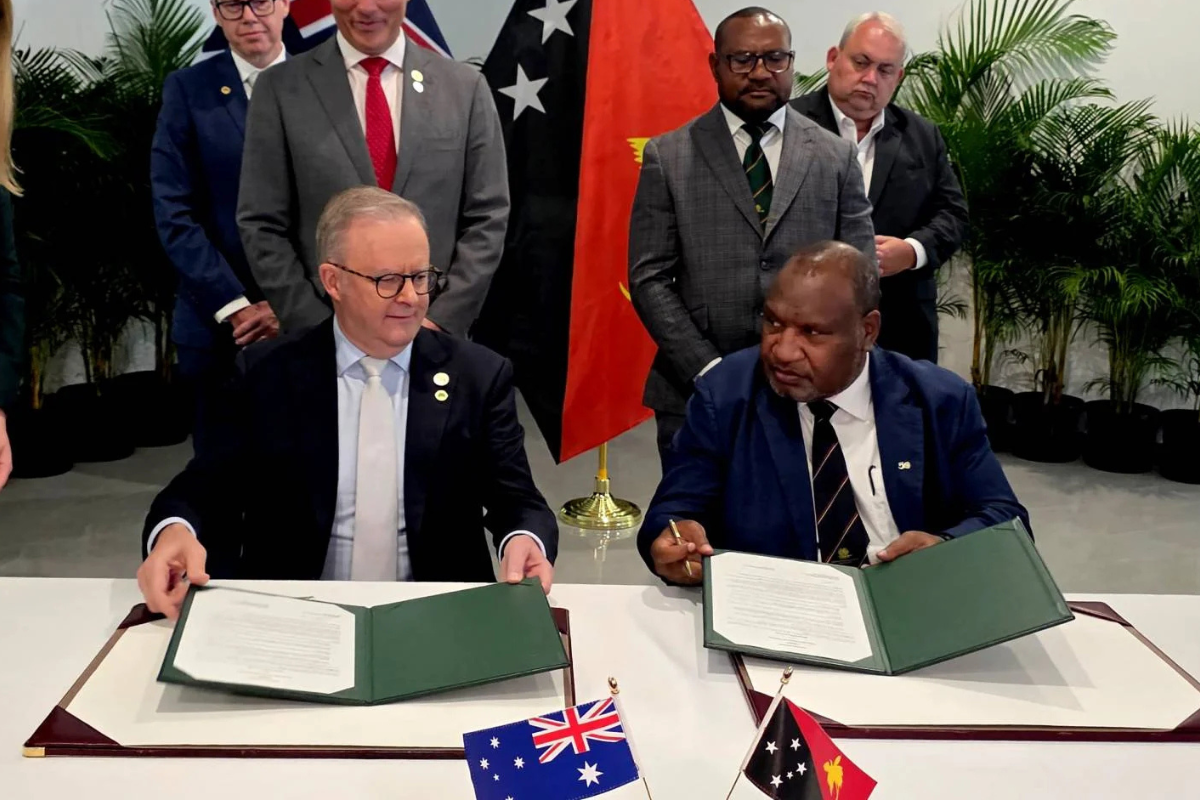
Papua New Guinea’s cabinet has approved a controversial mutual defence treaty with Australia, officials confirmed to AFP on Thursday. The move comes as Canberra seeks to strengthen ties with Pacific nations and counter Beijing’s growing influence in the region.
The agreement, known as the Pukpuk Treaty, commits both nations to defend each other against armed attacks, citing concerns over “emerging threats” to regional security. The treaty also allows citizens of each country to serve in each other’s militaries.
A crucial clause ensures that: “Any activities, agreements or arrangements with third parties would not compromise the ability of either Party to implement the Treaty.”
This is widely seen as a direct response to China’s expanding presence in the Pacific.
The treaty has sparked domestic controversy in Papua New Guinea, with critics arguing it may undermine the country’s sovereignty and its long-standing non-aligned foreign policy.
Officials from Papua New Guinea’s legal office and foreign ministry confirmed that the cabinet approved the treaty on Wednesday. The next step is ratification by the country’s parliament.
Originally, the treaty was scheduled to be signed during a visit to Port Moresby by Australian Prime Minister Anthony Albanese last month. However, the signing was delayed as the Prime Minister noted that the cabinet could not convene due to ongoing independence celebrations.
Beijing has expressed concerns about the treaty, with its embassy in Papua New Guinea cautioning against any actions that might “undermine” China’s interests or the country’s sovereignty.
Australia has intensified its engagement in the Pacific, seeking to counteract China’s influence through diplomatic and security measures. Papua New Guinea, the largest and most populous state in Melanesia, lies directly to the north of Australia, making it a strategically significant partner.
China has invested billions of dollars over the past decade in Pacific nations, funding infrastructure projects including hospitals, sports stadiums, roads, and other public works. This approach has yielded results: countries such as the Solomon Islands, Kiribati, and Nauru have recently switched diplomatic recognition from Taiwan to China.
| Feature | Details |
| Treaty Name | Pukpuk Treaty |
| Signatories | Papua New Guinea & Australia |
| Purpose | Mutual defence against armed attacks; regional security cooperation |
| Special Provisions | Citizens may serve in each other’s militaries; third-party agreements cannot compromise the treaty |
| Controversy | Concerns over sovereignty and non-aligned foreign policy |
| Regional Context | Countering Beijing’s growing influence; strategic importance of PNG in Melanesia |
| Next Steps | Ratification by Papua New Guinea’s Parliament |
The Pukpuk Treaty represents a significant step in Australia’s regional security strategy, reflecting a broader geopolitical contest between Canberra and Beijing for influence in the Pacific. It remains to be seen how the treaty will shape the region’s security and diplomatic dynamics in the coming years.



Comments