Sunday, 5th April 2026

Khabor Wala Desk
Published: 2nd March 2025, 4:11 AM
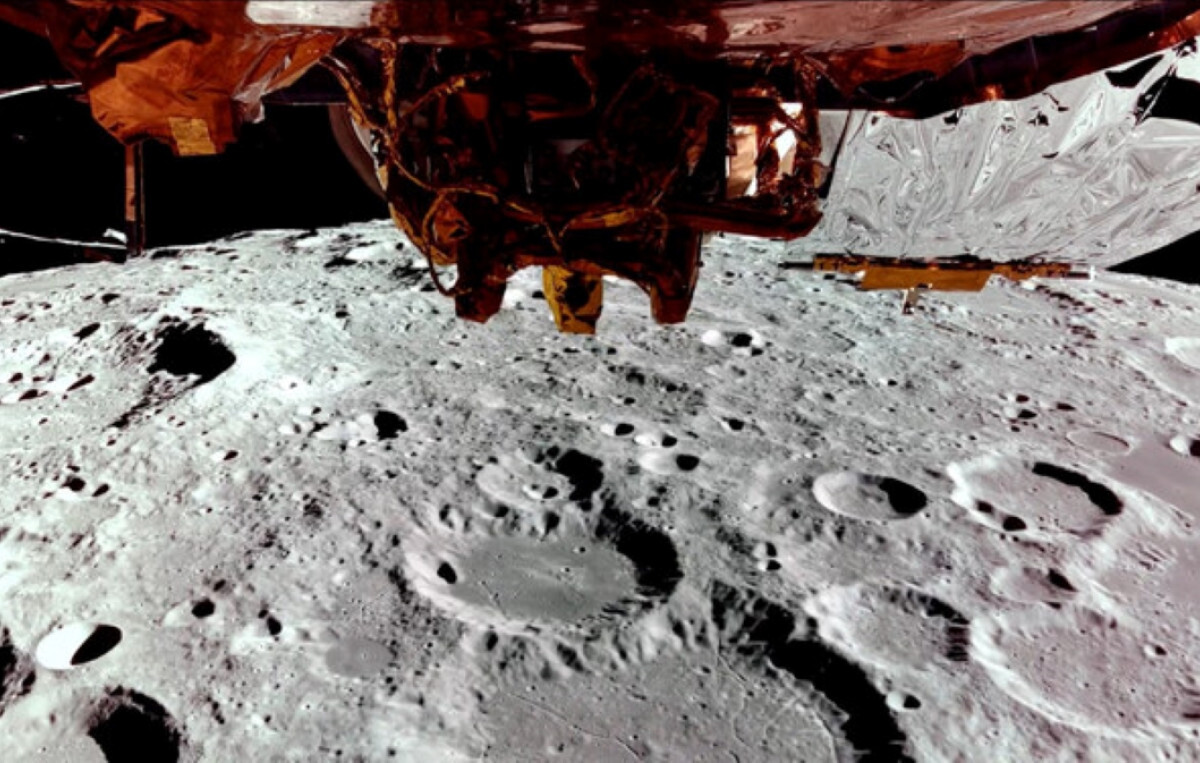
WASHINGTON, 2nd March 2025 – After an extensive journey through space, a US-based company is just hours away from attempting a daring lunar landing. If successful, its spacecraft will become only the second private lander to achieve this remarkable feat.
Firefly Aerospace’s Blue Ghost Mission 1 is scheduled to land no earlier than 3:34 am US Eastern Time (0834 GMT) on Sunday. The mission aims to touch down near Mons Latreille, a volcanic feature in Mare Crisium, located on the Moon’s northeastern near side.
“The lander has really performed well,” commented Ray Allensworth, the Blue Ghost programme manager, during a live webcast from mission control in Austin, Texas. “We haven’t encountered any significant issues, which is fantastic.”
The mission, nicknamed “Ghost Riders in the Sky,” marks just over a year since the first-ever commercial lunar landing and is part of NASA’s ongoing collaboration with private industry to reduce costs and support its Artemis programme, which aims to return astronauts to the Moon.
Launched on 15th January aboard a SpaceX Falcon 9 rocket, the golden lander, roughly the size of a hippopotamus, captured breathtaking footage of Earth and the Moon as it made its way to the lunar surface. The mission shared a ride with a Japanese lander that is set to attempt its own landing in May.
Blue Ghost is carrying 10 scientific instruments, including a lunar soil analyser, a radiation-tolerant computer, and an experiment to test the feasibility of using the existing global satellite navigation system for Moon navigation.
Designed to operate for a full lunar day (equivalent to 14 Earth days), Blue Ghost is expected to capture high-definition imagery of a total lunar eclipse on 14th March, when Earth will block the Sun from the Moon’s horizon. On 16th March, the spacecraft will also capture footage of a lunar sunset, offering valuable insights into how dust levitates above the surface under the influence of the Sun, creating the mysterious lunar horizon glow first documented by Apollo astronaut Eugene Cernan.
Hopping Drone and Lunar Exploration
Following Blue Ghost’s arrival, Texas-based company Intuitive Machines will launch its IM-2 mission on 6th March, featuring the Athena lander. In February 2024, Intuitive Machines became the first private company to achieve a soft lunar landing – the first US landing since Apollo 17 in 1972. However, the mission was cut short when the lander descended too quickly, tipping over on impact and failing to generate enough solar power.
This time, the company claims to have made significant improvements to the hexagonal-shaped Athena lander, which now has a taller, slimmer profile than Blue Ghost. The lander is roughly the height of an adult giraffe.
Athena launched on Wednesday aboard a SpaceX rocket, heading for Mons Mouton, the southernmost lunar landing site ever attempted. Its payload includes three rovers, a drill designed to search for ice, and a unique hopping drone, the first of its kind, which will explore the Moon’s rugged terrain.
NASA’s Private Moon Fleet and the Future of Lunar Exploration
Landing on the Moon presents unique challenges, particularly due to the absence of an atmosphere, which makes the use of parachutes ineffective. Spacecraft instead rely on precisely controlled thruster burns to slow their descent.
Before Intuitive Machines’ success, only five national space agencies had managed to achieve a soft lunar landing: the Soviet Union, the United States, China, India, and Japan. However, the United States is now working to make private lunar missions a regular occurrence through NASA’s $2.6 billion Commercial Lunar Payload Services (CLPS) programme.
These missions come at a pivotal moment for NASA, as speculation grows regarding the future of the Artemis lunar programme. There are concerns that the agency may scale back or even cancel its ambitious lunar return plans in favour of prioritising Mars exploration – a key goal for both President Donald Trump and his close advisor, SpaceX founder Elon Musk.
Context:
With increasing interest in commercial space exploration, these private missions to the Moon represent a significant step towards reducing reliance on government space agencies and fostering a new era of lunar exploration. As NASA continues to explore its own ambitions for returning astronauts to the Moon, private companies like Firefly Aerospace and Intuitive Machines are demonstrating the growing potential for the commercial sector to play a leading role in space exploration.




Comments