Sunday, 5th April 2026

Khabor Wala Desk
Published: 28th January 2026, 11:32 AM
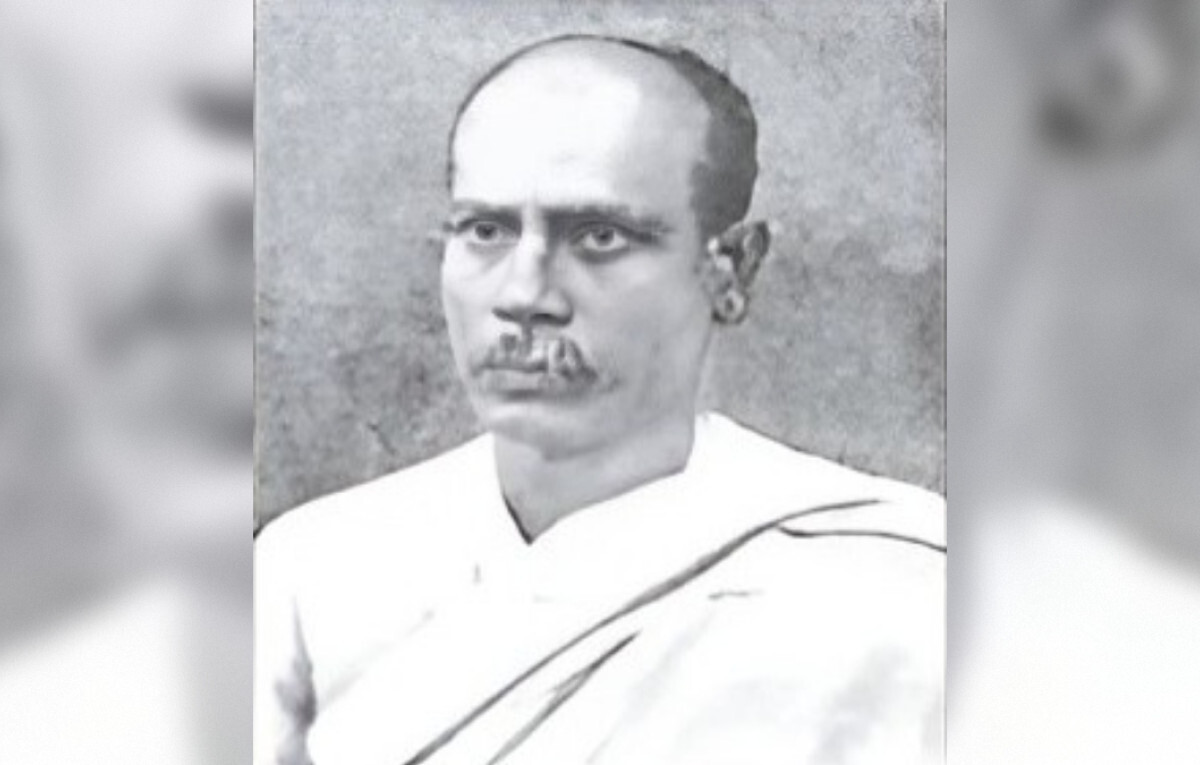
Among the valiant youth of the fiery era who risked their lives to weave the dream of independence against British colonial rule, Pulindebihari Das stands as one of the foremost pioneers. He was not merely a revolutionary; he was an organiser, trainer, symbol of courage, and the founder of the Dhaka Anushilan Samiti, a crucible of revolutionary activity.
Pulindebihari Das was born on 28 January 1877 in Lonsing village, Naria Upazila, Shariatpur District, into a well-educated and prosperous middle-class family. Though the family possessed land, all male members were employed in government service. His father, Navakumar Das, served as a lawyer at the Madaripur Subdivisional Court, while other relatives held positions such as Deputy Magistrate and Munsef, reflecting a deep engagement with law and administration.
In 1894, Pulindebihari passed the entrance examination from Faridpur District School with distinction and joined Dhaka College. His scholarly aptitude quickly became evident; he even served as a practical instructor in the college laboratory. From a young age, he demonstrated a strong interest in physical training and was an accomplished stick-fighter (lathi). Inspired by Sarala Devi’s akhara in Kolkata, he established his own akhara in Dhaka’s Tikatuli in 1903.
By 1905, under the tutelage of the renowned lathial Murtaza, he mastered advanced techniques of stick and wrestling combat, laying the foundation for revolutionary training. The September 1906 visit of Bipin Chandra Pal and Pramath Nath Mitra to Bengal and Assam became a turning point in his life. Responding to Mitra’s call, Pulindebihari committed himself to the struggle against foreign domination.
In October 1906, he founded the Anushilan Samiti in Dhaka, initially with 80 young members. Under his organisational genius, the society expanded across Bengal and Assam, establishing over 500 branches. Pulindebihari also founded the National School in Dhaka, a training centre for armed revolutionaries disguised as an educational institution. Training progressed from lathi and wooden swords to knives, pistols, and revolvers, preparing members for the ultimate fight for independence.
Pulindebihari was involved in the daring assassination attempt on Basil Copleston Allen, Dhaka’s District Magistrate, at Gopalganj station on 23 December 1907. The attempt narrowly failed. He later defended his home with a handful of followers against a mob of nearly 400 rioters. In 1908, he orchestrated a daylight raid on the Barar zamindar house in Nawabganj, Dhaka, to procure arms and ammunition, further cementing his revolutionary credentials.
Subsequently, he was arrested alongside notable revolutionaries including Bhupesh Chandra Nag and Ashwini Dutta, enduring brutal imprisonment in Montgomery Jail. Released in 1910, he resumed revolutionary activities, overseeing operations in Dhaka, although the Anushilan branches in Kolkata and Dhaka eventually separated following the death of Pramath Nath Mitra.
During the July 1910 Dhaka conspiracy case, Pulindebihari Das and 46 other revolutionaries were arrested; ultimately, a further 44 were detained. He received a life sentence and was sent to Cellular Jail, where he interacted with legends such as Hemchandra Das and Vinayak Damodar Savarkar. His sentence was later reduced in 1918, leading to house arrest, and he was fully released in 1919.
Pulindebihari Das passed away on 17 August 1949, leaving behind a legacy of unparalleled courage, sacrifice, and organisational brilliance. He remains a shining exemplar of the fiery generation that laid the groundwork for India’s independence.
Timeline of Pulindebihari Das’s Life and Revolutionary Activities
| Year | Event |
|---|---|
| 1877 | Born in Lonsing village, Naria, Shariatpur |
| 1894 | Passed entrance exam; enrolled at Dhaka College |
| 1903 | Established akhara in Dhaka’s Tikatuli |
| 1905 | Trained under lathial Murtaza |
| 1906 | Inspired by Pramath Nath Mitra; founded Dhaka Anushilan Samiti |
| 1907 | Attempted assassination of District Magistrate Allen |
| 1908 | Armed raid on Barar Zamindar House |
| 1910 | Arrested in Dhaka conspiracy case; life sentence in Cellular Jail |
| 1918 | Sentence reduced; placed under house arrest |
| 1919 | Fully released from imprisonment |
| 1949 | Passed away on 17 August |
Pulindebihari Das’s life remains an indelible chapter in the history of revolutionary Bengal—a testament to courage, strategic brilliance, and unyielding patriotism.



Comments