Sunday, 5th April 2026

Khabor Wala Desk
Published: 3rd February 2026, 5:04 AM
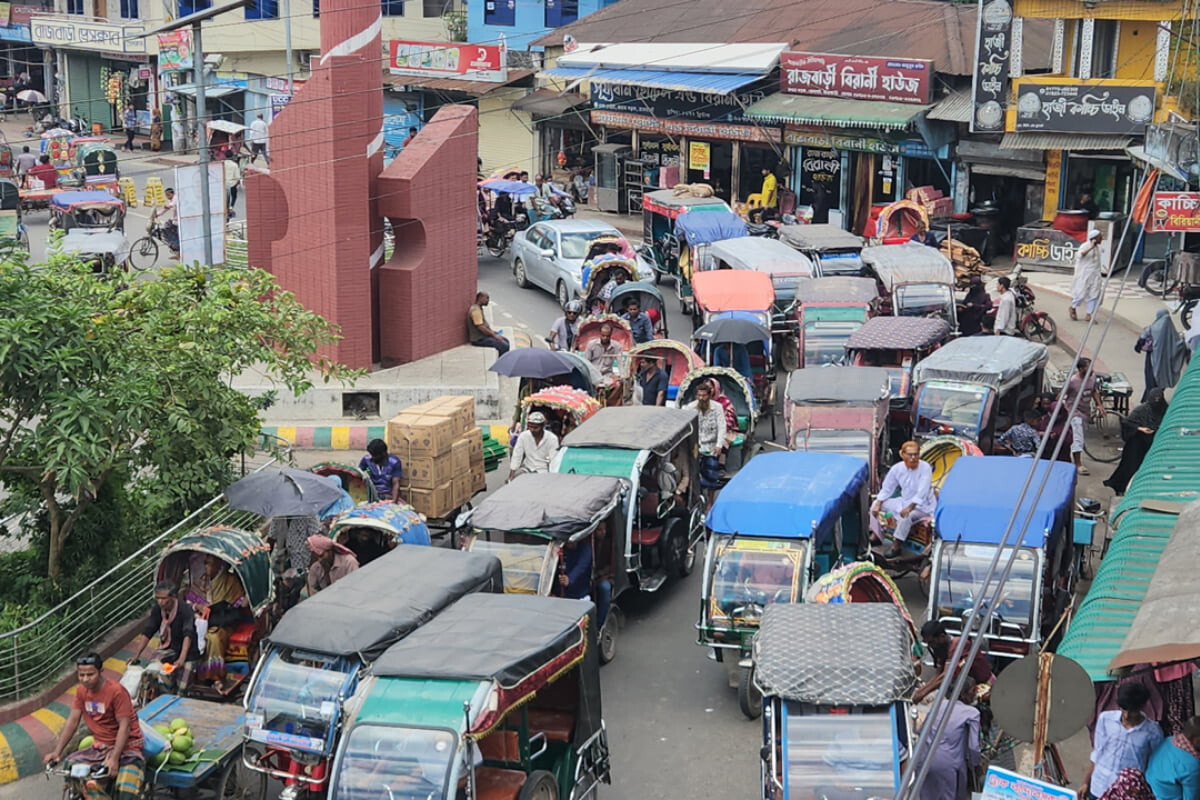
The streets of Rajbari town are increasingly dominated by unregulated battery-powered e-bikes and auto-rickshaws, creating growing safety hazards and severe traffic congestion. Key thoroughfares, including Shreepur Market, Boropool, Natun Bazar, Ankur Collegiate School, Adarsha Women’s College, Panna Chottor, Railgate, and Borobazar, are particularly affected. During peak hours, especially when schools and colleges dismiss students or markets are crowded, traffic slows to a crawl. Residents report that travelling from Borobazar to Railgate can now take as long as 30 minutes—a journey that previously required only a few minutes.
Local commuters attribute the worsening congestion to excessive numbers of e-bikes and rickshaws, inexperienced drivers, and indiscriminate parking along narrow roads.
According to the Rajbari Municipality, approximately 4,000 battery-powered e-bikes operate daily in the town. Of these, around 1,600 are in the process of registration, while the municipality aims to bring an additional 2,000 vehicles under formal regulation.
| Vehicle Type | Registered | Operating Without Approval | Total (Approx.) |
|---|---|---|---|
| E-bike | 2,000 | 2,000–3,000 | 4,000+ |
| Rickshaw | 1,733 | 2,000–3,000 | 3,700+ |
Traffic authorities report that over the past 17 months, Rajbari district has witnessed 78 road accidents, resulting in 52 fatalities and 75 injuries, many of which led to permanent disability. A significant proportion of these incidents involve battery-powered e-bikes and auto-rickshaws.
Additionally, nearly 10,000 e-bikes and rickshaws in the town collectively consume around 11 megawatts of electricity daily for charging. Rajbari OJOPADICO’s executive engineer clarified that charging vehicles are billed under separate meter categories with specific tariffs, and thus the strain does not directly affect general electricity supply.
Municipal licence inspector Md. Liaqat Ali Khan highlighted that the lack of effective regulation over illegal e-bikes and rickshaws has exacerbated traffic congestion. He emphasised that without proper parking arrangements and traffic management in line with the city’s road capacity, congestion is unlikely to improve.
Citizens and civic organisations suggest that enforcing traffic laws, providing designated parking, and controlling unauthorised vehicles could substantially reduce congestion. Jyoti Shankar Jhantu, president of the Rajbari Citizens Committee, warned that the disproportionate presence of e-bikes and rickshaws is severely disrupting urban life in the small town, urging authorities to implement stricter supervision and regulation.
With coordinated enforcement and structured urban planning, Rajbari may yet regain orderly streets and safer transit for its residents.



Comments