Sunday, 5th April 2026

Khabor Wala Desk
Published: 25th August 2025, 12:31 PM
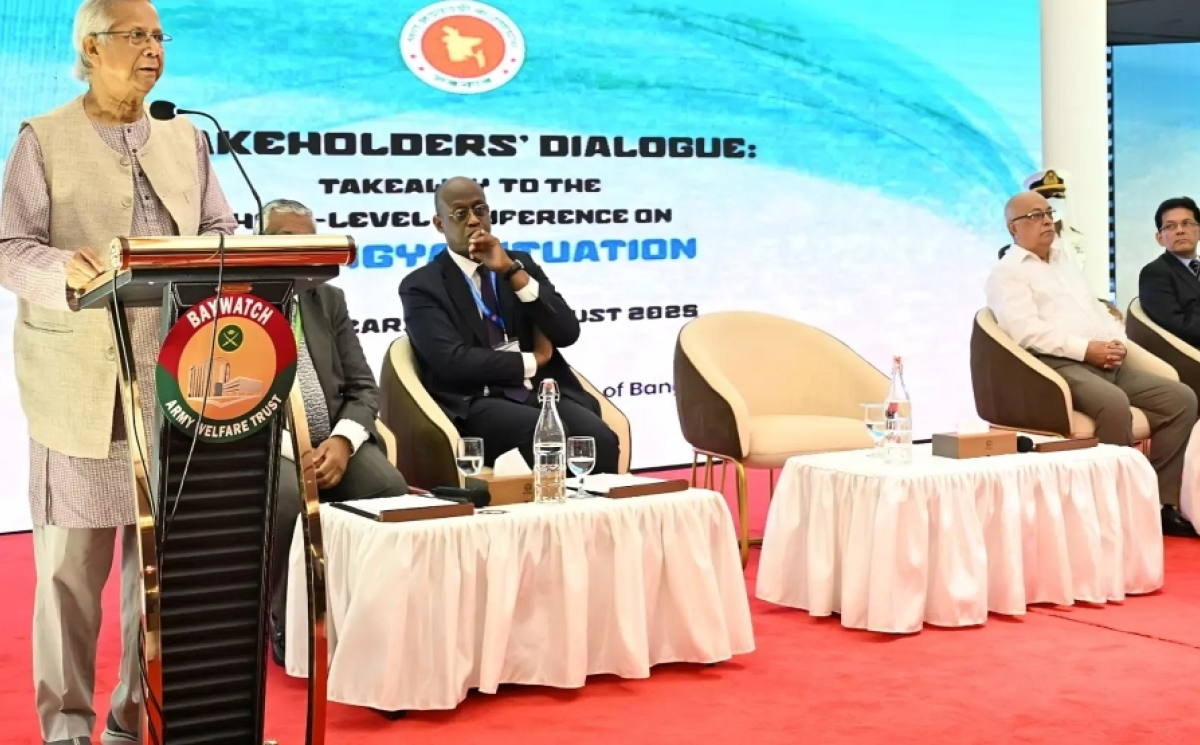
Bangladesh’s Chief Adviser, Dr Muhammad Yunus, has asserted that the Rohingya crisis is a creation of Myanmar, and therefore its solution must also come from within Myanmar. He made these remarks on Monday (25 August) while addressing a dialogue titled “Stakeholders’ Dialogue: Takeaway to the High-Level Conference on the Rohingya Situation” held in Cox’s Bazar.
Dr Yunus urged the international community to step forward in ensuring a sustainable solution to the crisis. He stressed that Bangladesh cannot continue to bear the burden of sheltering 1.3 million Rohingya refugees without additional global resources.
“The international community must intervene to protect the Rohingya from the atrocities of the Myanmar junta and the Arakan Army. Stopping the armed perpetrators from carrying out their horrifying plan of ethnic cleansing is our moral responsibility,” Dr Yunus said.
He further expressed hope that a viable path could be found to enable the Rohingya to return safely to their own homes.
Marking eight years since the mass exodus of Rohingya to Bangladesh fleeing military persecution, the Chief Adviser outlined a seven-point action plan aimed at resolving the crisis.
These proposals, alongside insights gathered from the dialogue, will be presented at the United Nations Conference on the Rohingya Situation scheduled for 30 September in New York.
Upcoming Conference
| Aspect | Details |
| Origin of Crisis | Military persecution by Myanmar junta and Arakan Army |
| Rohingya Refugees in Bangladesh | Approximately 1.3 million |
| Duration of Crisis | 8 years since mass influx began |
| Proposed Solution | International initiative to ensure safe repatriation |
| Dr Yunus’ Statement | Myanmar created the problem; solution must also come from Myanmar |
| Upcoming UN Conference | 30 September, New York, with ~170 country representatives |
Dr Yunus concluded by stressing that Bangladesh alone cannot bear the responsibility and that the world must come together to ensure justice, security, and a dignified return for the Rohingya population.


Comments