Sunday, 5th April 2026

Khabor Wala Desk
Published: 3rd December 2025, 9:29 AM
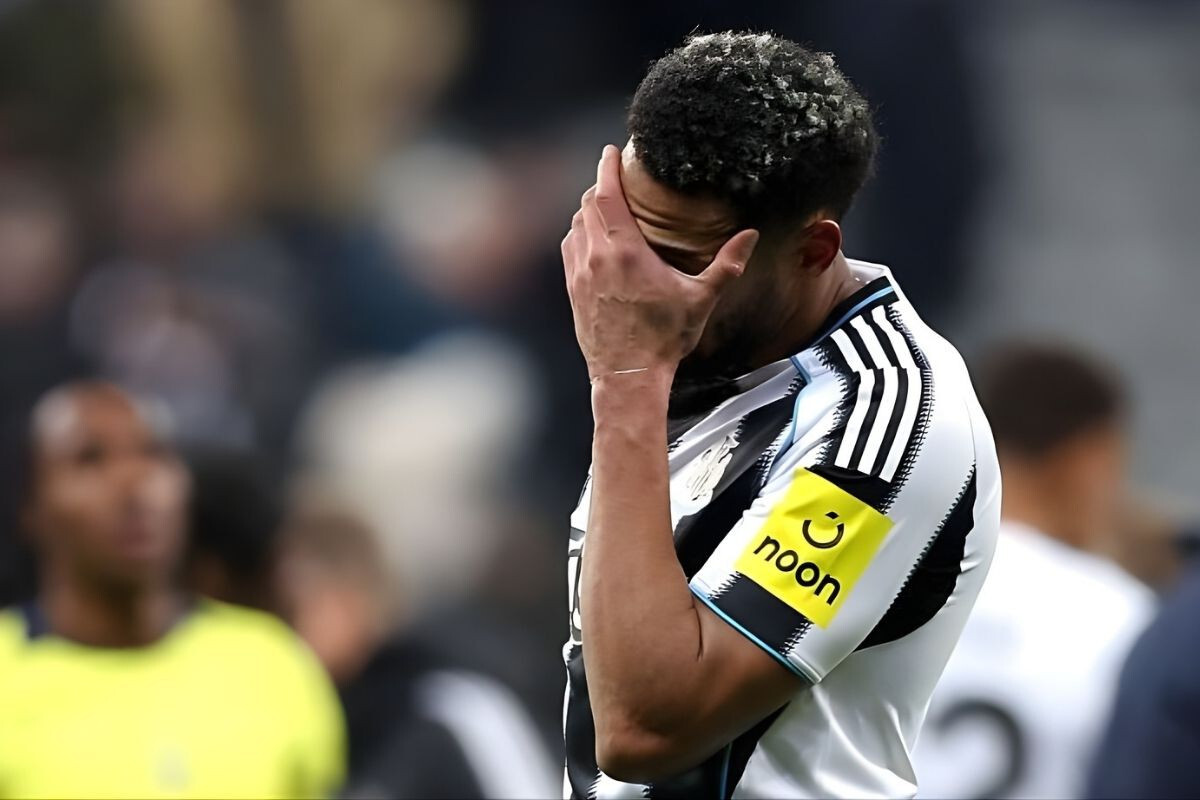
If there is a word to describe Newcastle United’s season so far, it is “frustration.” Tuesday night offered yet another illustration of that frustration as a stoppage-time overhead kick from Tottenham captain Cristian Romero denied the Magpies a much-needed victory at St James’ Park. What should have been a night of celebration instead highlighted a worrying trend that threatens to derail the entire campaign.
The match itself had the ebb and flow of classic Premier League drama. Newcastle began brightly, pressing with energy and purpose. Tottenham, still smarting from previous humiliations on Tyneside, were cautious but composed. Both sides exchanged chances before the game settled into a pattern: Newcastle with the territorial advantage, Tottenham dangerous on the break.
When Anthony Gordon struck late to restore Newcastle’s advantage, the stadium erupted. The young forward has become a symbol of Newcastle’s attacking ambition, and his goal—calmly slotted home after excellent approach play—seemed to confirm that the hosts were on the path to victory. Chants taunting Spurs soon followed, echoing through the stands with defiance.
But instead of lifting pressure from the players, the renewed expectation appeared to have the opposite effect. Newcastle began to sit deeper, inviting Spurs forward. The fluidity that had defined their attacking phases evaporated, replaced by hurried clearances and nervous movement.
As the clock ticked into stoppage time, the tension was palpable. Spurs launched one final assault, sending bodies into the box. A loose ball dropped in a crowded area, where Romero—somehow finding both space and balance—executed an acrobatic overhead kick. Dúbravka had no chance. The ball flew into the net, and St James’ Park fell silent.
For Newcastle supporters, the silence was not just about one goal; it was about the accumulation of moments just like it. Liverpool in August. Arsenal in September. West Ham. Brentford. Now Tottenham. Points slipping away repeatedly, often with seconds left on the clock.
Dropping eleven points from winning positions is not the hallmark of a team aiming for European qualification. And yet, had those leads been preserved, Newcastle would sit at the top of the Premier League table. Instead, they find themselves lodged in mid-table, staring at a season that could already be slipping away.
Eddie Howe did little to hide his disappointment. “We’ve got to rediscover how to see out games,” he said. “It’s costing us in the league, and we can’t allow it to continue.”
But solving the issue is not straightforward. Defensively, Newcastle lack the crisp organisation that defined their rise last season. Injuries have disrupted rhythm, and the midfield has struggled to maintain control late in matches. Even the forwards, who have contributed consistently, cannot compensate for defensive lapses that occur with unnerving regularity.
The question now facing Howe is whether this pattern is a temporary flaw or a deeper issue embedded in the team’s mentality. Allowing opponents to dictate the final minutes of matches speaks to a psychological vulnerability, one that must be addressed urgently.
As for Tottenham, they will feel both relieved and emboldened. Romero’s heroics provided more than just a point; they offered a reminder that Spurs possess the character and quality to fight until the final whistle.
For Newcastle, however, the reflected image is far less flattering. Unless they can break this cycle of concession, the late-game curse may continue to define their season.



Comments