Sunday, 5th April 2026

Khabor Wala Desk
Published: 24th September 2025, 7:03 AM
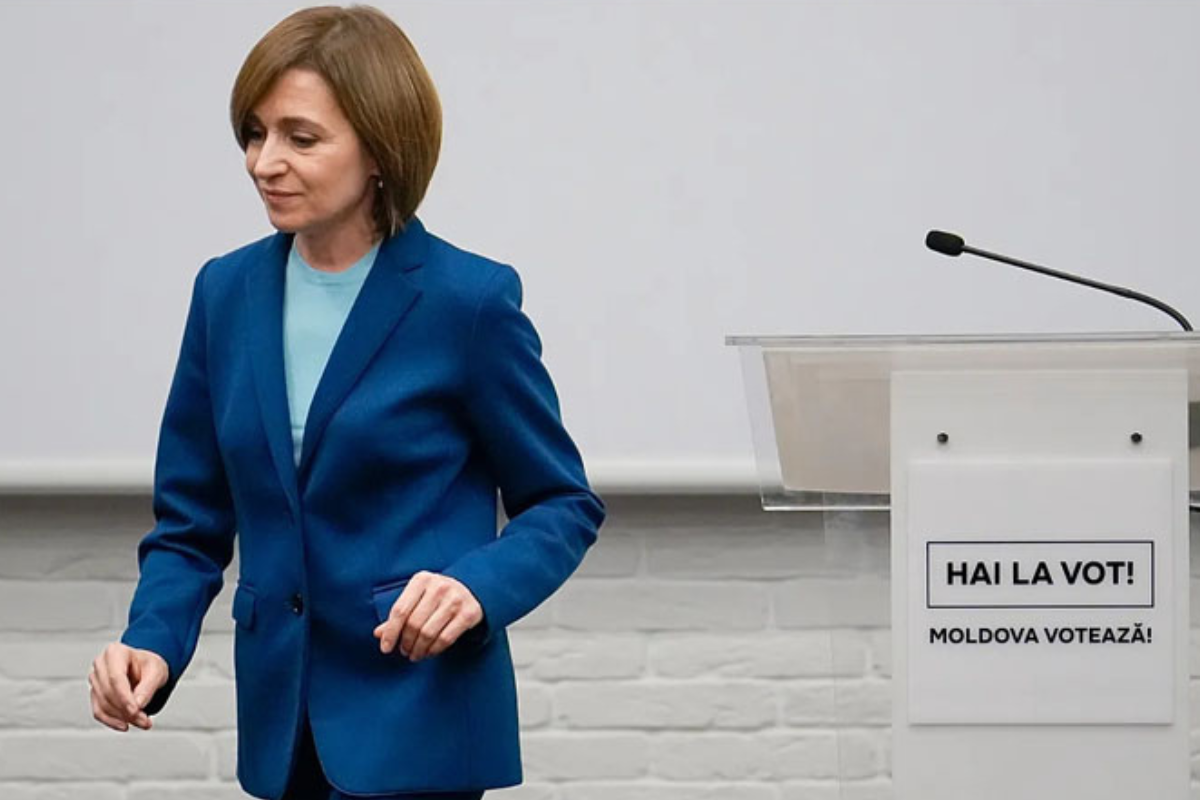
Ahead of Moldova’s parliamentary elections on Sunday, deepfake videos and unsubstantiated accusations targeting pro-European Union President Maia Sandu are spreading online, with analysts warning that the country has become Moscow’s “testing ground” for information warfare in Europe.
The vote is seen as pivotal in deciding whether the EU candidate country of some 2.5 million people will deepen its ties with Brussels or pivot back towards Moscow, from which it gained independence in 1991.
Most polls suggest Sandu’s pro-EU party, in power since 2021, remains in the lead, but it faces a tough challenge from the opposition.
Sandu has warned of “unprecedented interference” by the Kremlin, accusing it of pouring hundreds of millions of euros into attempts to influence voters and disseminating disinformation.
Weeks before the elections, Sandu became the subject of a mocking deepfake video, created using Luma AI, depicting her performing a rap song in Russian and portraying her as an ineffective leader.
This is one example of the misleading content propagated by the Russian-aligned disinformation campaign known as Operation Overload or Matryoshka (Russian doll), according to the online collective Antibot4Navalny.
Other false accusations targeting Sandu include:
Investigations have confirmed Russia-linked disinformation campaigns ahead of the polls.
Antibot4Navalny shared evidence with AFP showing that Kremlin-aligned Telegram channels spread disinformation, which was then amplified by influencers-for-hire on TikTok and bot-like accounts on X.
Some English-language posts on X impersonated international media outlets such as AFP and the BBC, targeting international audiences, including over one million Moldovans living abroad.
The BBC also reported this week on a secret Russia-funded network attempting to disrupt the election. The network, linked to fugitive pro-Russian politician Ilan Shor, allegedly paid Moldovans to disseminate pro-Russian propaganda, resulting in posts viewed millions of times.
Separately, Moldovan newspaper Ziarul de Garda revealed that a group connected to Shor coordinated hundreds of activities via secret Telegram groups to flood TikTok and Facebook with anti-EU content. Activists were trained online for several months by Russian-speaking curators, with some later recruited as paid trolls by Moscow.
Experts say these findings represent only a portion of Moscow’s wider coordinated network targeting Moldova and Europe.
“Unfortunately, Moldova has become a testing ground for Kremlin information warfare in Eastern Europe,” said Nicolae Tibrigan, research scientist at the Romanian Academy in Bucharest.
Analysts note that Russian disinformation campaigns targeting elections, also observed in neighbouring Romania, aim to push Moldova back towards Moscow and destabilise the European Union.
“The objective is not just to manipulate a few votes, but to erode confidence in the democratic process,” said Corneliu Bjola, Professor of Digital Diplomacy at the University of Oxford.
Social media companies are monitoring the situation:
If Moscow’s tactics succeed in Moldova, analysts warn, similar disinformation campaigns will likely target other European democracies.
“Europe, with Romania on the frontline, is the ultimate target,” Bjola added.




Comments