Monday, 6th April 2026

Khabor Wala Desk
Published: 6th March 2026, 1:47 PM
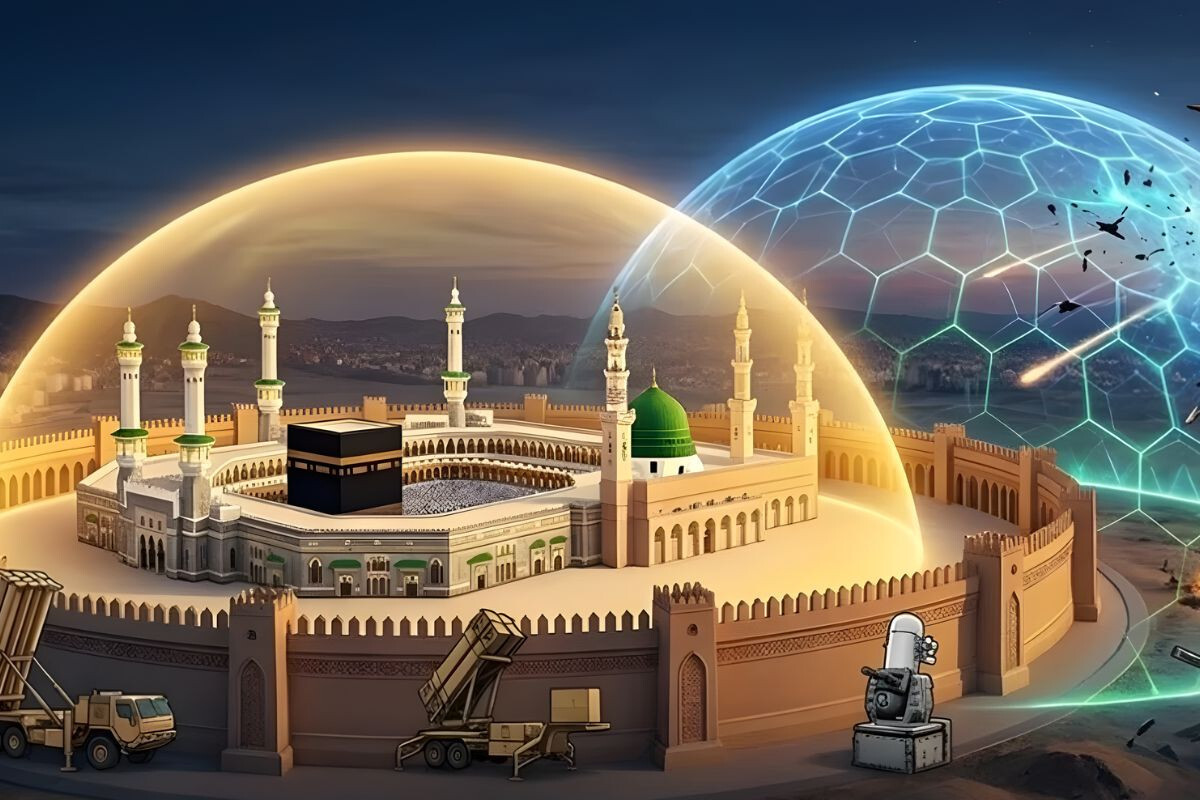
Amid rising tensions in the Middle East, Saudi Arabia has established an unprecedented multi-layered defence network to safeguard the Islamic holy cities of Mecca and Medina. Confronted with escalating threats from drones and missiles, the Kingdom has fortified its airspace with one of the most advanced integrated defence systems in the world. Recent incidents have demonstrated the effectiveness of this network, as multiple hostile drones and ballistic threats from various regions were successfully intercepted, highlighting the capabilities of the Saudi defence apparatus.
At the core of this formidable system is the American-made Patriot PAC-3 missile defence system. Designed to detect and destroy short- and medium-range ballistic missiles mid-flight, the PAC-3 serves as the primary shield for the sacred cities. Hundreds of interceptors remain on high alert around the clock, providing rapid-response capability against sudden attacks. Defence analysts note that the system’s speed and precision are crucial for protecting densely populated areas in Mecca and Medina.
Complementing the Patriot system, Saudi Arabia has deployed the THAAD (Terminal High Altitude Area Defense) system. Widely recognised as one of the world’s most sophisticated defence platforms, THAAD can engage missiles both inside and outside the atmosphere. Initial units were activated in key regions such as Mecca and Jeddah in early 2025–26, ensuring that high-velocity, long-range missiles are neutralised before reaching the holy territories.
Further enhancing operational versatility, the Kingdom has integrated South Korea’s KM-SAM Block II mobile system, capable of countering both aerial and missile threats with high precision. The combination of American and Korean technologies has significantly strengthened Saudi Arabia’s air defence, with KM-SAM’s mobility allowing rapid redeployment to respond to emergent threats.
Saudi Arabia has also embraced cutting-edge Chinese technology for drone suppression. A 30-kilowatt fibre-optic laser system can incinerate hostile drones in mere seconds, offering a cost-effective solution against small, fast-moving aerial targets. While desert dust occasionally poses challenges, the laser has proven effective against swarming drones.
As the final defensive layer, Skyguard 35mm twin cannons have been deployed at city perimeters. Radar-guided and capable of continuous fire, these guns serve as the “last line of defence” should a missile or drone bypass the upper layers of protection.
Recent operations underscore the system’s efficiency. According to the Saudi Ministry of Defence, a cruise missile in the eastern Al-Kharj region and three drones near Riyadh were successfully neutralised.
| Defence Layer | Technology/System | Primary Role | Notable Features |
|---|---|---|---|
| Layer 1 | Patriot PAC-3 (USA) | Intercept short- & medium-range ballistic missiles | Hundreds of ready interceptors, 24/7 readiness |
| Layer 2 | THAAD (USA) | Counter long-range, high-speed missiles | Atmospheric and exo-atmospheric engagement |
| Layer 3 | KM-SAM Block II (South Korea) | Counter aerial & missile threats | Highly mobile, rapid redeployment |
| Layer 4 | 30 kW Fibre-optic Laser (China) | Drone suppression | Instant neutralisation, low operational cost |
| Layer 5 | Skyguard 35mm Twin Cannons | Final defence perimeter | Radar-guided, continuous fire, last line of defence |
Saudi Arabia’s multi-layered approach underscores a robust commitment to protecting the holy cities, combining global technologies to secure the Kingdom’s most sacred regions against modern aerial threats.




Comments