Sunday, 5th April 2026

Khabor Wala Desk
Published: 2nd August 2025, 7:11 PM
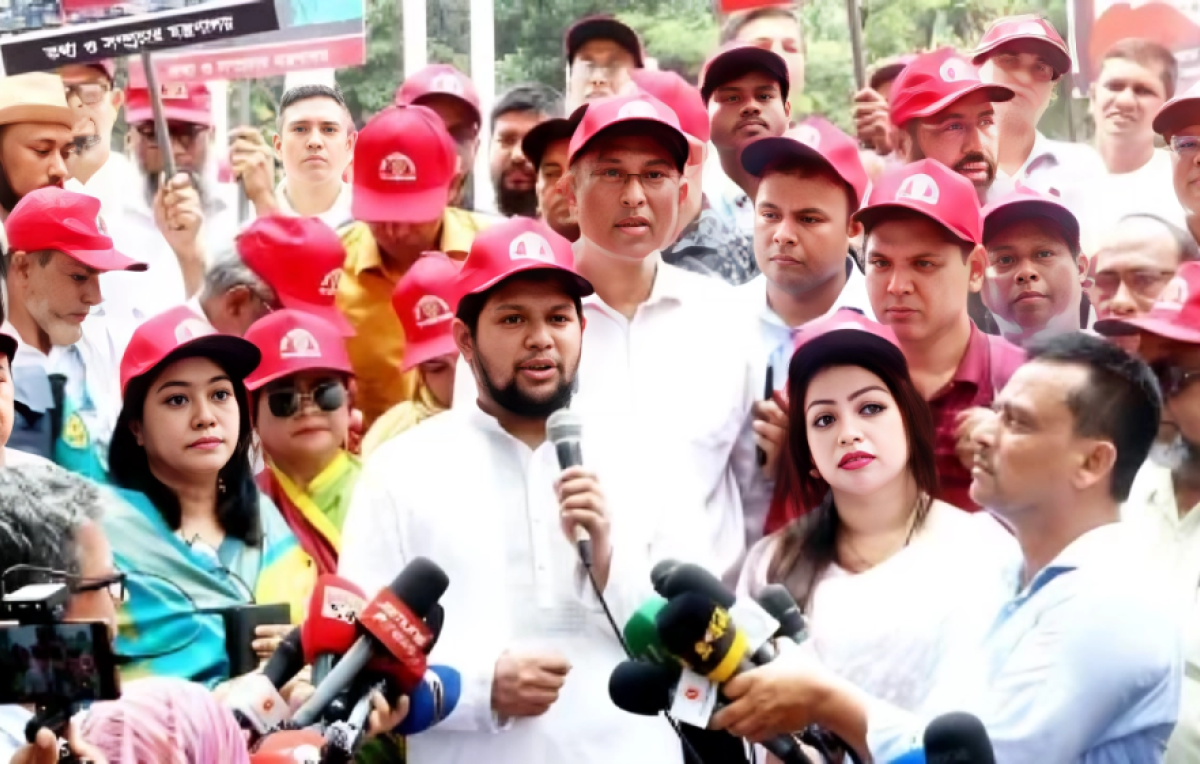
Md. Mahfuj Alam, Adviser to the Ministry of Information and Broadcasting, today declared that Shaheed Minar stands as a profound symbol of resistance and triumph.
Speaking at the conclusion of the July Revival Procession 2025, organised by the Information and Broadcasting Ministry at the Central Shaheed Minar, he stated:
“We began from here, and it was only upon arriving here that we could celebrate our victory.”
Details of the Procession
| Event | Location | Description |
| July Revival Procession 2025 | Started: Osmani Memorial Auditorium, Dhaka Ended: Central Shaheed Minar |
A significant procession commemorating the July Uprising |
The procession commenced at Osmani Memorial Auditorium and culminated at the Central Shaheed Minar.
Shaheed Minar’s Role in the July Uprising
Mahfuj Alam reflected on the pivotal role of Shaheed Minar during the final phase of the July Uprising:
“Teachers, social activists, and cultural workers took to the streets, defying the curfew and holding programmes at Shaheed Minar. This inspired us greatly.”
He emphasised that:
“In every sense, Shaheed Minar is a symbol of our resistance and ultimate victory. It was here that the one-point movement was officially declared on 3rd August.”
Remembering the Sacrifices
Mahfuj Alam highlighted the human cost of last year’s uprising:
| Casualties and Injuries | Approximate Numbers |
| Martyrs | About 2,000 |
| Injured | Between 20,000 and 25,000 |
He underscored that all commemorative activities are held in memory of this immense sacrifice.
“As long as we remember the martyrs and feel the pain of the injured, we will remain dedicated to building a new Bangladesh,” he affirmed.
The Promise of a New Bangladesh
The adviser expressed that the nation has been gifted a new opportunity due to the martyrs’ sacrifice:
“In exchange for their sacrifice, the nation received a chance to build Bangladesh anew. We must seize this opportunity.”
He acknowledged progress:
“Many promises were made, and a significant portion has moved towards realisation. Although the fate of ordinary Bangladeshis may not have changed within a year, our efforts have, and will continue.”
Addressing Past Injustices
Mahfuj Alam spoke candidly about past injustices under the previous fascist system:
“Many were denied fair rights and suffered discrimination.”
However, he noted a change over the last 16 years:
“Now, those people have witnessed rights, fairness, and the end of discrimination.”
Reflections on the 2024 Movement
Recalling the 2024 anti-discrimination student and public movement, he said:
“After the attack on the Gayebana Janaza on 17th July, entry to campuses was barred. The movement spread beyond campuses to the entirety of Bangladesh, particularly around eight key entry points to Dhaka, where fierce resistance emerged.”
He added that the movement transcended party lines:
“People participated regardless of political affiliation, and countless sacrificed their lives.”
The July Uprising: The Beginning of Change
Mahfuj Alam reiterated the historic significance of the uprising:
“The July mass uprising marks the beginning of transformation. It is not confined to a year, two years, or one or two governments. Governments may come and go, but the old system and settlement have ended due to the uprising.”
He characterised the current phase as a transition:
“We have passed one phase and embarked on a new one. I believe the democratic and multifaceted expressions of this new phase will not be fully realised in just one or two years.”
Hope for a Democratic Bangladesh
In closing, Mahfuj Alam shared an optimistic vision:
“If all social, political, and cultural institutions of the country remember our generation that initiated this democratic journey, and continue to strive to build a new Bangladesh upholding the spirit of the July Uprising, we hope Bangladesh will transform into a truly democratic nation.”




Comments