Sunday, 5th April 2026

Khabor Wala Desk
Published: 29th October 2025, 1:34 PM
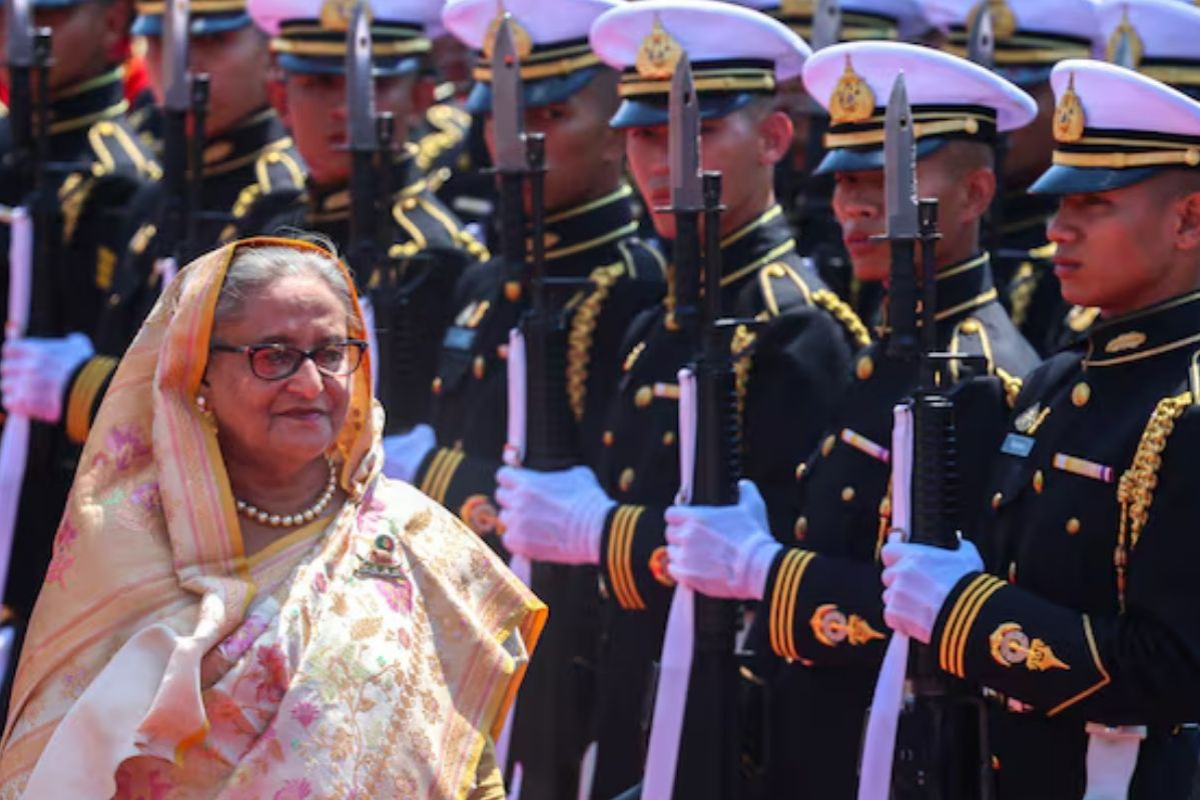
Former Bangladeshi Prime Minister Sheikh Hasina, who has been living in exile in India, has expressed her willingness to return home — but only under a legitimate government. In an interview with Reuters on Wednesday (29 October), Hasina said that if her party, the Awami League, is not allowed to contest the upcoming national election, millions of her supporters will boycott the polls.
She stated that she has no plans to return to Bangladesh under any administration formed without her party’s participation, and will continue to remain in India for the time being.
Hasina fled to India in August 2024, following a mass student-led uprising that swept across Bangladesh. During that period, widespread violence erupted throughout the country. According to a United Nations report, between 15 July and 5 August 2024, at least 1,400 people were killed and thousands more injured, most of them by gunfire from security forces. The unrest was described as the deadliest episode in Bangladesh since its 1971 war of independence.
Despite her ouster, Sheikh Hasina now faces charges of crimes against humanity. The International Crimes Tribunal in Bangladesh has accused her of ordering the violent suppression of student protests, as well as the enforced disappearance and torture of political opponents.
The former prime minister has denied all allegations, calling them politically motivated.
“These proceedings are driven by political motives,” Hasina told Reuters. “The verdicts were predetermined. I was not given proper notice or a fair chance to defend myself.”
She also criticised the ongoing ban on her party, saying:
“The prohibition against the Awami League is not only unjust, it is self-defeating. Any future government must enjoy electoral legitimacy. Millions of citizens support the Awami League — if they do not vote, a functioning political system cannot exist.”
Bangladesh currently has more than 126 million registered voters. For decades, the country’s political landscape has been dominated by two major parties — the Awami League and the Bangladesh Nationalist Party (BNP). With the Awami League’s activities currently suspended, the BNP’s candidates are widely expected to win the forthcoming election.
However, Hasina made it clear that her supporters are not being encouraged to vote for other parties.
“We are not asking our supporters to vote for anyone else,” she said. “We still hope that reason will prevail and our party will be allowed to take part in the election.”
She did not confirm whether any back-channel negotiations were underway between her representatives and Bangladeshi authorities to secure the Awami League’s participation.
According to reports, Hasina’s son and political adviser, Sajeeb Wazed, could assume leadership of the party if necessary. But Hasina dismissed the notion of a dynastic handover.
“This is not about me or my family,” she said. “For Bangladesh’s future, we must ensure constitutional governance and political stability. No single person or family can determine the destiny of a nation.”
Sheikh Hasina emphasised that her return to Bangladesh depends entirely on whether a legitimate and constitutional government is in place, with law and order properly maintained.
Her party, along with all of its affiliated organisations, remains banned under the current interim administration. Hasina noted that even if she returns, her or her family’s presence in leadership positions is not essential for the Awami League’s survival.
After Hasina’s departure last year, targeted attacks were reported against Awami League workers in several regions. While the streets are now relatively calm, sporadic clashes were recently reported during the signing of a state reform agreement.
Currently residing freely in New Delhi, Hasina remains cautious due to her family’s history of political violence. Her father and three brothers were assassinated in a military coup in 1975, while she and her sister were abroad.
Despite the uncertainties, Hasina hinted that she would like to return someday — but only to a lawful and stable Bangladesh.


Comments