Sunday, 5th April 2026

Khabor Wala Desk
Published: 13th March 2026, 2:29 AM
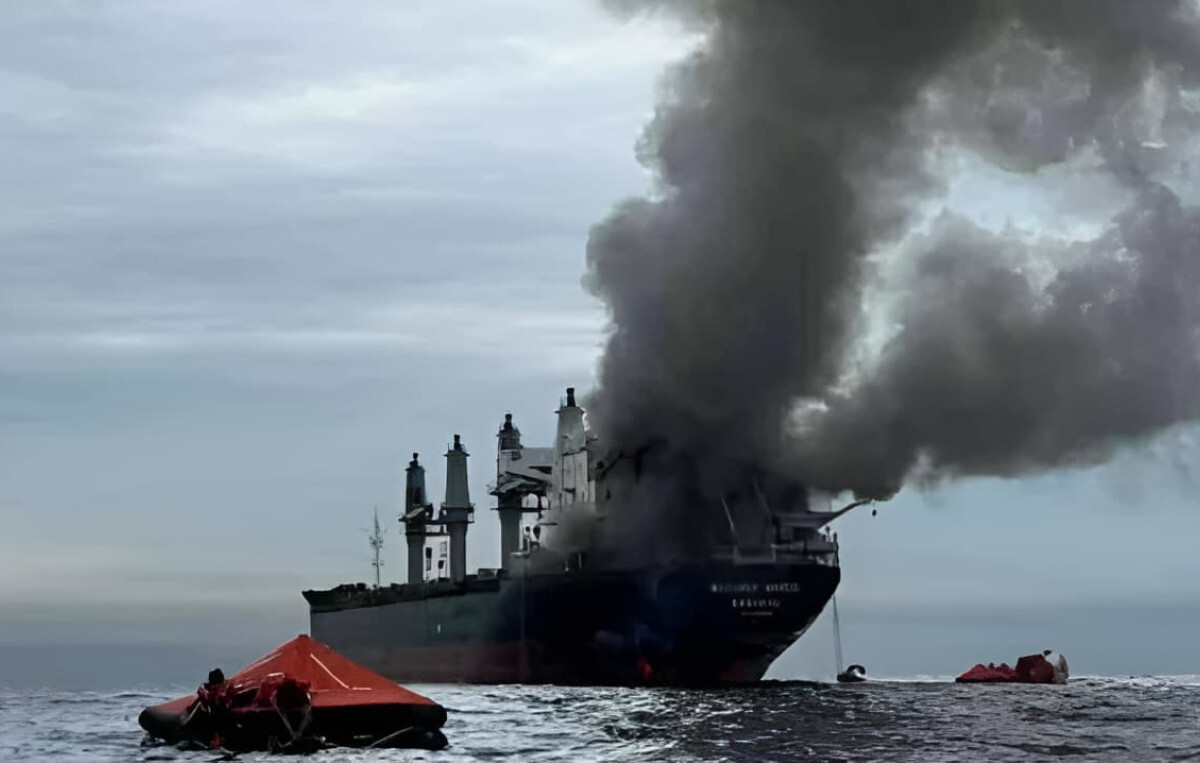
Tensions in the Persian Gulf and the strategic Strait of Hormuz have intensified after a fresh wave of attacks on commercial vessels, raising concerns about maritime security and global energy supply. At least six ships were reportedly targeted in the latest incidents, including two tankers that were severely damaged in Iraqi territorial waters.
According to port authorities, maritime security agencies and regional risk assessment organisations, the most serious attack occurred on Wednesday (11 March) when an explosive-laden boat allegedly linked to Iran struck an oil tanker operating near Iraq’s southern coastline. The explosion killed one crew member and triggered a massive fire that ultimately destroyed two vessels.
Officials said the blast followed earlier projectile attacks on four other ships in the Persian Gulf. Those attacks reportedly involved missiles or artillery-style projectiles, though details about the perpetrators and the extent of damage remain under investigation. Analysts believe the coordinated nature of the incidents suggests a significant escalation in hostilities in the wider Iran conflict.
Security monitors note that since the beginning of the conflict in late February, maritime attacks in the Middle East have increased sharply. At least 16 commercial vessels operating in or near the Persian Gulf have been targeted in various forms, ranging from drone strikes to missile attacks.
The renewed violence comes after military strikes carried out by the United States and Israel against targets in Iran on 28 February. Since then, shipping activity in the Persian Gulf and the narrow Strait of Hormuz—one of the world’s most critical energy corridors—has slowed dramatically as shipping companies reassess security risks.
The Strait of Hormuz is particularly significant to the global economy. Roughly one-fifth of the world’s seaborne oil supply passes through the narrow waterway each day, making any disruption there a major concern for energy markets. As tensions have escalated, global oil prices have surged, reaching their highest level since 2022.
The following table summarises key facts related to the latest incidents:
| Key Indicator | Details |
|---|---|
| Date of latest attacks | 11 March |
| Total vessels targeted | 6 |
| Ships destroyed by fire | 2 |
| Confirmed fatalities | 1 crew member |
| Ships attacked since conflict began | At least 16 |
| Share of global oil passing through Hormuz | About 20% |
Iran’s Revolutionary Guards have issued a stern warning in response to the ongoing military pressure on the country. In a recent statement, the organisation declared that if attacks on Iran continue, it would ensure that “not a single litre of oil” from the Middle East reaches the United States, Israel or their allies.
Meanwhile, former US President Donald Trump responded with a counter-warning, stating that any attempt by Iran to block oil exports or disrupt shipping would provoke a stronger military response from Washington. He also urged international energy companies to continue using the Strait of Hormuz, asserting that most of Iran’s naval capabilities had already been neutralised.
Iraqi port officials identified the two vessels destroyed in the latest incident as the Marshall Islands–flagged tanker Safe Sea Vishnu and the Malta-flagged Zephyros. Both ships had been loaded with petroleum products from Iraqi facilities before the attack occurred.
Iraq’s state oil marketing company, SOMO, confirmed that the tanker Safe Sea Vishnu had been chartered by an Iraqi company operating under a contract with the organisation. The Zephyros, meanwhile, was reportedly transporting fuel products on behalf of the Basra Gas Company.
According to SOMO officials, the attack took place during a ship-to-ship fuel transfer operation within Iraqi territorial waters. Such transfers are common in the region’s oil logistics network but can leave vessels temporarily stationary and vulnerable to attack.
Maritime analysts warn that continued instability in the Persian Gulf could have far-reaching consequences. Beyond the immediate safety risks to crews and vessels, sustained disruptions to shipping lanes could tighten global energy supply, increase transportation costs and deepen volatility in international oil markets. For now, naval forces from several countries are increasing patrols in the area, but the security situation remains highly fragile.




Comments