Sunday, 5th April 2026

Khabor Wala Desk
Published: 27th November 2025, 11:41 AM
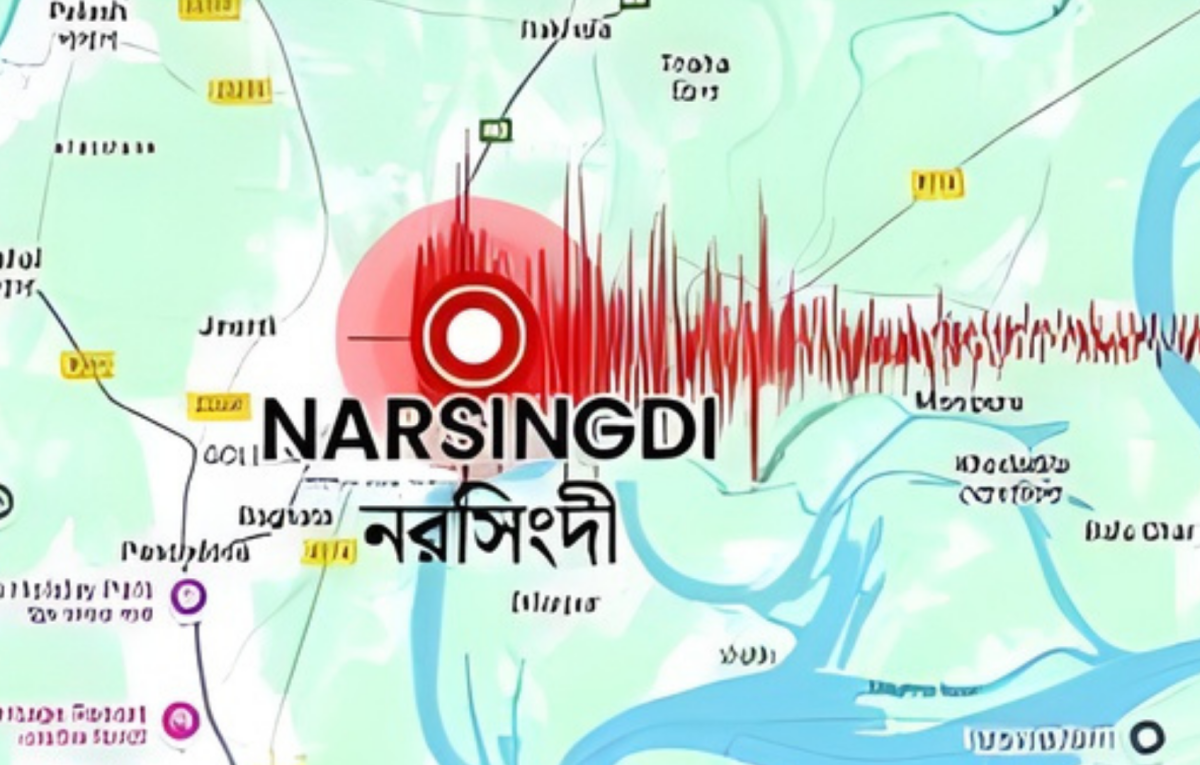
The capital city of Dhaka experienced another earthquake this afternoon, adding to the rising anxiety among residents after a series of tremors in recent days. According to Rubaiyat Kabir, the acting official at the Meteorological Department’s Earthquake Monitoring Centre, the quake occurred at precisely 4:15:20 PM. The magnitude was recorded at 3.6 on the Richter scale, with its epicentre located in Ghorashal, Narsingdi—alarmingly close to the capital.
Although the tremor was brief and considered minor, it was clearly felt in several parts of Dhaka, prompting residents to rush out of buildings in fear. Reports from areas including Mirpur, Uttara, Dhanmondi, Badda, and Old Dhaka confirm that many people immediately evacuated residential and office buildings as a precaution.
This new quake comes amidst a pattern of increased seismic activity. Between Friday morning (21 November) and Saturday, Dhaka and its surrounding areas experienced four quakes within just 31 hours. The strongest of these was Friday’s 5.7 magnitude earthquake, with its epicentre in Madhabdi, Narsingdi, at a shallow depth of only 10 kilometres. That powerful quake left 10 people dead and injured more than 600 others.
Renowned geologist and earthquake specialist Professor Humayun Akhtar stated today that two additional tremors were felt early this morning in Sylhet and Teknaf. As a result, Bangladesh has now experienced six earthquakes since last Friday—an unusually high number within such a short time frame.
Professor Akhtar emphasised that the 5.7 magnitude quake on 21 November was one of the strongest recorded in Bangladesh in recent decades. Its shallow depth intensified the shaking and caused widespread panic across the capital. Many residents remained traumatised even days later, making today’s fresh tremor particularly alarming.
He further explained that three out of the last six earthquakes had epicentres in Narsingdi. The district sits dangerously close to the junction between the Burma Plate and the Indian Plate, a region known as a subduction zone. This geological zone is capable of producing significant tectonic pressure, often releasing it through clusters of tremors. According to him, both the Sylhet and Teknaf earthquakes earlier today also originated within this same subduction boundary.
Experts note that frequent small quakes can indicate shifting tectonic stress. While not necessarily a sign of an imminent major earthquake, the trend is concerning and warrants close monitoring. They caution that Dhaka, with its densely packed and often structurally weak buildings, remains highly vulnerable even to moderate seismic activity.
Many residents expressed fear on social media, questioning whether the repetitive tremors signal a larger quake ahead. Authorities have urged the public to remain alert but not panic, and to follow standard safety guidelines such as staying away from weak structures, avoiding lifts during tremors, and keeping emergency kits ready.
| Date | Time | Epicentre | Magnitude | Impact |
|---|---|---|---|---|
| 21 Nov | 10:38 AM | Madhabdi, Narsingdi | 5.7 | 10 dead, 600+ injured |
| 21–22 Nov | Various | Dhaka region | Low | Public panic |
| Today (early) | Dawn | Sylhet, Teknaf | Low | No damage |
| Today | 4:15:20 PM | Ghorashal, Narsingdi | 3.6 | No reported damage |
As Bangladesh continues to witness repeated seismic activity, experts and citizens alike are urging authorities to review building safety standards, strengthen preparedness, and enhance monitoring systems.




Comments