Sunday, 5th April 2026

Khabor Wala Desk
Published: 4th August 2025, 4:16 PM
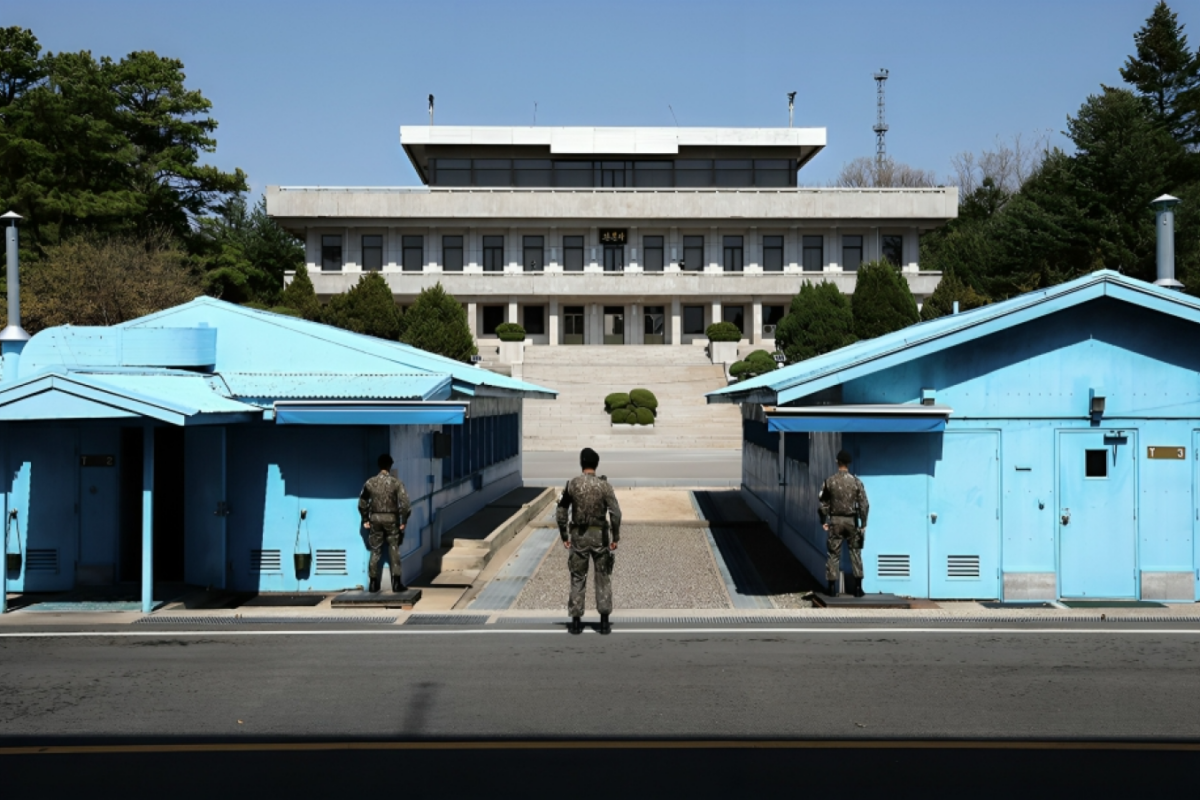
South Korea announced on Monday that it has begun dismantling loudspeakers previously used to project K-pop music and news reports into North Korea, marking a conciliatory step by the new administration in Seoul to de-escalate hostilities with its belligerent northern neighbour.
The move follows the election of President Lee Jae-myung, whose administration has signalled a softer diplomatic approach compared to his predecessor. The loudspeaker broadcasts, a hallmark of South Korean psychological warfare efforts, had already been suspended in June.
Background to the Loudspeaker Broadcasts
South Korea and North Korea remain technically at war, as the Korean War (1950–1953) ended with an armistice rather than a peace treaty. The demilitarised zone (DMZ) separating the two nations has been a hotspot for tension and propaganda over the decades.
Last year, the previous South Korean government resumed the loudspeaker broadcasts in retaliation to waves of rubbish-filled balloons launched southward by Pyongyang. The broadcasts featured pop songs, anti-regime messaging, and international news — all taboo across the heavily censored North Korean border.
In response, North Korea began emitting strange and disturbing noises along the frontier, reportedly causing a major nuisance for residents on the southern side.
Military Statement and De-escalation Effort
Speaking at a press conference on Monday, Lee Kyung-ho, spokesperson for South Korea’s Ministry of National Defence, confirmed:
“Starting today, the military has begun removing the loudspeakers.
It is a practical measure aimed at helping ease tensions with the North,
provided that such actions do not compromise the military’s state of readiness.”
He noted that all loudspeakers along the border would be removed by the end of the week, although he declined to specify the exact number of devices being dismantled
Political Context: Lee’s Policy Shift
President Lee, elected following the impeachment of his predecessor over an aborted martial law declaration, ordered the military in June to cease the broadcasts as part of a broader initiative to “restore trust” with Pyongyang.
The previous administration had adopted a confrontational approach, especially after North Korea aligned itself more closely with Moscow in the aftermath of Russia’s invasion of Ukraine.
In contrast, Lee has pledged to improve inter-Korean relations and reduce tensions on the peninsula. He has expressed willingness to pursue talks without preconditions, breaking from the hardened stance of his forerunner.
North Korea’s Response
Despite Lee’s overtures, Pyongyang has dismissed any possibility of renewed dialogue. Last week, Kim Yo-jong, influential sister of North Korean leader Kim Jong-un, issued a statement criticising Seoul’s gestures as naïve:
“If the ROK [Republic of Korea]… expected that it could reverse all the results it had made with a few sentimental words,
nothing is more serious a miscalculation than it.”
Her remarks underscore the continued chill in inter-Korean relations, despite shifts in rhetoric and posture from Seoul.
Timeline of Events
| Date | Event | Details |
| 1950–1953 | Korean War | Ended in an armistice; no formal peace treaty signed |
| 2023 | Loudspeaker broadcasts resumed by South | Response to North’s balloon provocations |
| March 2024 | President Lee Jae-myung elected | After impeachment of predecessor |
| June 2024 | Broadcasts suspended | In response to North halting bizarre noise emissions |
| 5 August 2024 | Loudspeaker dismantling begins | Full removal expected by end of the week |
| Ongoing | North Korea refuses talks | Kim Yo-jong dismisses South’s overtures |
The dismantling of the loudspeakers is symbolic of a new chapter in South Korea’s approach to diplomacy and deterrence. Whether the move will have any real impact on North Korea’s posture remains uncertain, but it marks an effort by President Lee’s administration to shift away from provocation and towards strategic de-escalation.



Comments