Sunday, 5th April 2026

Khabor Wala Desk
Published: 23rd July 2025, 4:26 PM
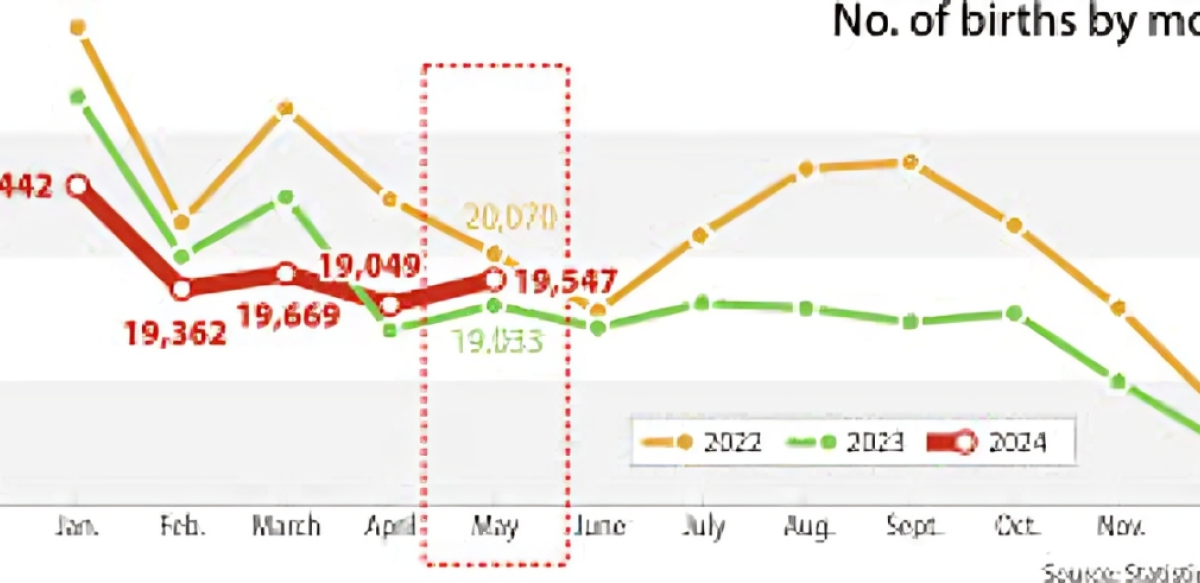
South Korea has reported a record-breaking increase in its birth rate for the first five months of 2025, according to officials from Statistics Korea, as shared with AFP on Wednesday. The number of newborns in the country surged significantly, marking a notable shift in a long-standing demographic trend.
Data Overview
| Period | Number of Newborns | Growth Rate | Historical Significance |
| January-May 2025 | 106,048 | 6.9% | Highest growth rate since 1981 |
According to the official report, 106,048 babies were born between January and May this year, representing a 6.9% increase compared to the same period last year. This is the highest growth rate in South Korea since data collection on birth rates began in 1981.
A Positive Shift Amid Declining Birth Rates
This development comes as a surprise, considering South Korea’s persistent struggles with one of the world’s lowest birth rates, which has been a significant concern for policymakers for years. The country has faced demographic challenges such as an aging population and a shrinking workforce, leading to serious economic and social implications.
For several years, South Korea’s birth rate had been declining, with many families opting for fewer children due to factors such as high living costs, long working hours, and the difficulties of balancing family life with professional careers.
Government Efforts to Tackle Low Birth Rates
This increase in the birth rate is seen as a positive sign, potentially reflecting the success of recent government policies aimed at encouraging family growth. The South Korean government has introduced various initiatives to combat the country’s demographic crisis, including financial incentives, parental leave policies, and affordable childcare options, as well as efforts to improve work-life balance.
However, experts caution that while this growth is encouraging, it remains to be seen whether this trend will continue in the long term or if it is a temporary shift in response to specific factors, such as pandemic-related changes or government interventions.
Future Outlook
Despite the 6.9% growth, South Korea’s total birth rate remains far below the replacement level, which is the number of births needed to maintain a stable population. The country continues to face an ageing demographic, and additional measures will likely be needed to sustain and build upon this recent surge in births.
The government’s response and ongoing efforts to support young families will likely be pivotal in determining whether this growth is a lasting trend or a short-lived anomaly.
This significant birth rate increase, however, provides a glimmer of hope in addressing the country’s long-term demographic challenges and signals a potential shift in the nation’s family planning outlook.



Comments