Thursday, 9th April 2026

Khabor Wala Desk
Published: 9th April 2026, 8:36 AM
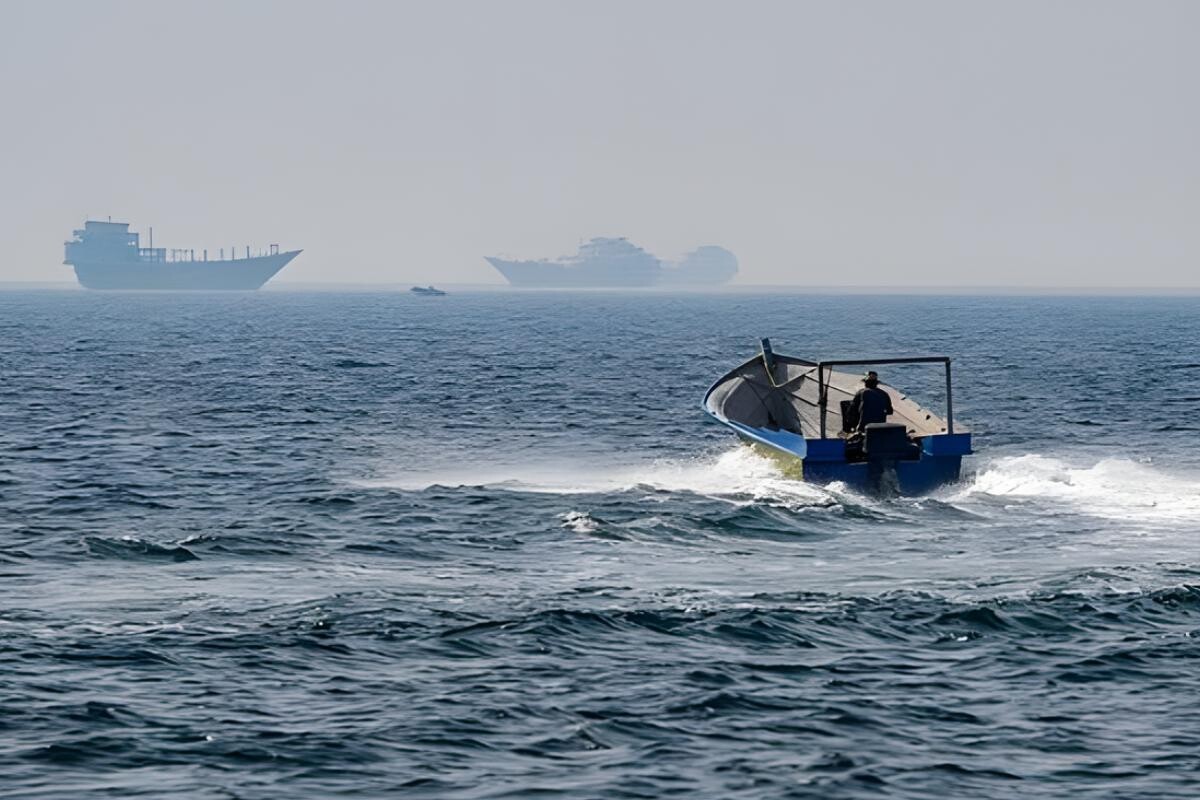
United States President Donald Trump has proclaimed the recently brokered two-week ceasefire between Washington and Tehran as a “complete and unconditional victory”. Yet a closer reading of the agreement suggests a more complex reality: by retaining effective control over the Strait of Hormuz, Iran appears to have preserved a powerful lever over global energy markets and, by extension, the wider world economy.
The ceasefire’s implementation is implicitly tied to whether Iran permits the reopening of this vital maritime corridor. That linkage effectively acknowledges Tehran’s strategic influence over a route through which roughly one-fifth of the world’s oil and natural gas supplies pass. Energy analysts argue that such leverage allows Iran to exert disproportionate economic pressure without relying solely on conventional military strength.
Brookings Institution energy expert Samantha Gross recently observed that Iran requires only limited military capability to disrupt the global economy. Her assessment has been borne out by recent market volatility. Although the ceasefire announcement brought temporary relief to investors, uncertainty remains entrenched.
On Wednesday, crude oil prices fell by approximately 15–20 per cent, while European natural gas prices also declined significantly. However, Neil Shearing, Chief Economist at Capital Economics, cautioned that substantial barriers remain to achieving lasting peace among the United States, Israel, and Iran. He highlighted the unresolved status of the Strait as the single greatest concern for markets.
| Indicator | Estimated Impact |
|---|---|
| Share of global oil & gas via Hormuz | ~20% |
| Share of global urea صادرات | ~33% |
| Duration of disruption | Over 6 weeks |
| Oil price movement (recent) | ↓ 15–20% |
| Iranian daily exports (March) | ~1.85 million barrels |
Despite tentative signs of resumed tanker movements, reports indicate that Iran has intermittently halted shipping following renewed regional tensions, including Israeli strikes in Lebanon. At present, Iranian forces maintain operational control over the waterway, and full normalisation of maritime traffic remains uncertain.
The disruption is unprecedented in scale. For more than six weeks, most vessels have been unable to traverse the Strait freely—an unthinkable scenario until recently. The consequences have been global: the Philippines has declared a national energy emergency, European electricity generation costs have surged, and even energy-rich economies such as the United States have experienced rising fuel prices.
According to geopolitical strategist Dan Alamaru of Oxford Economics, Iran has effectively leveraged its control of the Strait to secure a ceasefire while sustaining its governing system. He characterises Tehran’s approach as a form of “economic warfare”.
Iran’s position also brings financial advantages. To stabilise global supply, Washington has reportedly eased restrictions on approximately 140 million barrels of Iranian oil. Data from Kpler indicate that Iran exported an average of 1.85 million barrels per day in March—an increase on recent months.
Moreover, Tehran has capitalised on supply constraints to command higher prices. Traditionally selling at a discount of around $10 per barrel compared with Brent crude, Iranian oil has recently traded at premiums of up to $3 per barrel in China and $7 in India.
There are also growing concerns about the possible institutionalisation of transit fees. Reports suggest that vessels may soon face formal tolls for passage through the Strait. Shipping intelligence firm Lloyd’s List has already indicated that at least one vessel paid $2 million for access.
Speculation is mounting that Oman could act as a neutral intermediary, collecting fees and transferring a portion to Iran—potentially compensating Tehran for wartime economic losses.
In sum, while the ceasefire has reduced immediate tensions, the underlying balance of power appears far from settled. Control of the Strait of Hormuz has emerged not merely as a tactical asset, but as a strategic instrument capable of reshaping negotiations, markets, and geopolitical alignments alike.


Comments