Sunday, 5th April 2026

Khabor Wala Desk
Published: 26th March 2026, 2:23 PM
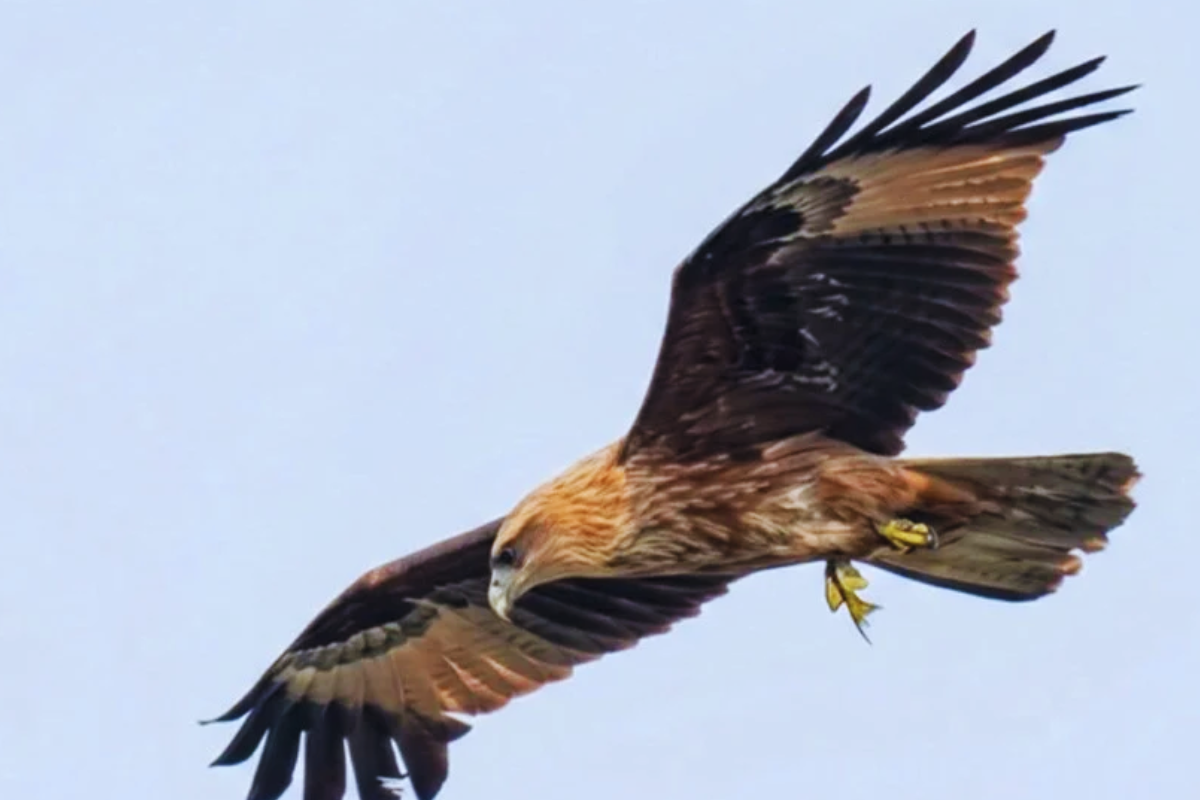
The Pallas’s fish eagle, locally dubbed the “pirate eagle” due to its aggressive and opportunistic hunting behaviour, is one of the most elusive and endangered raptors found in the region. Renowned for its exceptional eyesight and remarkable fishing skills, this bird of prey occupies a distinct ecological niche, yet it is now rarely observed in the wild.
Belonging to the family Accipitridae, the species is also known as Pallas’s sea eagle. In Bangladesh, it is referred to by various local names, including Bo-ol, Kurrara, and Kurr. Despite once having a broader range across wetland-rich landscapes, its population has declined drastically. Current estimates suggest that only around 50 to 100 individuals remain within Bangladesh. While globally classified as vulnerable or near-threatened in several assessments, within the country it is regarded as critically endangered due to its extremely limited presence.
Recent attention has been drawn to this rare species following the efforts of wildlife photographer Rana Masud, who successfully documented the bird after an extensive field expedition. According to him, the search began in Rangpur and extended to the Satchari National Park in Habiganj, a biodiversity-rich forest known for its dense canopy and diverse avifauna. It was there that he eventually encountered the elusive eagle, marking a significant moment in his photographic journey.
Rana Masud describes wildlife photography as a pursuit defined not by success alone, but by repeated failure, patience, and physical endurance. Wildlife, he notes, does not conform to human expectations; capturing a single meaningful frame often requires days, sometimes weeks, of patient observation in challenging terrain.
During this expedition, he endured prolonged periods in forested environments while fasting, spending entire days from dawn to dusk tracking movement within the canopy. At times, he broke his fast with only water and dates before resuming his search for the perfect shot. His journey later took him to the Baikka Beel wetlands in Srimangal, where he faced even harsher conditions, including intense heat, physical exhaustion, and deteriorating health.
Despite these difficulties, he persisted until his condition forced him to rest on the advice of companions. Although he was unable to capture every desired frame, he regards his successful documentation of the Pallas’s fish eagle as a personal milestone—what wildlife photographers often call a “lifer”, meaning a first-ever encounter with a species in the wild.
Conservationists highlight that the species’ decline is largely driven by habitat loss, wetland degradation, declining fish populations, and increasing human disturbance. These pressures have significantly reduced suitable breeding and feeding grounds, pushing the species closer to local extinction.
The following table summarises key information about the Pallas’s fish eagle:
| Feature | Details |
|---|---|
| Common names | Pirate eagle, Bo-ol, Kurrara, Kurr |
| Scientific family | Accipitridae |
| Conservation status (Bangladesh) | Critically endangered |
| Estimated population | 50–100 individuals |
| Primary habitat | Wetlands, riversides, forested water bodies |
| Diet | Fish and small aquatic animals |
| Main threats | Habitat destruction, food scarcity, human disturbance |
Rana Masud reflects that every successful wildlife photograph is built upon a foundation of struggle, patience, and unwavering passion for nature. It is this dedication, he says, that transforms hardship into achievement and allows fleeting moments in the wild to be preserved for future generations.




Comments