Sunday, 5th April 2026

Khabor Wala Desk
Published: 7th November 2025, 11:55 AM
An end to the devastating conflict in Sudan appears no closer, despite the paramilitary Rapid Support Forces (RSF) — who have been battling the national army for over two years — announcing their support for a ceasefire plan.
The Sudanese government, backed by the army, has yet to respond to the US-led mediation effort, while explosions continued to shake the army-controlled capital, Khartoum, on Friday.
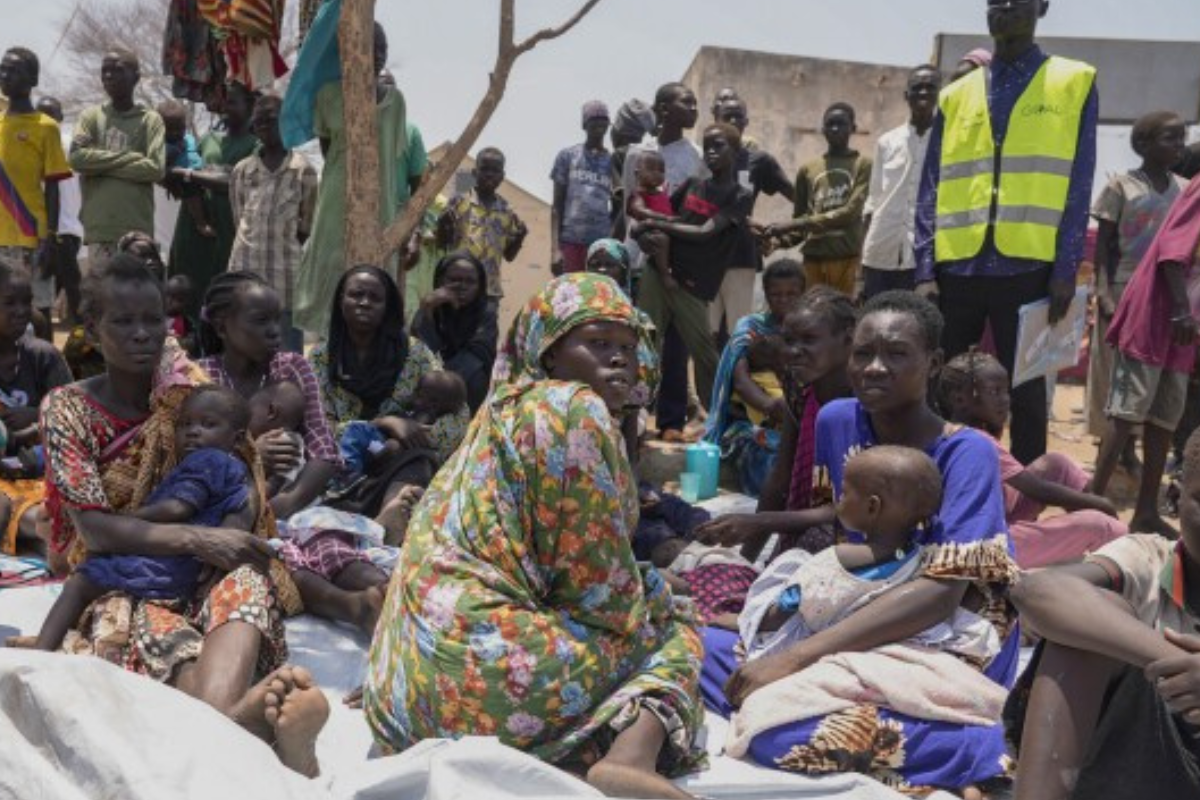
Experts remain sceptical about the RSF’s sincerity, warning that it may be preparing a new offensive to seize the strategic southern city of El-Obeid. Yet, after nearly 31 months of warfare that has killed tens of thousands, displaced almost 12 million people, and pushed millions to the brink of famine, some analysts suggest the conflict may be nearing a turning point.
Fighting erupted in April 2023 between the forces of army chief General Abdel Fattah al-Burhan and his former deputy, RSF commander Mohammed Hamdan Dagalo, in a power struggle that has fractured the nation.
The United Nations has accused the United Arab Emirates of supplying arms to the RSF — allegations repeatedly denied by Abu Dhabi — while observers say the Sudanese army has received backing from Egypt, Saudi Arabia, Turkey and Iran.
Now, the United States, Saudi Arabia, the UAE and Egypt are jointly supporting a proposed ceasefire plan.
RSF’s Gains in Darfur
Less than two weeks ago, the RSF captured El-Fasher — the army’s last major stronghold in western Darfur — in a move accompanied by reports of mass killings, sexual assaults, and widespread looting. The takeover drew international condemnation and raised fears of further atrocities as the fighting shifts eastwards towards Khartoum and the oil-rich Kordofan region.
Under mounting global pressure, the RSF has declared itself open to a ceasefire, though the army has yet to respond. Analysts doubt the RSF’s sincerity.
“Its only intent is to distract from the atrocities it is currently committing in El-Fasher and to appear more responsible than the army,” said Cameron Hudson of the Centre for Strategic and International Studies in Washington.
He added that the army’s focus is now on “retaking all of Kordofan before advancing towards El-Fasher.”
The RSF’s capture of El-Fasher gives it control over all five state capitals in Darfur and large parts of the south. Meanwhile, the army maintains dominance across the north, east and central regions along the Nile and Red Sea.
Hudson noted that while the RSF may now wish to secure humanitarian access to areas under its control, the army has a clear incentive to block such efforts and prevent the paramilitaries from consolidating their power.
Although details of the proposed ceasefire remain undisclosed, a senior Saudi official told AFP that it envisions a three-month truce followed by talks in Jeddah aimed at reaching a permanent peace deal.
Renewed Explosions and Drone Strikes
Just one day after the RSF’s announcement, fresh explosions rocked Khartoum and the army-held city of Atbara, around 300 kilometres north of the capital. Witnesses described overnight drone attacks and anti-aircraft fire lighting up the skies.
“I was awoken around 2 am by explosions near the Wadi Sayidna military base,” said one Omdurman resident, speaking anonymously for safety reasons. Another reported a drone strike near a power station that caused a local blackout.
In Atbara, a witness described several drones being shot down by army defences, sparking fires across the city’s eastern districts. There were no immediate reports of casualties, and neither side has commented on the attacks.
Fighting Intensifies in Kordofan
In the south, the Sudan Doctors’ Union accused the RSF of shelling a hospital in the besieged city of Dilling on Thursday morning, injuring several people and destroying the hospital’s radiology and imaging department.
Dilling, under siege since June 2023, lies about 150 kilometres southwest of El-Obeid, the capital of North Kordofan — a key crossroads connecting Darfur to Khartoum.
Famine and Oil Interests
Access to affected areas remains limited due to intense fighting and communications blackouts, but aid agencies warn that Dilling faces a catastrophic humanitarian situation.
The Rome-based Integrated Food Security Phase Classification (IPC) reports that Dilling is at risk of famine, while the nearby state capital, Kadugli, is already suffering one. Famine has also been confirmed in El-Fasher and three nearby displacement camps, with parts of the Nuba Mountains declared famine zones last year.
South Kordofan, which borders South Sudan, holds significant strategic value due to its oil reserves, including the Heglig oil field — one of Sudan’s largest.
As both sides dig in and international mediators push for peace, the people of Sudan continue to endure the devastating toll of a conflict that shows no sign of abating.



Comments