Sunday, 5th April 2026

Khabor Wala Desk
Published: 14th February 2026, 11:02 PM
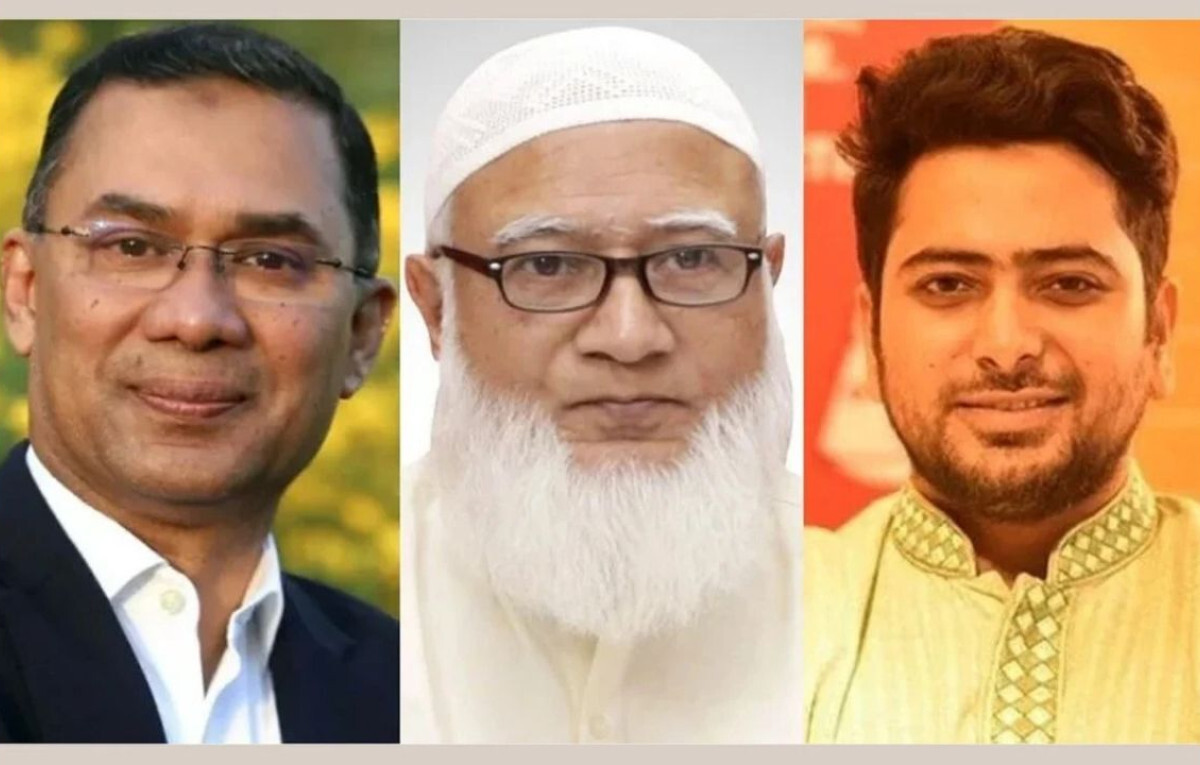
In a move widely interpreted as the dawn of a new era in Bangladeshi politics, Tariq Rahman, the Chairman of the Bangladesh Nationalist Party (BNP), is set to undertake high-profile visits to his electoral opponents this Sunday. Departing from the historical tradition of post-election animosity, Mr Rahman will visit the residences of Dr Shafiqur Rahman, Ameer of Jamaat-e-Islami, and Nahid Islam, the Convener of the National Citizens’ Party (NCP).
According to Shamsuddin Didar, a member of the BNP Chairman’s press wing, the visits are choreographed to foster a spirit of national unity. The schedule for the evening of Sunday, 15 February, is as follows:
| Time | Host Leader | Political Affiliation |
|---|---|---|
| 19:00 | Dr Shafiqur Rahman | Ameer, Jamaat-e-Islami |
| 20:00 | Nahid Islam | Convener, National Citizens’ Party (NCP) |
These meetings are described as “courtesy calls” following the recent general elections. However, political analysts suggest the implications run far deeper, signalling a strategic shift towards a pluralistic and collaborative governance model.
The announcement follows a significant press conference held by Mr Rahman on Saturday afternoon. Addressing the nation, he urged all political stakeholders to remain united in the pursuit of a democratic Bangladesh, free from the vestiges of fascism. He acknowledged that while the heat of the campaign trail often leads to friction, such disputes must not be allowed to fester into cycles of retribution.
“During the election, parties compete against one another, and misunderstandings naturally arise in the field,” Mr Rahman noted. “However, I urge everyone to be vigilant so that these disputes do not transform into revenge or malice.”
The BNP Chairman’s outreach is part of a broader “New Settlement” strategy. By engaging with the NCP—a party led by the influential student leader Nahid Islam—and the long-standing Jamaat-e-Islami, Rahman appears to be laying the groundwork for a coalition-style administration. His message is clear: the task of rebuilding the state after years of upheaval requires a collective effort that transcends partisan boundaries.
This diplomatic mission is seen as an attempt to reassure the public and international observers that the post-revolutionary transition will be marked by stability rather than the “winner-takes-all” politics that has historically plagued the nation.


Comments