Sunday, 5th April 2026

Khabor Wala Desk
Published: 15th October 2025, 9:46 AM
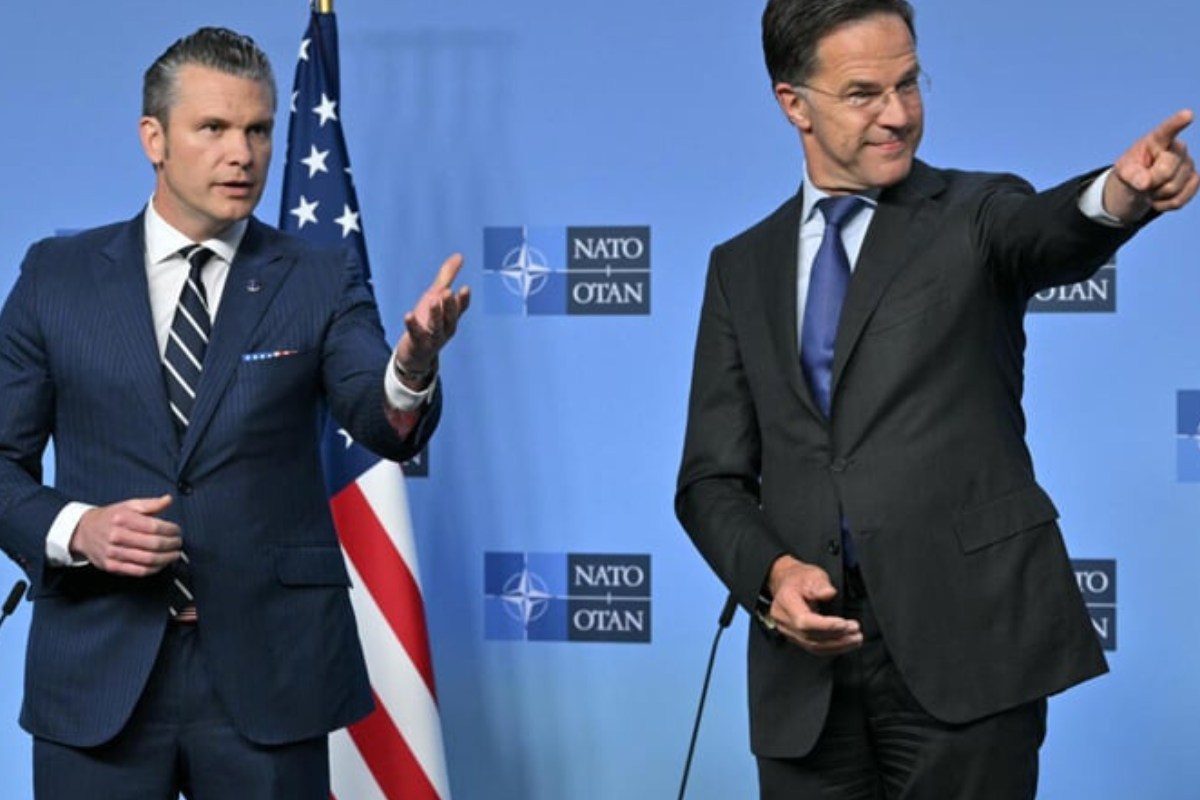
NATO defence ministers are set to meet on Wednesday in Brussels to discuss enhancing the alliance’s capacity to counter Russian air incursions, as concerns mount over Moscow’s actions in the so-called “grey zone” between war and peace.
The meeting will also focus on bolstering support for Ukraine, with US Defence Secretary Pete Hegseth joining his 31 NATO counterparts. Meanwhile, President Donald Trump is reportedly considering the supply of long-range missiles to Kyiv.
Recent months have seen a series of high-profile Russian airspace violations in Poland and Estonia, raising fears of conflict spilling over NATO borders. These incidents were followed by mysterious drones that disrupted airports and flew close to military installations across several countries.
“In more and more ways, we are in a long-term and intensified conflict with Russia,” a Western official remarked.
The pattern of provocations has heightened anxiety within the alliance, with some countries near Russia demanding a more robust and visible response.
| Recent Russian Threats | Impact / NATO Response |
| Airspace violations (Poland, Estonia) | Tested NATO’s readiness; increased air patrols |
| Drone incursions | Required costly missile intercepts; prompted anti-drone initiatives |
| Broader “grey zone” activity | Increased calls for revising rules of engagement |
NATO Secretary General Mark Rutte emphasised the need for continued adaptation: “We are doing what we trained for, and it works, but we need to do more.”
The alliance has launched new missions and strengthened forces in its eastern flank, while also refining rules of engagement and harmonising approaches among member states.
A priority is the development of anti-drone capabilities, incorporating low-cost technologies similar to those deployed by Ukraine to counter Russian attacks.
The European Union, which will convene its own defence ministers’ meeting on Wednesday evening, has proposed a “drone wall” to address the growing threat.
However, there is scepticism from countries such as Germany, with concerns that the initiative could overlap or conflict with NATO operations. The drone wall is part of a broader EU push to prepare for potential conflict with Moscow, with a roadmap to be presented to leaders next week.
| EU Defence Focus Areas | Details |
| Drone countermeasures | “Drone wall” initiative under discussion |
| EU-wide defence readiness | Preparing for potential future conflicts with Russia |
| Coordination concerns | Some member states wary of duplicating NATO efforts |
| Approval timeline | Roadmap to be signed at next EU leaders’ summit |
Hegseth is expected to urge NATO members to honour their pledges to increase defence spending, following commitments made at the Hague summit in June to reach 3.5 per cent of GDP on core military expenditure by 2035.
In addition to strengthening NATO itself, ministers will discuss supporting Ukraine in its defence against Russian attacks. Washington has grown closer to Kyiv amid frustration with Vladimir Putin’s stalling on peace efforts.
| NATO/US Support for Ukraine | Details |
| Current deals | Around €2 billion ($2.3 billion) in US-supplied weapons funded by Europe |
| Target countries for contributions | Britain, France, Spain, Italy |
| Trump considerations | Provision of long-range Tomahawk missiles |
| Strategic aim | Pressure Russia to negotiate peace |
US Ambassador to NATO Matthew Whitaker highlighted the strategic rationale: “This programme is vital, and allies must step up and contribute now to put the pressure on Russia to come to the negotiating table.”
Trump is scheduled to meet Ukrainian President Volodymyr Zelensky on Friday to discuss the possible transfer of longer-range missiles. The Kremlin has warned against the move, but Washington suggests that enabling deep strikes into Russian territory could alter Putin’s calculations, potentially impacting energy infrastructure and strategic positions.
NATO’s current focus is thus twofold: strengthening defences along its eastern flank and supporting Ukraine with advanced military aid, while navigating the complexities of member coordination, EU initiatives, and Russian provocations.
The meeting in Brussels is likely to set the tone for alliance strategy over the coming months, signalling NATO’s determination to adapt to evolving threats in an era of hybrid warfare and grey-zone tactics.




Comments