Sunday, 5th April 2026

Khabor Wala Desk
Published: 30th July 2025, 5:42 PM
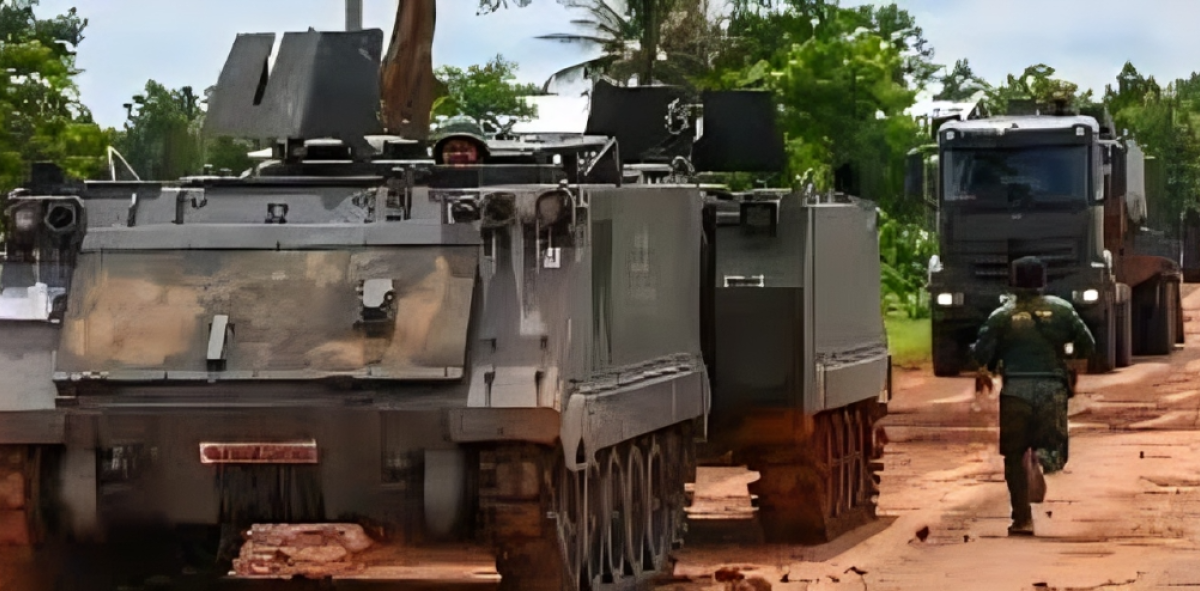
Thailand has accused Cambodia of a “flagrant violation” of a newly agreed ceasefire, after its troops reportedly came under sustained attack overnight, despite a truce aimed at halting hostilities along the volatile border region.
Ceasefire Breached Hours After Agreement
The ceasefire, which came into effect on Tuesday, was meant to put an end to five consecutive days of cross-border fighting that claimed the lives of at least 43 individuals from both sides. The clashes stem from a long-running territorial dispute centred around ancient temples along the 800-kilometre (500-mile) frontier between the two countries.
However, according to a statement issued by Thailand’s Foreign Ministry on Wednesday, Cambodian troops launched attacks in Sisaket province during the night, using small arms and grenades, with assaults continuing into the morning.
“This represents a flagrant violation of the ceasefire agreement,”
– Thailand’s Foreign Ministry.
Despite the reported attacks, Thai government spokesperson Jirayu Huangsab claimed that Thai forces maintained control of the situation and that border conditions had returned to normal by 8:00 am (0100 GMT).
Cambodia Denies Violation
Cambodia has consistently denied breaching the truce, which was agreed upon to de-escalate the crisis and facilitate the return of the over 300,000 evacuees displaced from the border region.
An AFP journalist stationed on the Cambodian side reported no explosions from the time the ceasefire began until Wednesday morning, although artillery had been heard daily since the hostilities began the previous Thursday.
Casualties and Damage
The recent conflict has caused more casualties than the intermittent violence between 2008 and 2011. Below is a breakdown of the known casualties:
| Nation | Military Deaths | Civilian Deaths | Total Deaths |
| Thailand | 15 | 15 | 30 |
| Cambodia | 5 | 8 | 13 |
| Total | 20 | 23 | 43 |
A Fragile Peace
Although the truce began shakily — with initial accusations of Cambodian violations by Thailand — meetings between rival military commanders continued along the border as planned. These meetings produced agreements on de-escalation measures, such as halting reinforcements and refraining from any troop movements that could lead to misunderstandings.
Yet, as Bangkok’s border crisis centre spokesperson Maratee Nalita Andamo warned:
“In this moment, in the early days of the ceasefire, the situation is still fragile.”
International Involvement
The ceasefire deal was finalised in Malaysia following diplomatic intervention by US President Donald Trump. Both Thailand and Cambodia have been courting the United States in hopes of avoiding punitive tariffs, and the truce is seen as a diplomatic win for Washington in the region.
Historical Context
The root of the border conflict lies in ambiguous demarcations made in 1907 by French colonial administrators, leaving both nations claiming sovereignty over historically significant temples and adjoining land. Despite several past attempts at negotiation, the issue remains unresolved.
As tensions simmer, observers remain wary of further escalations. The international community is closely monitoring whether both parties will uphold the fragile peace or descend once again into conflict.




Comments