Sunday, 5th April 2026

Khabor Wala Desk
Published: 1st August 2025, 3:53 PM

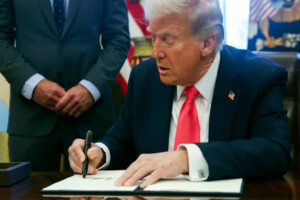
Thailand has hailed the revised 19 percent US import tariff—imposed under President Donald Trump’s trade reform strategy—as a “major success”, effectively averting a previously threatened 36 percent duty on key Thai exports.
The development follows weeks of negotiations between Thai officials and Washington, as part of the broader “Liberation Day” tariff restructuring initiative aimed at rebalancing America’s global trade partnerships.
Background and Context
| Key Detail | Information |
| Previous Tariff Threat | 36% |
| Finalised Tariff Rate | 19% |
| Announced By | US President Donald Trump |
| Thailand’s Viewpoint | “Major success” – preserves export base & stability |
| Thai Spokesman | Jirayu Huangsab |
| US–Thailand Trade Deficit (2024) | $45.6 billion (↑11.7% YoY) |
Thailand’s Response
In an official statement on Friday, Thai government spokesman Jirayu Huangsab confirmed that the reduced tariff would help maintain the nation’s trade momentum amid global volatility.
“This finalised deal, setting US import tariffs at 19 percent, marks a major success for Thailand. It represents a win-win approach aimed at preserving Thailand’s export base and long-term economic stability,”
— Jirayu Huangsab, Government Spokesman
The announcement brings relief to key sectors heavily reliant on US demand, including automotive parts, electronics, and agriculture.
Economic Implications
Thailand’s economy has remained fragile since the Covid-19 pandemic, which devastated its tourism industry—a critical pillar of GDP.
Growth Forecast Revisions
| Year | Initial GDP Forecast | Revised GDP Forecast |
| 2024 | — | 2.5% (actual growth) |
| 2025 | 3.2–4.2% | 2.3–3.3% |
In May 2025, the government lowered its economic growth outlook, citing escalating concerns over external tariffs and geopolitical risk factors.
US–Thailand Trade Snapshot
According to data from the US Trade Representative, America’s goods trade deficit with Thailand rose to $45.6 billion in 2024, an 11.7% increase compared to the previous year.
This significant deficit was among the justifications behind President Trump’s decision to recalibrate tariff rates on US trading partners.
Ceasefire Mediation and Regional Stability
Interestingly, the tariff announcement came just days after President Trump helped broker a ceasefire between Thailand and neighbouring Cambodia, following five days of violent border clashes.
Conflict Summary
This diplomatic engagement adds a geopolitical dimension to the evolving US–Thailand relationship, where trade negotiations appear linked with broader regional peace efforts.
Strategic Outlook
The reduction from 36% to 19% signals a rare bilateral success under Trump’s aggressive tariff regime. While the tariff is still higher than historical norms, Thai officials are framing it as a strategic compromise that ensures continued US market access, especially during a time of economic uncertainty and geopolitical fragility.
Thailand’s economic planners are now focusing on:
This tariff development may set a precedent for how other developing economies negotiate softer outcomes under Washington’s evolving trade policies.



Comments