Sunday, 5th April 2026

Khabor Wala Desk
Published: 29th July 2025, 2:26 PM
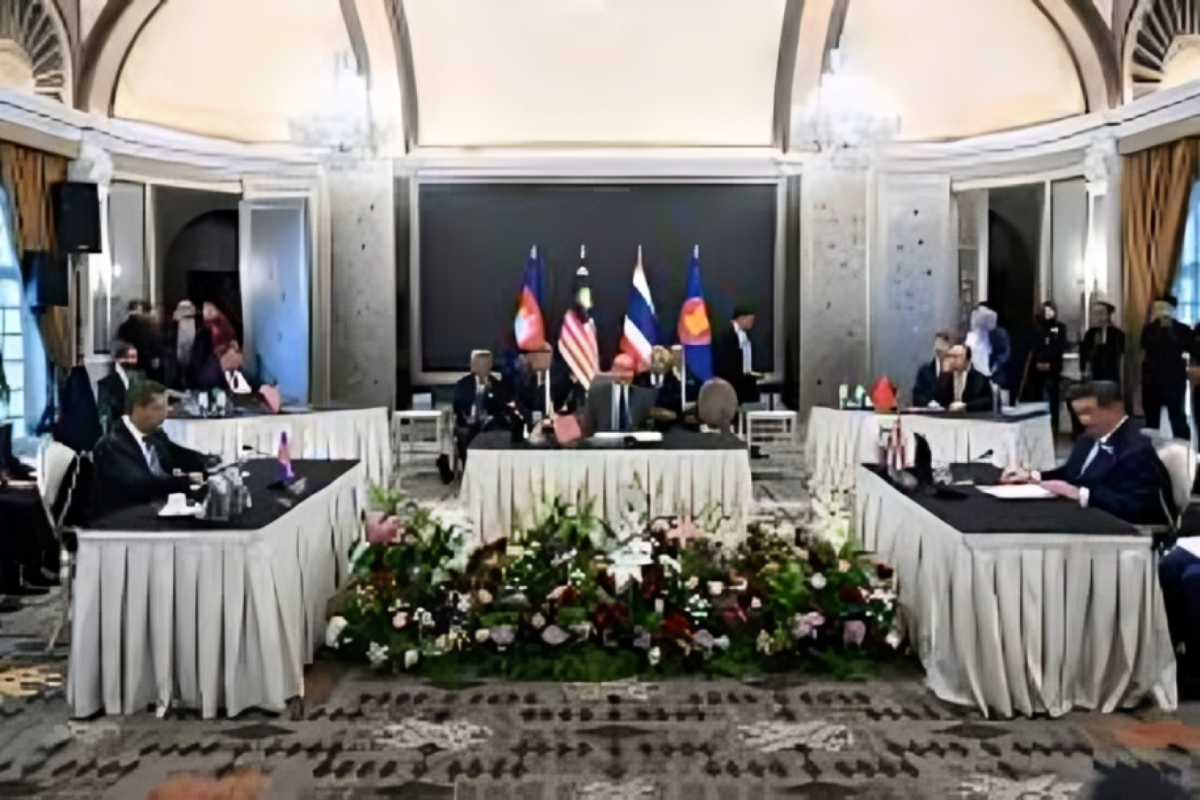
A ceasefire agreement between Thailand and Cambodia came into effect in the early hours of Tuesday, marking a pivotal attempt to end five days of intense border clashes around disputed ancient temple sites nestled within dense jungle terrain.
The agreement stipulates an “unconditional” ceasefire commencing at midnight on Monday, covering the 800-kilometre (500-mile) frontier. The ceasefire aims to halt the artillery, rocket, and aerial assaults that have killed at least 38 people and displaced nearly 300,000 civilians since hostilities erupted on Thursday.
Timeline of Events
| Date | Event |
| Thursday | Hostilities begin between Thailand and Cambodia over disputed territory. |
| Monday (pre-midnight) | Artillery fire heard in Cambodia’s Samraong city. |
| Midnight Monday | Ceasefire agreement officially begins. |
| Tuesday, 07:00 (0000 GMT) | Military commanders from both sides scheduled to meet. |
| 4 August | Bilateral cross-border committee to convene in Cambodia. |
Ceasefire Conditions and Local Reactions
In Samraong city, 20 kilometres from the frontier, an AFP reporter noted a steady rhythm of shelling throughout Monday, which abruptly stopped just before midnight and remained silent at least half an hour into the ceasefire.
In Preah Vihear province, another hotspot of violence, local governor Kim Rithy confirmed via Facebook that the situation had remained calm 20 minutes after the truce was initiated.
“When I heard the news I was so happy because I miss my home and my belongings that I left behind,”
— Phean Neth, 45, Cambodian evacuee
“If they say they’ll stop firing, they must stop completely.”
— Prapakarn Samruamjit, 43, Thai evacuee
Statements and International Support
A joint statement issued by Thailand, Cambodia, and Malaysia—the latter of which hosted the peace talks—described the truce as:
“A vital first step towards de-escalation and the restoration of peace and security.”
UN Secretary General Antonio Guterres also welcomed the ceasefire, urging both nations to:
“Create an environment conducive to addressing long-standing issues and achieving lasting peace.”
US President Donald Trump, whose administration had actively participated in brokering the talks, was thanked by Cambodian Prime Minister Hun Manet for his “decisive” support. Thai acting Prime Minister Phumtham Wechayachai insisted the ceasefire be implemented “in good faith by both sides”.
The peace efforts were also supported by China, according to the joint communiqué. Negotiations were hosted by Malaysian Prime Minister Anwar Ibrahim, currently serving as ASEAN chair, in Putrajaya
Casualties and Displacement
| Country | Military Deaths | Civilian Deaths | Displaced Persons |
| Thailand | 11 | 14 | 138,000+ |
| Cambodia | 5 (military confirmed) | 8 | 140,000+ |
The Thai military reported it has returned the bodies of 12 Cambodian soldiers, and accused Phnom Penh of deploying snipers in contested temples and launching rocket attacks into Thai territory. Skirmishes were reported across seven rural zones, typically known for rubber and rice farming.
Political and Economic Context
The conflict occurred during King Maha Vajiralongkorn’s 73rd birthday, with planned public festivities in Bangkok’s Grand Palace cancelled due to the unrest. Meanwhile, Trump’s tariff threats continue to loom over both countries. The US president has warned of severe trade levies unless bilateral trade deals are reached, though he signalled readiness to finalise agreements “once peace is at hand.”
Both nations previously agreed to a ceasefire in principle, yet mutual accusations of using cluster munitions, targeting medical facilities, and sabotaging peace efforts persisted.
Next Steps
The success of this ceasefire will likely depend on sustained diplomatic engagement, faithful implementation, and pressure from global stakeholders invested in both regional peace and economic stability.



Comments