Sunday, 5th April 2026

Khabor Wala Desk
Published: 4th December 2025, 12:01 AM
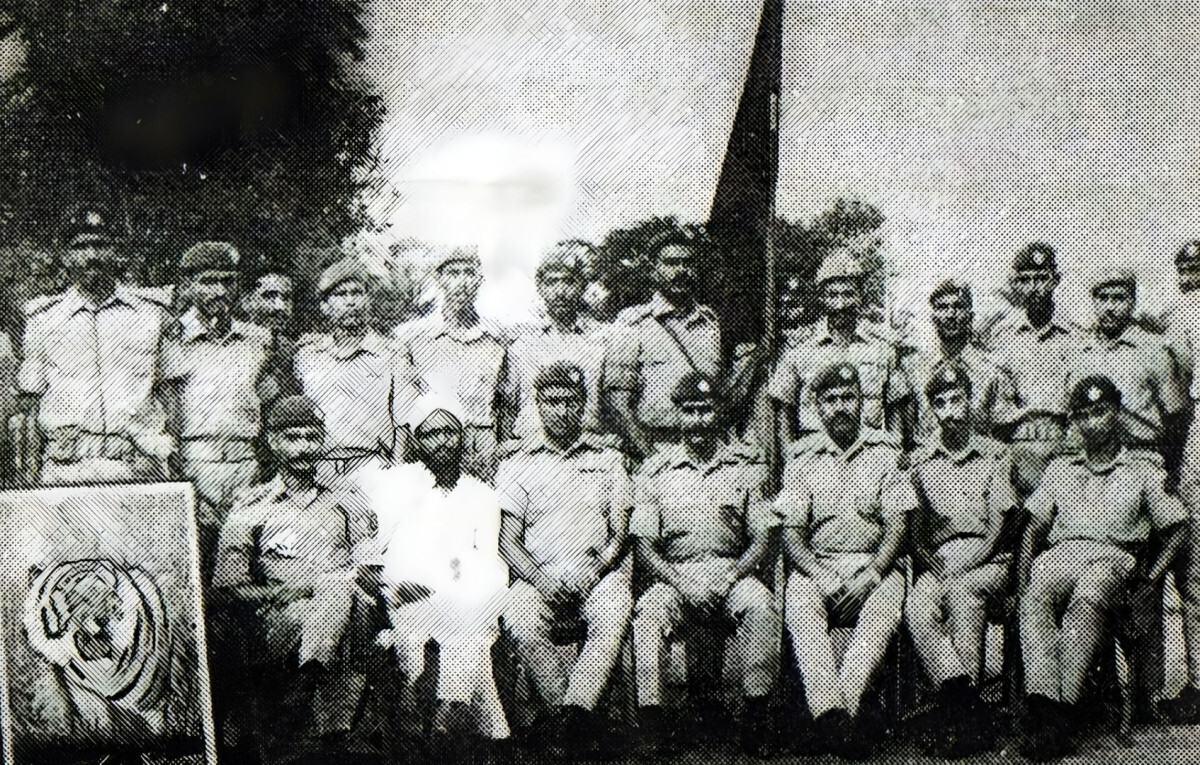
For many younger Bangladeshis, the name “Dewanbaghi” often surfaces through humorous internet songs and memes. One particular line has gained widespread popularity: “In the Liberation War of ’71, Sufi Emperor Dewanbaghi Baba… He carried weapons, fought bravely and freed Mother Bengal.” The lyrics have invited laughter and endless parody. But the real-life history of Maulana Mahbub-e-Khoda, widely known as Dewanbaghi, is far removed from the exaggerations and comedic renditions currently circulating online.
Behind the myth and mockery stands a man who not only believed deeply in his faith but also risked his life for his motherland. At a time when some religious leaders were issuing controversial fatwas—such as the infamous pronouncement branding Bengali women as “spoils of war”—and when leaders affiliated with Jamaat-e-Islami were allegedly engaged in plotting the murder of intellectuals, Dewanbaghi made a different choice. He took up arms, proving by example that true religious devotion includes standing against tyranny.
Dewanbaghi’s participation in the Liberation War originated from years of political activism. During the politically turbulent days of 1969, he served as the president of the western Brahmanbaria chapter of the All-Party Students’ Struggle Council. Following the 1970 elections, as it became evident that West Pakistan’s rulers were preparing to deny the elected Bengali majority their rightful mandate, he began quietly preparing young men for potential armed resistance.
Thus, when the massacre of 25 March 1971 unfolded, Dewanbaghi was neither unprepared nor hesitant. He initially focused on humanitarian aid, establishing volunteer groups to assist the thousands of refugees fleeing across the border. But he soon realised that moral support alone could not halt the Pakistani military’s brutal campaign. Within weeks, he pivoted towards direct armed resistance.
On 11 April—days before the provisional government of Bangladesh was declared—Dewanbaghi arrived with 72 fighters at the Medda camp in Brahmanbaria. This step was not spontaneous; it was the result of deliberate preparation and conviction. Shortly afterwards, he travelled to Teliapara, the headquarters of Sector 3, where he was selected to lead a platoon of 60 young recruits.
Official documentation from both Indian and Bangladeshi archives verifies his role. His identification appears in Indian wartime volumes as well as the records of the Bangladesh Muktijoddha Welfare Trust. According to testimonies from senior officers, he served under the S-Force of Sector 3 and fought under the guidance of Major General K M Shafiullah.
Dewanbaghi’s first major operation occurred on 26 April 1971 in Shahbazpur, Brahmanbaria, where he led a successful attack on Pakistani troops. His involvement continued throughout May and June in a series of coordinated ambushes and battles, including operations on the Sylhet–Brahmanbaria highway, Baghair village of Madhabpur, and the strategic routes surrounding Teliapara and Chunarughat.
He also fought in the significant engagements at Madhabpur on 28 April and Mantala–Harashpur on 15 June. His battlefield performance led to his temporary deployment to Sector 1 under Major Ziaur Rahman. There he contributed to the formation of the 8th East Bengal Regiment—an assignment given only to fighters with notable discipline and strategic understanding.
Recognising his leadership potential, senior commanders, including General Osmani, recommended Dewanbaghi for a commissioned position in the Bangladesh Army after the war. Yet he declined the honour, explaining that he was an Islamic scholar whose true calling lay in religious instruction. He had fought for independence—not for professional advancement. His refusal reflected a rare blend of conviction and humility.
Dewanbaghi also played a vital role in lifting the spirits of freedom fighters. At the Hejamara camp on 19 November 1971, he led the Eid-ul-Fitr congregation amid deep grief and uncertainty. During his khutbah, filled with emotion, he made a bold prophecy: that Bangladesh would achieve victory before the next Eid-ul-Azha and that he would lead the Eid prayers at the Racecourse Maidan in Dhaka.
What seemed impossible at that moment turned into reality. Bangladesh was liberated on 16 December, and on 26 January 1972 Dewanbaghi indeed led the country’s first Eid-ul-Azha prayer as a free nation.
Today, Dewanbaghi’s spiritual ideology or religious interpretations may still provoke debate. Criticism is entirely consistent with the norms of an open society. But his status as a freedom fighter, his role as a platoon commander, and his sacrifices on the battlefield are matters of documented history—not belief or opinion.
When Dewanbaghi held a Sten gun in 1971, he was not a revered spiritual guide but a Bengali soldier fighting for freedom. His story challenges the tendency to oversimplify Sufism as passive or withdrawn. Instead, it shows that spirituality can motivate courageous resistance to injustice.
In recognising his wartime contributions, the nation acknowledges a chapter of history too often obscured by mockery. To honour that truth is to honour the values for which the Liberation War was fought.


Comments