Sunday, 5th April 2026

Khabor Wala Desk
Published: 30th September 2025, 9:23 AM
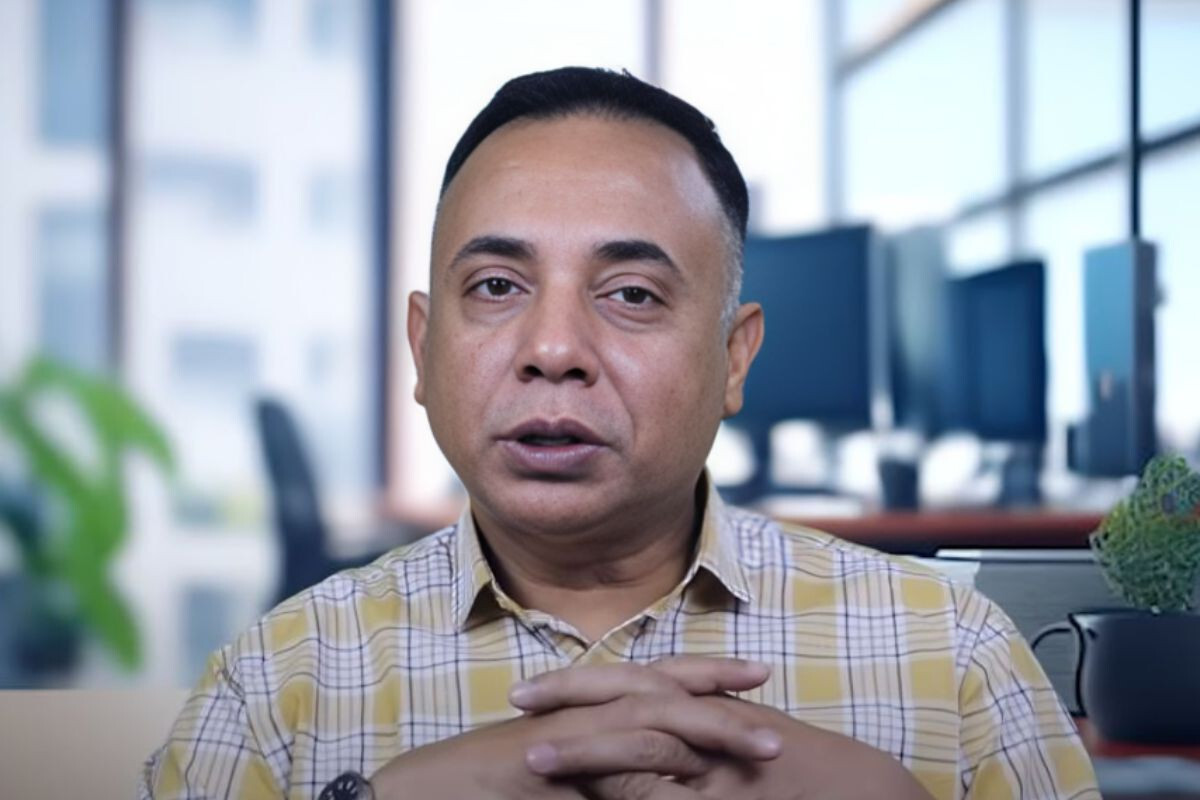
Political analyst and presenter Zillur Rahman has remarked that, “Currently, in the political arena, it truly feels like a festival of instruments is playing. Some chant slogans of reform, some talk of referendums, while others focus on forming upper chambers. Altogether, it seems as though the politics of the country is dancing to an invisible flute. Meanwhile, ordinary spectators sit in the audience wondering—who is actually playing this tune?”
He noted that many are discussing the upcoming February elections, though he himself remains sceptical about whether they will actually take place. “Even if they do, I doubt it will be a real election,” he commented. Government statements, however, assert that the elections will proceed in February, emphasising that the process cannot be postponed for even a single day, and that no external power can prevent it. Yet, daily developments continue to create new complexities on the electoral path. Zillur Rahman shared these observations in a recent video on his YouTube channel.
He highlighted that, despite seven months of dialogues under the National Unity Commission, no resolution has yet been reached. Political parties remain divided over the July charter, with positions diametrically opposed: some demand proportional representation (PR), others the formation of upper and lower chambers, and yet others insist on a referendum. Attempting to formalise these rules only increases uncertainty. At the root of this uncertainty lie two parallel situations: on one side, the government repeatedly assures that the February elections will occur and will be the best elections; on the other, the lack of a finalised consensus fuels doubt on the ground.
Zillur Rahman further noted that Professor Ali Riyaz, co-chair of the National Unity Commission, recently warned that failing to hold elections in February could jeopardise both internal stability and national security. According to him, there are three possible paths forward: political compromise, strict government enforcement, or passively letting time elapse. The core issue is that time is running out. This countdown is not only in the political calendar but is increasingly being written into the daily lives of citizens. Reports of group violence, arbitrary policing, harassment over clothing or hairstyle, and moral policing are becoming almost routine.
He added, “On the morning of 18 September in Comilla, attacks and arson occurred at four shrines simultaneously. Public gatherings had been called over loudspeakers. Though law enforcement eventually restored order, the fear among the general public remains. From the capital to the districts, this pattern is spreading with an irritating continuity. The recent controversy at Dhaka University’s Surya Sen Hall, where wearing half-pants was prohibited, again brought forward the old conflict between personal freedom and control.”
| Issue | Details |
| Political Atmosphere | Described as dancing to an invisible flute; mixture of reform slogans, referendums, and chamber formations |
| Election Concerns | February elections expected; government assures no postponement, but doubts persist |
| National Unity Commission | Seven months of dialogue; no resolution; divisions over PR, chambers, and referendums |
| Warnings | Prof. Ali Riyaz: Failure of elections may harm internal stability and national security |
| Public Anxiety | Group violence, moral policing, and personal freedom controversies; incidents in Comilla and Dhaka University |
Zillur Rahman’s analysis portrays a tense, complex, and ritualistic political theatre, where ordinary citizens are left to wonder who is orchestrating the tune, while national security and civil liberties continue to face pressures on multiple fronts.

Comments