Sunday, 5th April 2026

Khaborwala Online Desk
Published: 6th March 2025, 4:43 AM
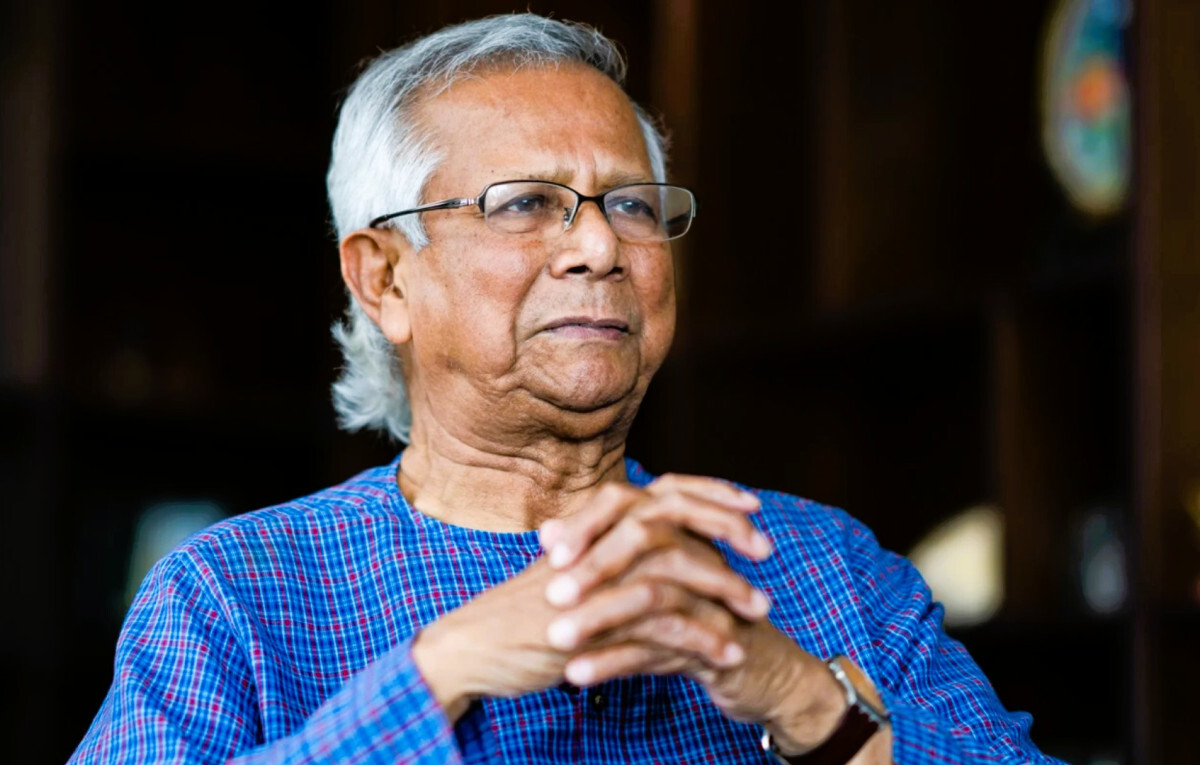
Chief Adviser Professor Muhammad Yunus has said that the country’s next general elections will take place between December 2025 and March 2026, depending on how quickly his interim government can implement necessary reforms.
“If reforms can be done as quickly as we wish, then December would be the time that we would hold elections. If you have a longer version of reforms, then we may need a few more months,” Professor Yunus said in an interview with the BBC, published today (March 6).
Speaking about his appointment as the head of Bangladesh’s interim government, Yunus admitted he was taken aback when asked to take charge following the ouster of long-serving Prime Minister Sheikh Hasina last year.
“I had no idea I’d be leading the government,” he said, describing his reaction as feeling “dazzled” when offered the role.
Since taking office, Yunus has prioritized restoring law and order and addressing Bangladesh’s economic turmoil.
With elections on the horizon, questions remain over whether Sheikh Hasina and her Awami League party will participate. The former prime minister, now in exile in India, is wanted in Bangladesh over crimes against humanity.
“They (Awami League) have to decide if they want to do it, I cannot decide for them,” the Chief Adviser told BBC. “The Election Commission decides who participates in the election.”
Yunus painted a grim picture of Bangladesh’s economic situation, likening it to a disaster zone.
“Peace and order is the most important thing, and the economy. It’s a shattered economy, a devastated economy,” he said. “It’s as if there’s been some terrible tornado for 16 years and we’re trying to pick up the pieces.”
The former prime minister’s tenure, which began in 2009, was marked by allegations of severe human rights violations, including the jailing and killing of political opponents. A student-led uprising toppled her government last August, paving the way for Yunus to take over as interim leader.
Reflecting on the unrest, he said, “We are coming from complete disorder… People getting shot, killed.”
Nearly after seven months, there is criticism over the country’s slow progress in stabilizing law and order. Many in Dhaka feel that conditions remain unchanged, according to the BBC report.
“Better is a relative term. If you are comparing it to last year, for example, at the same time, it looks okay,” Professor Yunus said.
Anger against Sheikh Hasina’s former regime remains strong, with thousands of demonstrators rallying in recent months to demand her prosecution for the deadly crackdown on student protesters.
A Bangladeshi court has issued a warrant for her arrest, but India has yet to respond to the request for her extradition.
Meanwhile, members of the Awami League claim they no longer feel safe in Bangladesh under Yunus’s government. The Chief Adviser dismissed these concerns, urging them to follow legal channels.
“There’s a court, there’s a law, there’s a police station. They can go and complain, register their complaint,” he said. “You just don’t go to a BBC correspondent to complain, you go to the police station and see whether the law is taking its course.”
The Trump administration’s decision to cut foreign aid has sparked concerns about its impact on Bangladesh. The United States, the third-largest provider of development assistance to Bangladesh, committed $450 million in foreign aid last year.
However, Professor Yunus downplayed the impact, suggesting the aid cuts might even be beneficial.
“It is their decision,” he said. “It’s been helpful. Because they are doing things that we wanted to get done, like fighting corruption, which we couldn’t afford right away.”
When asked how Bangladesh would compensate for the loss,” Chief Adviser Yunus said, “When it happens, we will make do.”



Comments