Sunday, 5th April 2026

Khabor Wala Desk
Published: 4th February 2026, 7:45 AM
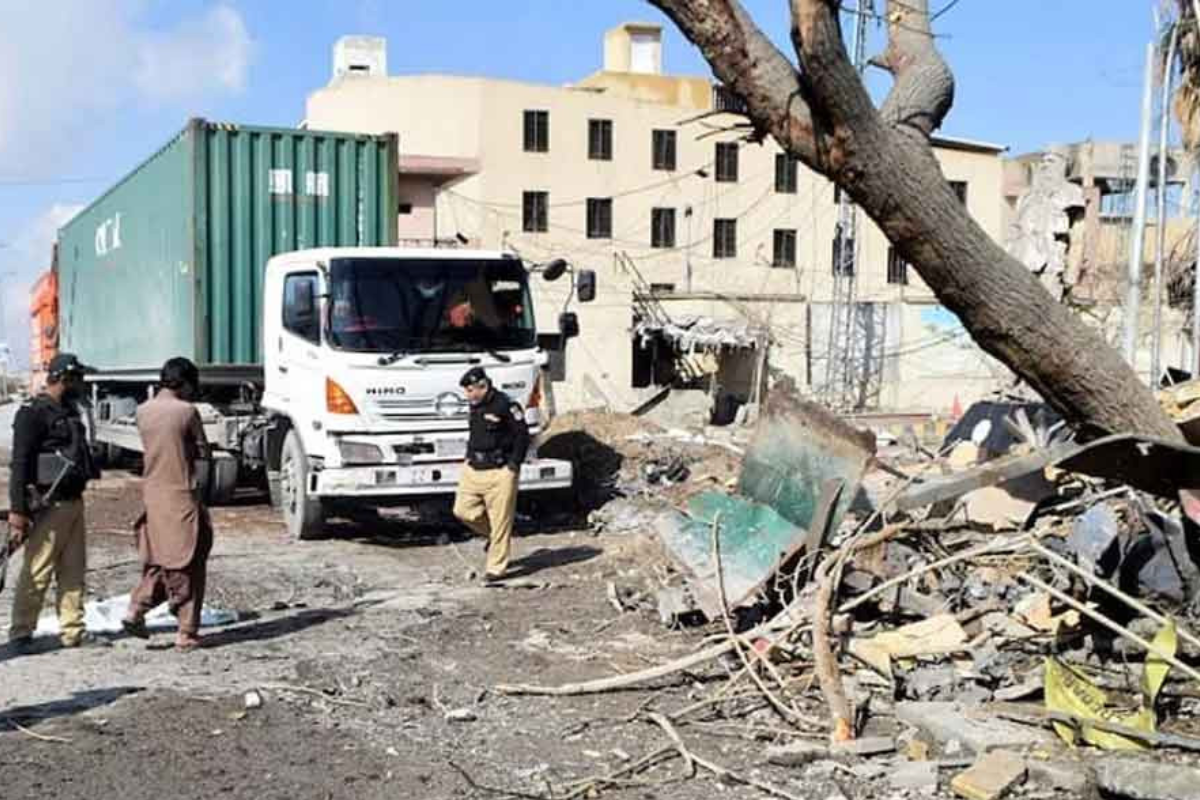
Pakistan’s south-western province of Balochistan has witnessed one of its bloodiest security operations in recent years, following a three-day counter-terrorism campaign launched after coordinated attacks across multiple towns. Official briefings state that at least 197 members of separatist militant groups were killed during clearance operations, while a minimum of 22 Pakistani soldiers lost their lives in the line of duty. Civilian casualties were also severe: 36 people, including women and children, were reported killed during the initial assaults and subsequent clashes. The combined death toll has reached 255, underscoring the scale and ferocity of the violence.
The crisis was triggered on 31 January, when the Baloch Liberation Army (BLA), described by the authorities as a separatist organisation, carried out near-simultaneous attacks on 12 towns and settlements across the province. The first wave of violence claimed the lives of 17 security personnel and 31 civilians, striking police posts, transport routes and crowded public areas. The attacks caused widespread disruption, forcing temporary closures of markets, schools and sections of key highways, and prompting emergency security measures across urban and rural districts.
Over the weekend, further assaults were reported in Quetta, Mastung, Nushki, Dalbandin, Kharan, Panjgur, Tump, Gwadar and Pasni. Security sources said militants targeted civilians in several locations, contributing to the high number of non-combatant deaths recorded over the three-day period. In response, Pakistan’s armed forces, supported by paramilitary units and law-enforcement agencies, launched province-wide clearance operations, including cordon-and-search missions, road-security sweeps and targeted raids on suspected militant hideouts. In the first phase alone, 92 militants were killed, among them three suicide attackers preparing for further strikes, according to official accounts. Subsequent engagements pushed the militant death toll to 197.
In a statement, the military’s media wing, ISPR, alleged that the attackers belonged to what it termed “Fitna al-Hindustan”, accusing the network of deliberately targeting civilians, including women, children, the elderly and labourers. The statement asserted that the violence was intended to disrupt daily life and development projects in Balochistan, a resource-rich but long-restive province. The military praised the “professional conduct and resolve” of security forces, while acknowledging the heavy cost of sustained close-quarters fighting; 15 personnel were killed on the first day of the operation alone.
Security analysts note that Balochistan’s rugged terrain, porous borders and long-running grievances over political representation and resource distribution continue to fuel instability. The latest violence has renewed concerns over the protection of civilians and critical infrastructure, as well as the need for longer-term political and socio-economic measures alongside kinetic security responses.
Reported Casualties Over Three Days
| Category | Fatalities |
|---|---|
| Separatist militants | 197 |
| Pakistani security personnel | 22 |
| Civilians | 36 |
| Total | 255 |




Comments